Episode 57✦2007-2016
Peter Thiel — The Billionaire Who Destroyed Gawker
June 5, 2026
From The Fires of History
Peter Thiel — The Billionaire Who Destroyed Gawker
The Outing
In December 2007, Gawker’s Valleywag blog published a piece outing Peter Thiel as gay. The article, by Owen Thomas, was titled “Peter Thiel is totally gay, people.” It was written in the breezy, cruelty-as-content house style that made Gawker both influential and despised. Thiel was not publicly out. He had not consented. The article existed because Gawker’s editorial philosophy — “Is it true? Is it interesting? Then publish it, regardless of consent or consequence” — did not include a third question: “Should we?”
Thiel said nothing publicly. He did not sue. He did not write an op-ed. He did not go on television. He did not tweet. He waited.
He waited nine years.
The Operation
What Thiel did, quietly, was hire Charles Harder, a Los Angeles litigation attorney, and instruct him to find plaintiffs with viable legal claims against Gawker Media. Thiel funded the lawsuits. He did not attach his name to them. He was not a party to any of the cases. He was the invisible hand behind a legal campaign designed to bleed Gawker through its own court system.
The cases were real. The plaintiffs had real grievances. Thiel simply provided the resource that most people who are wronged by powerful media organizations lack: enough money to actually fight them in court. This is the detail that makes the operation elegant rather than merely vindictive. Thiel did not manufacture claims. He bankrolled existing ones. He turned Gawker’s own editorial decisions into ammunition and hired the artillery.
The centerpiece was Hulk Hogan.
In 2012, Gawker published a sex tape of Terry Bollea — professionally known as Hulk Hogan. Bollea had not consented to the publication. The tape was obtained and posted because Gawker’s editors believed it was newsworthy, or at least entertaining, and at Gawker the distinction between those categories had been abolished years earlier.
Hogan sued. Thiel funded the litigation. The case went to trial in March 2016 in a Florida courtroom. The jury awarded Hogan $140 million in damages. Gawker could not pay. Nick Denton, Gawker’s founder, filed for bankruptcy. Gawker Media was sold to Univision for parts. The flagship site, Gawker.com, was shut down in August 2016.
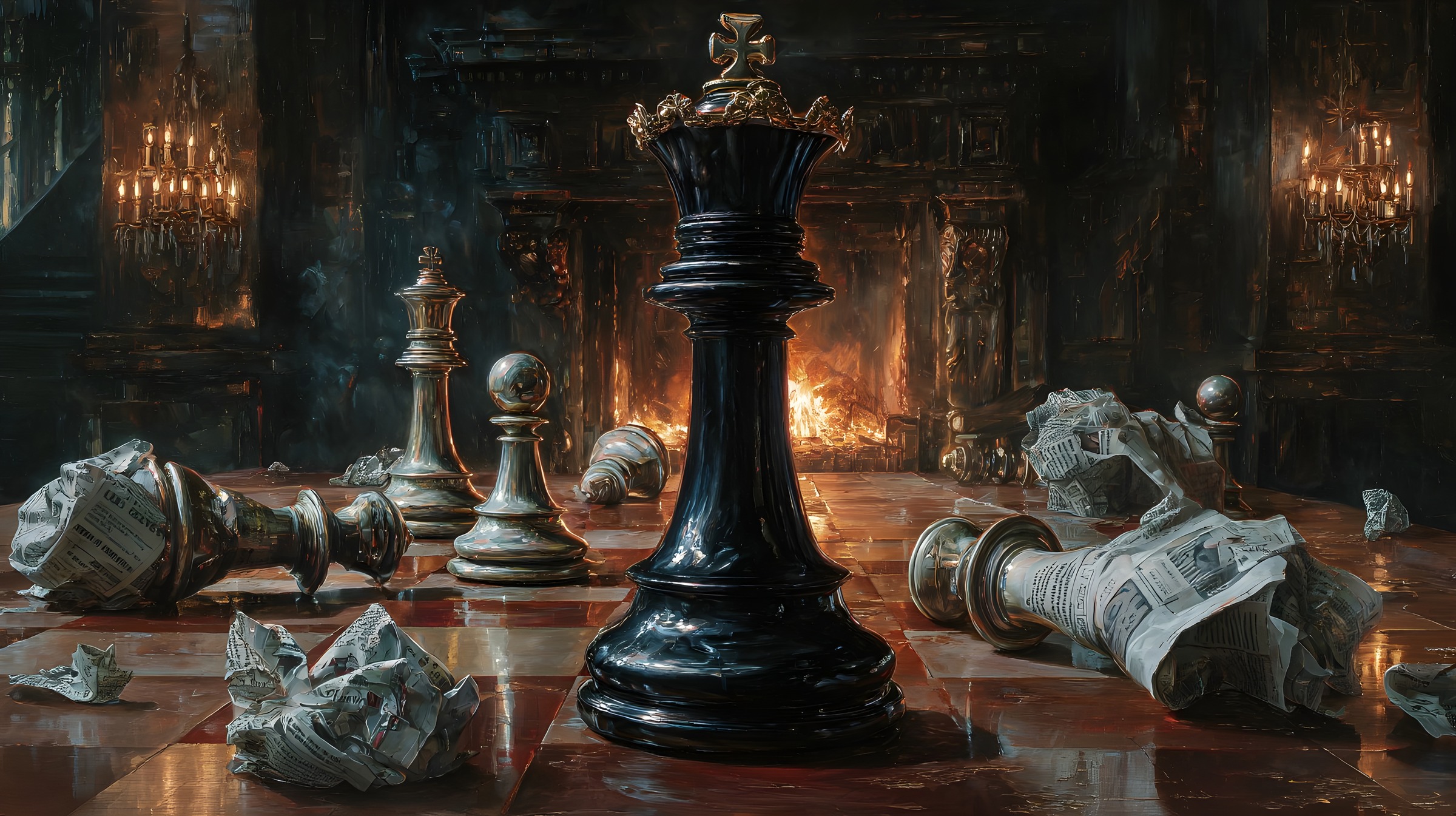
A billionaire had destroyed a media company. The weapon was a professional wrestler. The ammunition was the company’s own editorial decisions. The entire operation took nine years from the outing to the kill shot, and for most of that time, nobody knew Thiel was involved.
The Reveal
Thiel’s involvement was revealed by Forbes in May 2016, during the trial. When asked to confirm, Thiel did not deny it. He said: “I saw Gawker pioneer a unique and incredibly damaging way of getting attention by bullying people even when there was no public interest in doing so.”
He also said: “It’s less about revenge and more about specific deterrence.”
The media class was horrified. Not because a billionaire had funded litigation — that happens constantly, in every industry, and nobody writes hand-wringing op-eds about it. The horror was that the target had been one of them. The framing was immediate: “billionaire silences press.” The counter-framing was equally immediate: “media company that published a sex tape without consent discovers that actions have consequences.”
Both framings were accurate. Neither was complete. The discomfort of holding both simultaneously was the point.
The Patron Troll
Thiel’s operation meets every criterion of high-effort trolling as defined in the Fires series:
Provocation with purpose. The goal was not random destruction. It was the systematic elimination of a specific target using the target’s own weaknesses. Every lawsuit arose from Gawker’s editorial decisions. The vulnerability was self-inflicted.
Misdirection. Thiel was invisible for nearly a decade. The lawsuits appeared to be independent actions by aggrieved individuals. The coordination was the art. This is operational security that would impress intelligence agencies. Nine years. Multiple plaintiffs. No fingerprints until Forbes found them.
Using the system against itself. Gawker was destroyed by the legal system it operated under, by lawsuits arising from its own editorial choices. Thiel did not hack the system. He used it as designed. He did what any citizen can theoretically do — fund litigation against a party that wronged him — but at a scale that turned a theoretical right into an existential threat.
Disproportionate response. Being outed in a blog post is humiliating. Funding a nine-year legal campaign to destroy the entire company is disproportionate. The disproportion is the point. It is the trolling.
The reveal is part of the troll. When Thiel’s role was exposed, the reaction — outrage, admiration, fear — was itself content. The reveal transformed the story from “Gawker loses lawsuit” to “billionaire executes decade-long revenge plot.” The narrative upgrade was built into the operation.
But Thiel introduces a category the Fires series has not previously named: the patron troll. He did not troll Gawker directly. He funded other people’s trolling. He weaponized the legal system the way a Renaissance patron weaponized artists — by providing resources to people with talent and a target. Hogan was the instrument. Harder was the craftsman. Thiel was the Medici.
This is trolling at scale. It is also trolling at a level of patience that borders on the monastic. Most revenge plots collapse because the avenger cannot sustain the rage long enough. Thiel sustained it for nine years without a single public statement, a single leaked email, a single moment of premature satisfaction. The patience alone qualifies it as art.
The Free Speech Question
The Thiel-Gawker case is the modern version of the Socratic dilemma, and it splits every observer the same way Socrates split Athens.
Does the right to speak freely include the right to publish someone’s sex tape? Does the right to a free press include the right to out someone against their will? If your answer to both is “yes,” then Gawker did nothing wrong and Thiel’s operation was an assault on press freedom. If your answer to either is “no,” then Thiel’s operation was justice delivered by unconventional means.
Gawker said it believed in radical transparency. Thiel made Gawker transparent — to a jury. The company that published everything was destroyed by its own publications being entered into evidence. The irony is structural, not incidental. It is the troll’s signature: using the target’s own principles as the weapon.
The media industry learned nothing and everything simultaneously. They learned that publishing private sex tapes of public figures was legally risky. They did not learn that Gawker’s editorial philosophy — the one that made it influential, that attracted readers, that generated the attention that funded the operation — was the actual vulnerability that Thiel exploited. The philosophy was the attack surface. Thiel was just the penetration tester with an unlimited budget.
The Aftermath
Gawker.com was shut down in August 2016. The vertical sites — Gizmodo, Jezebel, Deadspin, and others — survived under new ownership, eventually passing through various media companies with varying degrees of editorial identity crisis. Nick Denton declared personal bankruptcy. Hulk Hogan collected a reported $31 million settlement.
Thiel went on to other things. He had made his point. The specific deterrence he mentioned was not abstract — it was the demonstrated fact that a media company could be destroyed by the consequences of its own editorial decisions, provided someone with sufficient resources decided to press the point.
The question the Fires series asks is not whether Thiel was right or wrong. It is whether you can distinguish the mechanism from the morality. A vindictive billionaire silencing a media outlet. A gay man holding accountable the organization that outed him without consent. A masterclass in patient, systematic trolling using institutional mechanisms. All three descriptions are true at once. The discomfort of holding all three is not a bug in the analysis. It is the analysis.
Source URLs
| Source | URL |
|---|---|
| Forbes — “Peter Thiel Secretly Funded Hulk Hogan’s Lawsuit Against Gawker” | https://www.forbes.com/sites/ryanmac/2016/06/21/peter-thiel-admits-to-bankrolling-hulk-hogans-case-against-gawker/ |
| NYT — “Peter Thiel, Tech Billionaire, Reveals Secret War With Gawker” | https://www.nytimes.com/2016/05/26/business/dealbook/peter-thiel-tech-billionaire-reveals-secret-war-with-gawker.html |
| Wikipedia — Bollea v. Gawker | https://en.wikipedia.org/wiki/Bollea_v._Gawker |
| Wikipedia — Peter Thiel | https://en.wikipedia.org/wiki/Peter_Thiel |
| Wikipedia — Gawker | https://en.wikipedia.org/wiki/Gawker |
| Valleywag original outing article (archived) | https://web.archive.org/web/2007*/valleywag.gawker.com/peter-thiel-is-totally-gay-people |
| NYT — “Gawker, Filing for Bankruptcy, Is for Sale” | https://www.nytimes.com/2016/06/11/business/media/gawker-bankruptcy-filing-sale.html |
Prefer RSS? Subscribe here.