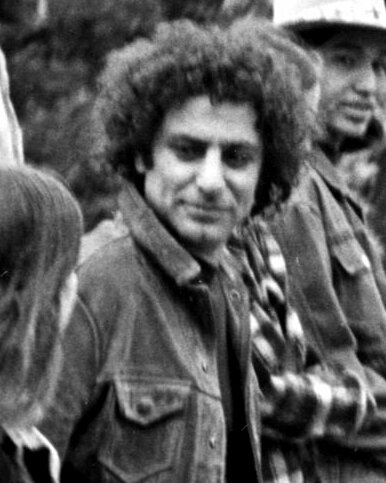
Behavioral Archetype
In December 1969, asked at the Chicago conspiracy trial to identify himself for the record, Abbie Hoffman answered: “My name is Abbie. I am an orphan of America.”
THE STAGE-MANAGER OF REALITY — Subject does not protest; subject produces. Every action is engineered as a televisable event whose actual target is not the people in the room but the audience watching at home. Subject grasped, earlier and more completely than any contemporary, that in a media-saturated society the image of the act eclipses the act itself. The stunt is the argument. The footage is the win. Subject treats the nightly news as a free distribution channel and the establishment’s own cameras as unpaid co-conspirators.
Essence Indicators
- Optimizes every act for the camera, not the crowd — the protest is the delivery vehicle; the broadcast is the payload
- Weaponizes absurdity to make the powerful respond, then films them responding (a man cannot dignify a pig candidate without looking ridiculous, and cannot ignore one without looking afraid)
- Converts authority’s reaction into the actual content — the bulletproof glass, the gag order, the contempt citation all become the story
- Operates with zero institutional resources and generates outsized coverage purely through engineered spectacle
- Refuses the frame: when handed a platform under rules, breaks the rules on air to expose the platform as constructed
- Brands relentlessly — adopts the pseudonym “Free,” names a movement “Yippie” for the acronym’s headline value, titles a book to dare the reader to commit a crime
- Took the witness stand in the Chicago conspiracy trial (December 1969) and opened in character. “Will you please identify yourself for the record?” – “My name is Abbie. I am an orphan of America.” Asked where he resided: “I live in Woodstock Nation … It is a nation of alienated young people. We carry it around with us as a state of mind in the same way as the Sioux Indians carried the Sioux nation around with them.” Judge Julius Hoffman: “Just where it is, that is all” (trial transcript, Famous Trials, Douglas O. Linder)
- Entered the Stock Exchange stunt into the federal record himself, from the same stand: “because of our action at the Stock Exchange in throwing out the money … within a few weeks the Wall Street brokers there had totally enclosed the whole stock exchange in bulletproof, shatterproof glass, that cost something like $20,000 because they were afraid we’d come back and throw money out again” (his account of what Jerry Rubin said; Famous Trials transcript; date of the stunt, 24 August 1967: Fires of History ch. 8)
- Died 12 April 1989; the autopsy finding was reported under the headline “Abbie Hoffman Committed Suicide Using Barbiturates, Autopsy Shows”: the Bucks County coroner, Thomas J. Rosko, ruled he died of “a massive overdose of the drug phenobarbital,” combined with alcohol, about 150 pills: “There is no way to take that amount of phenobarbital without intent. It was intentional and self-inflicted” (New York Times, 19 April 1989 (archived), archived; live URL; obituary, “Abbie Hoffman, 60’s Icon, Dies; Yippie Movement Founder Was 52,” New York Times, 14 April 1989)
- What he paid, ranked ahead of what he said. Chicago: the jury found five of the seven defendants guilty of violating the Anti-Riot Act on 18 February 1970, and “Judge Hoffman sentenced each defendant to five years’ imprisonment plus a $5,000 fine” (Linder, chronology; Linder, account). Along the way, “On October 29, the outraged judge ordered Seale bound and gagged” (Linder, account). The Seventh Circuit reversed the contempt convictions on 11 May 1972 and the convictions on the charges on 21 November 1972 (Linder, chronology). On 28 August 1973 he was arrested for “possession of a large quantity of cocaine,” and “Claiming to have been framed, Hoffman jumped bail and went underground” (Encyclopedia.com, “Abbie Hoffman”); Linder’s chronology has him in “plastic surgery” and underground “for seven years to avoid trial on cocaine charges,” then a work-release sentence in 1981-82 (Linder, chronology; Linder, Hoffman page). The counts differ and are set out in the table below
- The Seventh Circuit’s own words, in United States v. Dellinger. The court wrote “we have decided to reverse for trial error and abuse of discretion,” found the trial judge’s “deprecatory and often antagonistic attitude toward the defense” evident “from the very beginning,” and ordered: “The judgments appealed from are reversed and the cause remanded for a new trial if the government elects so to proceed.” The same opinion says of Hoffman that “there is ample evidence to support a jury finding that Hoffman committed one or more overt acts with the intent required by the statute,” and describes his party: “Hoffman and Rubin had organized, in late 1967, Youth International Party” and “Yippie was a less formal organization, under the leadership of Hoffman, Rubin and a number of others” (United States v. Dellinger, 472 F.2d 340 (7th Cir. 1972), Caselaw Access Project)
- The Pentagon, from the same witness stand. He testified that Jerry Rubin “told me that he had come to New York to be project director of a peace march in Washington,” and “I said that the Pentagon was a five-sided evil symbol in most religions and that it might be possible to approach this from a religious point of view.” He and Martin Carey “measured the Pentagon, the two of us, to see how many people would fit around it”: “We got arrested. It’s illegal to measure the Pentagon. I didn’t know it up to that point.” On the permit: “we wanted a permit to raise it 300 feet in the air, and they said “How about 10?” So we said “OK”.” Asked whether the Pentagon was in fact exorcised: “Yes, I believe it was.” (Famous Trials transcript; Linder’s chronology lists the October 1967 arrest, Linder, chronology)
- The Stock Exchange, in his own essay “Museum of the Streets.” The booking: “giving one of my favorite pseudonyms, George Metesky, the notorious mad bomber of Manhattan.” The stake: “Then I scraped together three hundred dollars which I changed into crispy one-dollar bills, rounded up fifteen free spirits.” The record: “no photographs of the incident exist: newsmen are not allowed to enter the sacred temple of commerce,” and “One version was we threw Monopoly money, another network called it hundred-dollar bills, a third shredded money.” The result: “Two weeks after our band of mind-terrorists raided the stock exchange, twenty thousand dollars was spent to enclose the gallery with bullet-proof glass.” (Hoffman, “Museum of the Streets,” The Anarchist Library)
- The myth, on cross-examination. Assistant U.S. Attorney Richard G. Schultz put to him that “In getting people to Chicago you created your Yippie myth.” Hoffman: “A myth is a process of telling stories, most of which ain’t true.” Asked whether he had promised “We will fuck on the beaches,” he answered “Yes, me and Marshall McLuhan. Half of that quote was from Marshall McLuhan.” (Famous Trials transcript)
- His own written words, outside the act. Steal This Book is dated “December, 1970” from Chicago’s Cook County Jail, opens “It’s perhaps fitting that I write this introduction in jail,” is “Dedicated to Jerry Lefcourt, Lawyer and Brother” and carries a “copyright ©1971 PIRATE EDITIONS” line; its introduction says “To steal from a brother or sister is evil. To not steal from the institutions that are the pillars of the Pig Empire is equally immoral,” and calls the book “a manual of survival in the prison that is Amerika” (Steal This Book, full text at libcom.org)
- The state’s file. The FBI Vault carries a file titled “Abbie Hoffman” in numbered parts, Part 01 through at least Part 40 (FBI Vault)
On the record, by date:
- The Realist: Defense Exhibit 225 was an issue containing an article by Hoffman on plans for Yippie in Chicago (1968) (United States v. Dellinger)
- United States v. Dellinger, 472 F.2d 340: defendant and appellant with Dellinger, Davis, Hayden and Rubin; Kunstler appeared of record for some defendants and Weinglass for others; Weinglass conducted his direct examination; Assistant U.S. Attorney Richard G. Schultz crossed him (1969-1972) (United States v. Dellinger; Famous Trials transcript; Linder, In Their Own Words)
- Youth International Party: organised “in late 1967” by Hoffman and Rubin, “a less formal organization”; the name credited by Hoffman to Krassner (“Yippie”) and Anita Hoffman (Youth International Party); Nancy Kurshan is named in the same account (1967) (United States v. Dellinger; Famous Trials transcript)
- Jerry Rubin: project director of the October 1967 march, who brought him in; co-organiser of the Yippies; co-defendant and co-appellant (1967) (Famous Trials transcript; United States v. Dellinger)
- The Pentagon exorcism: Allen Ginsberg, Ed Sanders (who wrote the exorcism text) and the Fugs, Paul Krassner, Keith Lampe, Martin Carey, who counted the circle with him (1967) (Arthur oral history, 2004)
- Pentagon security, who arrested him in October 1967 for measuring the building; the General Services Administration’s permit for the march, which in Cohen’s account refused the encirclement (1967) (Famous Trials transcript; Arthur oral history, 2004)
- The Mobe (National Mobilization Committee to End the War in Vietnam), Dellinger, Davis and Hayden’s organisation: Hoffman and Rubin attended its Lake Villa meeting in March 1968 and Hoffman attended its marshals’ meetings in August 1968, in the court’s recital of the evidence (1968) (United States v. Dellinger)
- Chicago city government: the letter of 26 March 1968 asking the city’s cooperation, delivered by Hoffman, Rubin and others to the parks department and the deputy mayor, and his telephone call to Deputy Mayor David Stahl on 26 August 1968 (1968) (United States v. Dellinger; Linder, chronology)
- Film and press work he listed on the stand: Liberation News Service reporter, and negotiations with United Artists and MGM for a Hollywood film (1969) (Famous Trials transcript)
- Pirate Editions: the imprint line on the 1971 Steal This Book (1971) (libcom.org)
- The 1973 New York cocaine case: arrest, bail jump, surrender and sentence, counts differing by record (see the table above) (1973-1982) (Linder, chronology; Encyclopedia.com)
- The FBI: a file under his name in at least forty parts (FBI Vault)
- As “Barry Freed”: appointed to a federal water resources commission and a witness before a U.S. Senate subcommittee, per the reference entry (1970s) (Encyclopedia.com)
- The man who was a co-organiser of a protest movement was also the subject of an FBI file running to at least forty parts, a federal defendant whose conviction a court threw out for the trial judge’s conduct while finding evidence a jury could use, and, in the 1970s, a fugitive under another name sitting on a federal commission.
Social Persona / Impression Management
Immediate impression: Manic, grinning, fast-talking street prophet in a flag shirt. Subject presents as pure chaos — a clown who wandered into politics. The clown reading is the disguise. Underneath sits a precise tactician who has war-gamed exactly how each piece of footage will play.
Energy: High-amplitude, contagious, performed joy. Subject radiates the specific charisma of someone having more fun than you are allowed to, in a place where fun is forbidden. The delight is real and it is also a tool — nothing disarms a riot cop or a federal judge like an opponent who appears to be enjoying himself.
Impression management strategy: STRATEGIC RIDICULOUSNESS. Where the straight activist seeks gravitas, Hoffman manufactures absurdity on purpose, because absurdity travels and gravitas does not. Throwing money onto the Stock Exchange floor says more about greed than a thousand pamphlets, and unlike the pamphlets it makes the network news. The foolishness is the medium; the message rides inside it. This is the Diogenes mode — argument-by-spectacle — rebuilt for the age of the television camera. (See Diogenes of Sinope, the analog progenitor of the same technique.)
Forensic Archetype Comparison
| Pattern | Match Level | Evidence |
|---|---|---|
| The Social Engineer | HIGH | Subject engineers institutions, not individuals. Provokes authority into self-incriminating overreaction (NYSE’s $20,000 glass cage, Judge Hoffman’s bound-and-gagged co-defendant, the entire contempt-citation spectacle). The mark is the establishment; the exploit is its own dignity. |
| The Narcissistic Operator | MODERATE-HIGH | Subject required attention constantly and was the named star of every production. But the attention was instrumental — pointed at a cause, not merely at the self. The ego served the spectacle, though the two were not always separable, and subject was not always honest with himself about which was which. |
| The Grievance Collector | LOW-MODERATE | Genuine political conviction (Vietnam, civil rights) drove the work, not personal vendetta. The anti-war commitment was real. The resentment, where present, was directed at systems rather than persons. |
| The Chameleon | MODERATE | Maintained the “Barry Freed” identity for six years as a fugitive, complete with cosmetic surgery and a local-environmentalist civic reputation. But this was tactical concealment, not identity dissolution — there was always a stable Abbie underneath, impatient to come back. |
| The Impulsive Actor | LOW | Reads as impulsive; is not. Each stunt was staged, timed, and pitched to coverage. The apparent spontaneity was production design. |
Psychometric Assessment
Big Five (OCEAN):
| Trait | Score | Evidence |
|---|---|---|
| Openness | 95/100 | Invented an entire grammar of political performance — money on the trading floor, a pig for president, a vow to levitate the Pentagon “until it turns orange.” No tactic too strange if it would broadcast. Exhibit: on cross-examination, asked about the promise of sex on the beaches, “Yes, me and Marshall McLuhan. Half of that quote was from Marshall McLuhan” (Famous Trials transcript); his own list of what he had done, “I am a poet. I am a film maker.” (Famous Trials transcript). |
| Conscientiousness | 58/100 | Mixed. The productions were meticulously conceived and media-timed, which is high discipline. The personal life — bail-jumping, the cocaine arrest, the untreated mood swings — was not. Disciplined about the work, chaotic about the self. Exhibit: the Exchange job in his own account, “giving one of my favorite pseudonyms, George Metesky, the notorious mad bomber of Manhattan,” three hundred dollars changed into one-dollar bills and fifteen people (Hoffman, “Museum of the Streets”); before the Pentagon, “we measured the Pentagon, the two of us, to see how many people would fit around it” (Famous Trials transcript). The chaos side: “Claiming to have been framed, Hoffman jumped bail and went underground” (Encyclopedia.com). |
| Extraversion | 96/100 | Cannot operate without an audience and a camera. Every act is public by definition; a private Hoffman stunt is a contradiction in terms. Exhibit: “We started clowning, kissing and hugging, and eating money” (Hoffman, “Museum of the Streets”); Linder’s chronology records his arrest at breakfast on 28 August 1968 over a word written on his forehead (Linder, chronology). |
| Agreeableness | 30/100 | Charming and warm in person, but happy to humiliate a judge, mock a convention, and dare booksellers to stock a manual for stealing from them. Affable and adversarial at once. Exhibit: at sentencing in February 1970, Linder reports that Hoffman offered the judge LSD with “I know a good dealer in Florida” (Linder, account). |
| Neuroticism | 72/100 | High and clinically documented — diagnosed bipolar in 1980. The same emotional amplitude that powered the performances also produced the depressive collapses, and one of them was fatal. Exhibit: the coroner’s finding already entered above (New York Times, 19 April 1989); and the 1973 bail jump, “Claiming to have been framed” (Encyclopedia.com). |
Dark Triad:
| Trait | Score | Notes |
|---|---|---|
| Narcissism | 62/100 | Elevated. Subject needed to be the figure at the center of the frame. Distinguished from pure vanity by genuine ideological commitment — but the line between “look at the cause” and “look at me” was thin and subject crossed it more than he admitted. Exhibit: his first words on the stand, “My name is Abbie. I am an orphan of America” (Famous Trials transcript), against his own disclaimer, “I never performed for the media. I tried to reach people” (Hoffman, “Museum of the Streets”). |
| Machiavellianism | 80/100 | High. Every spectacle was a calculated media operation. Understood the networks’ production logic better than the networks did and exploited it deliberately — “break the frame” was a strategy, not an accident. Exhibit: “A myth is a process of telling stories, most of which ain’t true” (Famous Trials transcript); and his own account of the reporters outside the Exchange, who asked “How much did you throw?” (the answer he gives himself is “Thousands,” against the three hundred dollars he says he changed) (Hoffman, “Museum of the Streets”). |
| Psychopathy | 25/100 | Low. Subject felt genuinely, sometimes destructively. The opposite of the cold operator — too much affect, not too little. The instability was the price of the sincerity. Exhibit: “Not a drop of blood had been spilled, not a bone broken” (Hoffman, “Museum of the Streets”), set against the Seventh Circuit’s recital of testimony that on 7 August 1968 he said “he was prepared to tear up the town” (United States v. Dellinger). |
MBTI: ENFP (“The Campaigner”) — Dominant extraverted intuition generates the endless supply of impossible, perfect images (a levitating Pentagon, an immortal pig). Auxiliary introverted feeling supplies the conviction that makes the absurdity land as something other than mere comedy. The combination is rare and volatile: a person who can see the surreal stunt that will play on every network, and who also genuinely believes it will help end a war.
Why This Profile Matters
Hoffman is the hinge between the street provocateur and the modern information operation. Diogenes performed for the agora; Hoffman performed for the broadcast, and in doing so he wrote the playbook that outlasted him — engineer an image too absurd to ignore and too cheap to suppress, let the establishment’s own reaction become the message, and let the distribution be free because outrage is free. Every subsequent operator who treats the platform’s amplification machinery as ammunition is working in his idiom, whether they have heard his name or not. He understood, in 1967, the thing the internet would spend the next half-century proving: the spectacle is the payload, and the camera always belongs to the troll.
Threat Assessment
| Category | Level | Notes |
|---|---|---|
| Physical threat | LOW | The threat was theatrical, not violent. The stunts were designed to provoke reaction, not to injure. |
| Institutional threat | EXTREME | Demonstrated that any institution can be made to look ridiculous on camera by an opponent with no resources and no shame — which is the one vulnerability institutions cannot patch. The NYSE literally walled off its own gallery in response. |
| Memetic threat | EXTREME | Authored the template — spectacle-as-message, reaction-as-content, free distribution via the target’s own coverage. The 1967 method is the operating logic of the entire attention economy that followed. |
| Posthumous threat | HIGH | The disputed suicide (“I don’t believe for one moment the suicide thing,” per co-defendant David Dellinger) means even his death refuses to settle into a single agreed narrative — a final, unintended bit from a man who spent his life making reality contestable. |
Flame Warrior Classification
Primary: Evil Clown Secondary: Troller Also reads as: Primary: Evil Clown / Enfant Provocateur Secondary: Grenade (lobs one perfect spectacle into the room and lets the explosion of coverage do the work) Notes: An Evil Clown on the witness stand and a Troller in the street. Asked where he lived, he told the Chicago court “I live in Woodstock Nation”; asked his occupation, “I am a cultural revolutionary. Well, I am really a defendant—full-time” (Famous Trials). The pig candidate was his own pitch: “it would be great theater if we ran a pig for President.” The price was a federal conviction and a sentence of “five years’ imprisonment plus a $5,000 fine,” reversed by the Seventh Circuit on 21 November 1972 (472 F.2d 340). The work outlived him: Steal This Book is still reproduced in full (libcom).
The receipts behind each number. ATK 10: by his own account the Exchange stunt cost him three hundred dollars, fifteen people and one telephone call, and “Two weeks after our band of mind-terrorists raided the stock exchange, twenty thousand dollars was spent to enclose the gallery with bullet-proof glass” (Hoffman, “Museum of the Streets”); at Chicago he put the same glass into the record, as Rubin’s statement of what the stunt had done (Famous Trials transcript). The leverage is that the target spent its own money on the answer, not that a rule bound anyone. DEF 4: a jury found him guilty and Judge Hoffman gave each defendant “five years’ imprisonment plus a $5,000 fine” (Linder, account); the Seventh Circuit reversed on “trial error and abuse of discretion” yet found “ample evidence to support a jury finding that Hoffman committed one or more overt acts” (United States v. Dellinger); and he “jumped bail and went underground” after the 1973 arrest (Encyclopedia.com). It is not lower because the appeal succeeded and the contempt convictions fell too, and it is not higher because the reversal came after a verdict, a sentence and a trial in which a co-defendant was bound and gagged. HP 7: the text and the record outlived him, Steal This Book is still reproduced in full (libcom.org) and his testimony is still published in full (Famous Trials transcript); but the Yippies were, in the court’s phrase, “a less formal organization,” and he died on 12 April 1989 by his own hand (New York Times, 19 April 1989).
Against peers on the same values: Thomas Paine holds 10 / 4 / 4 at 81.5, level on ATK and DEF and three points under on HP, because Paine’s grave was lost where Hoffman’s testimony and book remain in print and on screen. Lenny Bruce holds 9 / 1 / 4 at 81.4, the same score, one point less ATK, three less DEF and three less HP, because Bruce’s New York appeal was undecided when he died and Hoffman’s Chicago convictions were reversed within three years. Richard Pryor holds 10 / 5 / 8 at 85.2, level on ATK, a point more DEF and a point more HP, because Pryor survived the 1980 fire and worked on where Hoffman’s last years ended in the coroner’s finding above.
Books by Abbie Hoffman
Attested and Attributed
| Claim | Status | Source |
|---|---|---|
| “My name is Abbie. I am an orphan of America.” | Attested: the transcript of his testimony in the Chicago trial, December 1969 | Famous Trials transcript |
| “I live in Woodstock Nation,” and the Court’s “Just where it is, that is all” | Attested: the same transcript; his answer to the Court’s “In what state is Woodstock?” was “It is in the state of mind, in the mind of myself and my brothers and sisters” | Famous Trials transcript |
| How much money went onto the Exchange floor | Contested on his own record: his essay says he “scraped together three hundred dollars” in one-dollar bills with fifteen people; to the reporters outside he answered “Thousands”; the press versions he lists are Monopoly money, hundred-dollar bills and shredded money; no photographs exist | Hoffman, “Museum of the Streets” |
| The Exchange stunt was on 24 August 1967 | Attributed: the date comes from Fires of History ch. 8; neither his essay nor his testimony gives one | Hoffman, “Museum of the Streets”; Famous Trials transcript |
| The Exchange enclosed its gallery in glass at a cost of about $20,000 | Attributed: Hoffman’s testimony gives it as Rubin’s statement (“something like $20,000 because they were afraid we’d come back and throw money out again”); his essay gives “twenty thousand dollars” and “two weeks after” | Famous Trials transcript; Hoffman, “Museum of the Streets” |
| The Exchange stunt was staged for the cameras | Contested by him: “We didn’t call the press; at that time we really had no notion of anything called a media event,” and “I never performed for the media. I tried to reach people.” His same account has the reporters and cameramen waiting outside. The profile’s thesis and his denial are both entered | Hoffman, “Museum of the Streets” |
| Who first proposed exorcising or levitating the Pentagon | Contested among participants: Hoffman testified that Rubin brought the march and “I said that the Pentagon was a five-sided evil symbol”; Rubin says “It was my idea to confront the Pentagon” and that the exorcism was Abbie’s; Allen Cohen says Rubin “had taken the magical idea to exorcise the Pentagon that Michael Bowen and I had suggested” before the Human Be-In; Allen Ginsberg says “It was Gary Snyder who had conceived the notion of the levitation of the Pentagon,” and Rubin allows “It could very well have been Gary Snyder’s idea” while calling Abbie “the PR man for it” | Famous Trials transcript; Arthur oral history, 2004 |
| How high the Pentagon was to rise | Contested: Hoffman testified to a request for 300 feet and the reply “How about 10?”; Allen Cohen recalls the plan to “make it rise 300 feet, vibrate and turn orange”; Sal Gianetta recalls Hoffman “adamant that the building was gonna go up 22 feet” and settling at three; Paul Krassner says the media were told the government would allow “no more than three feet off the ground” | Famous Trials transcript; Arthur oral history, 2004 |
| A vow to levitate the Pentagon “until it turns orange” | Attributed: the orange comes from Cohen’s account of the plan and from Time’s 1967 wording as Waging Nonviolence quotes it, “turn orange and vibrate until all evil emissions had fled”; his testimony does not use the word | Arthur oral history, 2004; Waging Nonviolence |
| The Pentagon was exorcised | Attributed: his answer on the stand, “Yes, I believe it was”; Rubin recalls that Hoffman “had insisted that they had levitated the Pentagon” and that he himself did not think so | Famous Trials transcript; Arthur oral history, 2004 |
| He named the Yippies | Attributed both ways: he testified that “Paul Krassner said the word” and that Anita Hoffman “came up with the name” Youth International Party; the Seventh Circuit says “Hoffman and Rubin had organized, in late 1967, Youth International Party” | Famous Trials transcript; United States v. Dellinger |
| Five years and $5,000 for each convicted defendant | Attested by Linder’s account of the sentencing of 20 February 1970 | Linder, account; chronology |
| The convictions were reversed for the judge’s conduct | Attested by the court: “we have decided to reverse for trial error and abuse of discretion.” The same opinion finds “ample evidence” on Hoffman for a jury, so the reversal is not an acquittal | United States v. Dellinger |
| The Chicago contempt convictions were reversed | Attested by Linder: “The Seventh Circuit Court of Appeals later reversed all contempt convictions, ruling that contempt convictions resulting in more than six months in prison require jury trials”; his chronology dates it 11 May 1972 | Linder, account; chronology |
| The cocaine arrest, the length of the years underground and the sentence | Contested across records: the profile says six years as “Barry Freed”; Linder’s chronology says seven years underground and a work-release sentence in 1981-82; Linder’s Hoffman page dates the alias to 1974; Encyclopedia.com has the arrest on 28 August 1973, “four years in Thousand Islands” under the name, and “After serving a year in jail”; Linder’s charge is “cocaine charges,” Encyclopedia.com’s is “possession of a large quantity of cocaine,” and Hoffman’s own account was that he was framed | Linder, chronology; Linder, Hoffman page; Encyclopedia.com |
| “Conspiracy? Hell, we couldn’t agree on lunch.” | Attributed: Linder prints it under Hoffman’s name; no transcript or recording is cited here | Linder, In Their Own Words |
| Steal This Book is dated December 1970 at Cook County Jail and copyrighted 1971 by Pirate Editions | Attested by the book’s own front matter as reproduced at libcom.org; the reproduction is not the publisher’s edition | libcom.org |
| The FBI kept a file on him | Attested: the FBI Vault lists “Abbie Hoffman” in parts 01 to 40 and beyond; the contents are not entered here | FBI Vault |
Sources: Wikipedia: Abbie Hoffman · Britannica: Abbie Hoffman · Wikipedia: Steal This Book · Wikipedia: Chicago Seven · Testimony of Abbie Hoffman, Chicago Eight trial (Famous Trials) · New York Times, “Abbie Hoffman Committed Suicide Using Barbiturates, Autopsy Shows” (19 April 1989) · Hoffman, “Museum of the Streets,” The Anarchist Library · Steal This Book (1971), full text, libcom.org · United States v. Dellinger, 472 F.2d 340 (7th Cir. 1972), Caselaw Access Project · Linder, Chicago Eight Trial: account, chronology, Hoffman page, In Their Own Words · Arthur No. 13, “Out, Demons, Out!” oral history (2004) · Waging Nonviolence, “The day they levitated the Pentagon” · Encyclopedia.com, “Abbie Hoffman” · FBI Vault, Abbie Hoffman
LULZ Index
Best act 11 of 15 4 acts scored
11of 15
Exorcising the Pentagon
C+ T+++ F+++ H+++ A+
A arrested for measuring it
measured the Pentagon, the two of us, to see how many people would fit around it
famous-trials.com first-hand11of 15
Hoffman opens his Chicago testimony in character
C++ T+++ F+++ H+++ A-
My name is Abbie. I am an orphan of America.
famous-trials.com official10of 15
Yippies throw money onto the Stock Exchange floor
C+ T++ F+++ H+++ A+
F exchange spent $20,000 on bullet-proof glass A booked under the pseudonym George Metesky, but signed in his own essay
Two weeks after our band of mind-terrorists raided the stock exchange
theanarchistlibrary.org first-hand8of 15
Hoffman publishes Steal This Book
C+ T+++ F++ H++ A-
a manual of survival in the prison that is Amerika
libcom.org first-hand
C craft T target F funny H harmless A anonymous One plus a point, three at most. The number rates the act, not the person. How the code reads The whole index
Cross-Referenced Dossiers

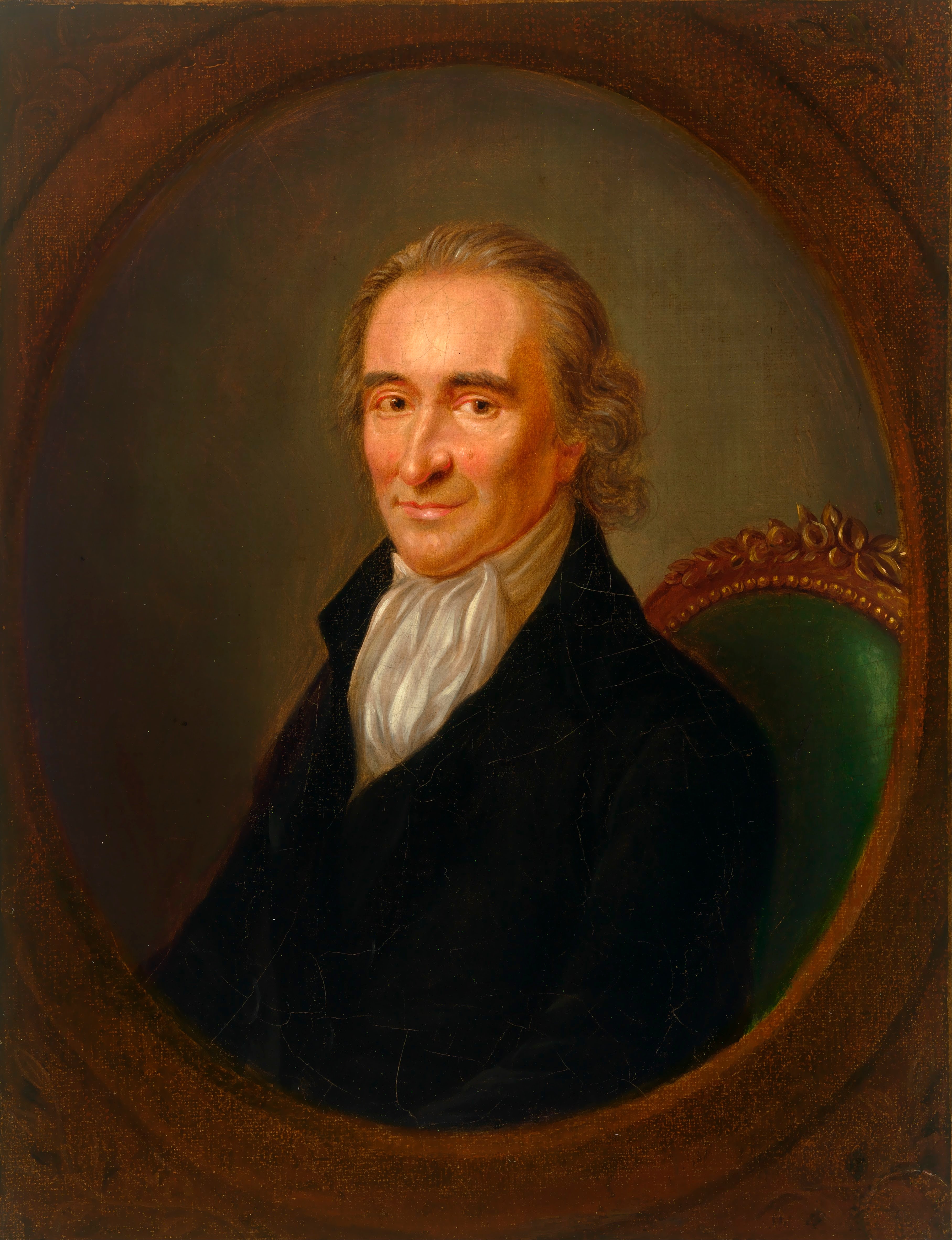
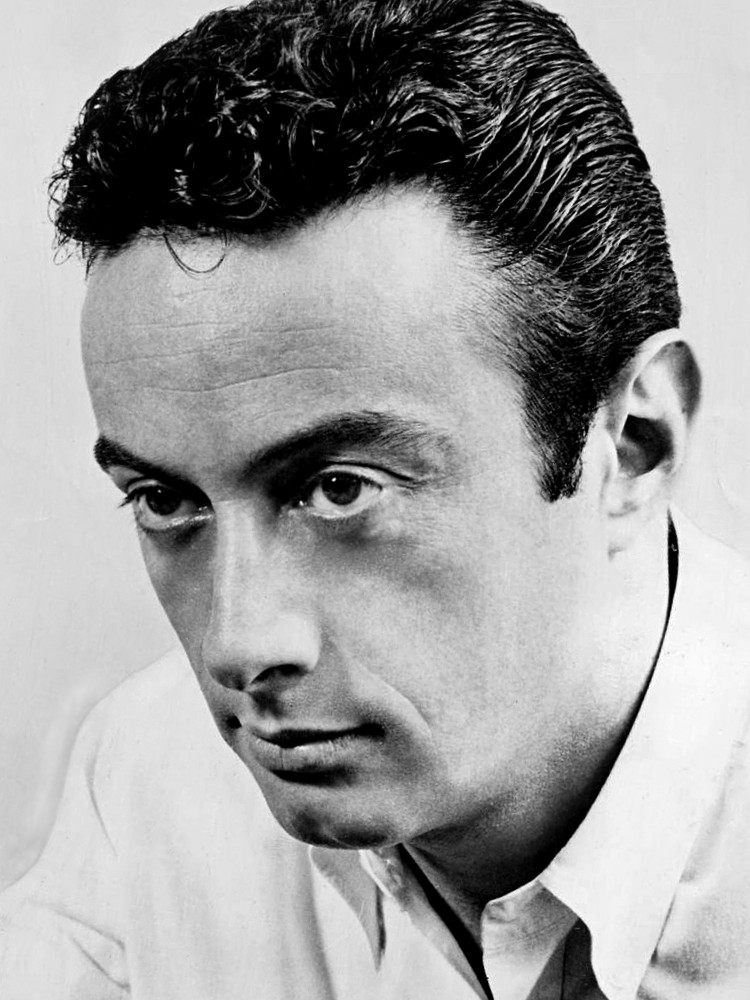
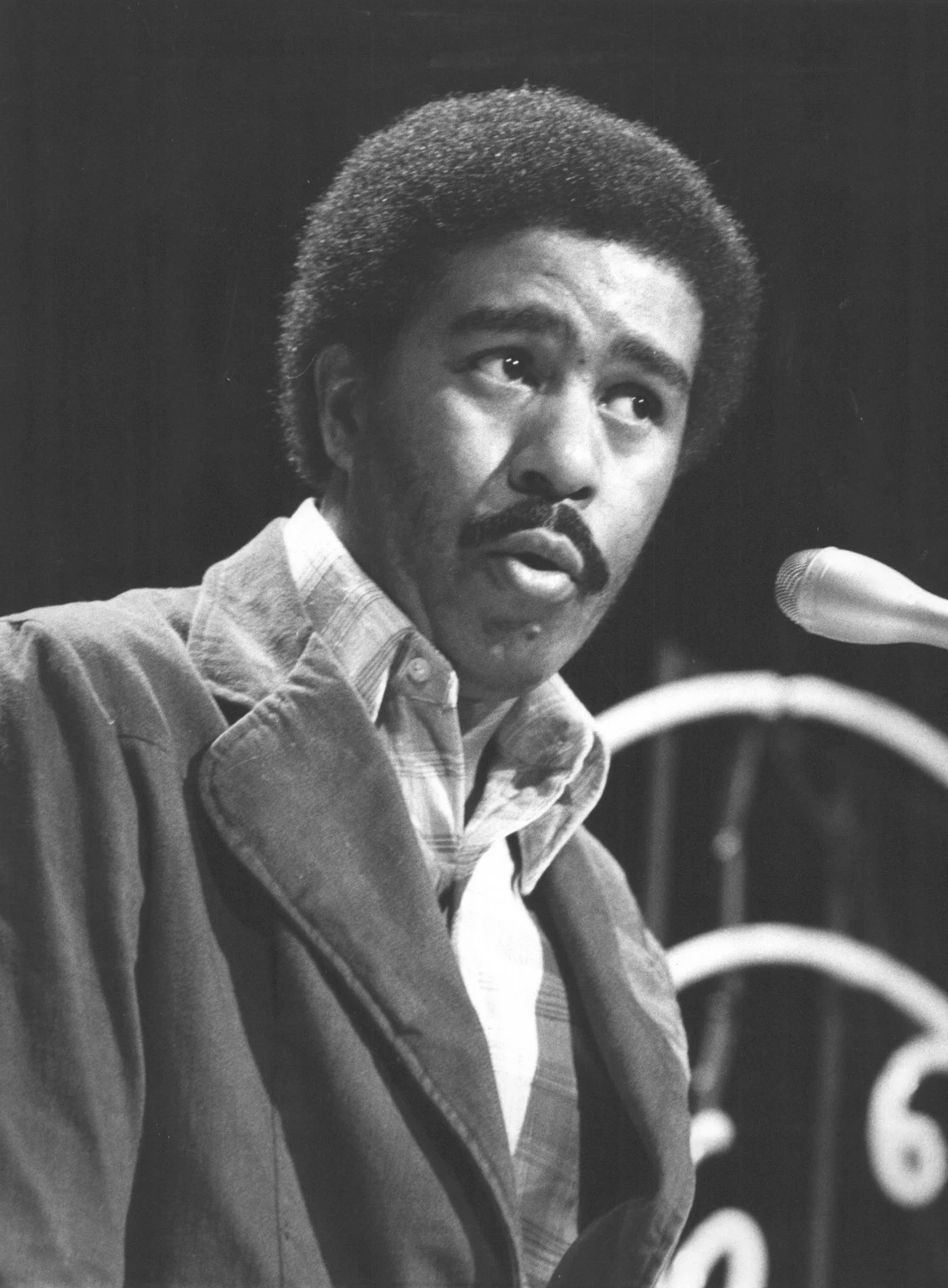

The scores on this file are computed by a published rule from sourced records, the same rule for every troll. Nobody types a number: a score moves only when a record does. How the scoring works
Prefer RSS? Subscribe here.