Related research: The Hermetic Order of the Golden Dawn: Comprehensive Research.
Behavioral Archetype
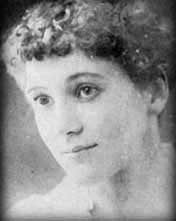
THE TRANSLATOR – Subject took the closed, oath-bound, deliberately obscure material of the Golden Dawn lineage and rendered it into plain English a literate outsider could actually read. Where her predecessors guarded the system behind grades, secrecy oaths, and Victorian obfuscation, Fortune published. The Mystical Qabalah is a textbook, not a grimoire – structured, lucid, pedagogical, written by someone who had trained as a psychotherapist and knew how to explain a model to a beginner. The archetype is not the founder who hoards the system or the showman who scandalizes it into the headlines. It is the practitioner who makes the system legible – and in doing so quietly takes it away from the people who controlled it by keeping it hidden.
Essence Indicators
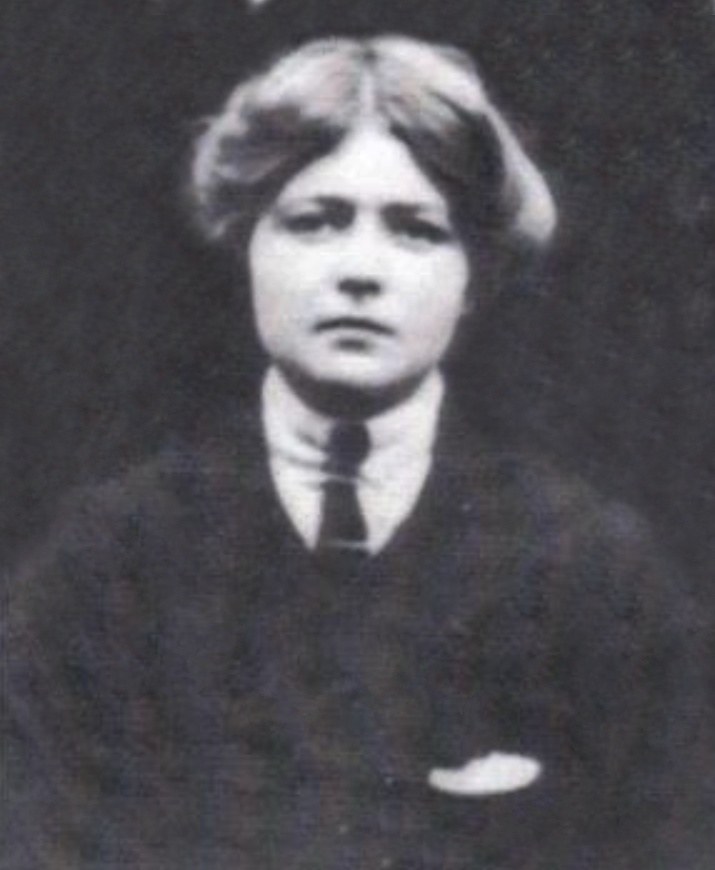
- Born Violet Mary Firth (1890), Llandudno, North Wales; studied psychology at the University of London and worked in a psychotherapy clinic before entering occult circles – a clinical background visible in everything she wrote
- Initiated into the Alpha et Omega (a Golden Dawn successor order) in 1919, later associated with the Stella Matutina lineage – the fragmented post-1900 inheritance of MacGregor Mathers’ system
- Founded what became the Fraternity of the Inner Light in 1924 with Charles Loveday; bases at Glastonbury and Bayswater, with temples, lectures, and – critically – correspondence courses
- Authored the works that taught the twentieth century how to read the system: The Mystical Qabalah (1935), Psychic Self-Defence (1930), and the initiatory novels The Sea Priestess (1938) and Moon Magic (posthumous), plus The Cosmic Doctrine
- Expelled from Moina Mathers’ order in 1926, reportedly on the grounds that she had “wrong symbols in her aura,” followed by mutual accusations of psychic attack – the lineage’s standard exit interview. Her own account: “She nearly turned me out for writing The Esoteric Philosophy of Love and Marriage, on the grounds that I was betraying the inner teaching of the Order … She suspended me for some months for writing Sane Occultism, and finally turned me out because certain symbols had not appeared in my aura – a perfectly unanswerable charge. However, I transferred again to yet another section.” Her entry, in her words: “I joined the Southern Branch of the Scottish section of it, since disbanded, in 1919” (R. A. Gilbert, The Golden Dawn: Twilight of the Magicians, p. 78; Golden Dawn research page)
- Organized the “Magical Battle of Britain” (1939–1942): a distributed network of meditators running weekly visualizations against Nazi Germany, coordinated by circulated letters – group ritual as morale infrastructure
- Corresponded with Aleister Crowley and, by 1942, publicly judged him “a genuine adept” – engaging the era’s most notorious magician on the merits while sharing none of his appetite for scandal
Social Persona / Impression Management
Immediate impression: A respectable, professionally-trained Englishwoman who happened to run a magical order. Where Crowley advertised depravity and Mathers performed Highland nobility, Fortune presented as exactly what she was: an author and teacher with a psychology background and a clinic on her resume. The persona was not a costume. It was the absence of one.
Energy: Measured, didactic, controlled. Contemporaries describe a forceful organizer and a clear instructor rather than a charismatic performer. The writing carries the same register – patient, explanatory, allergic to the obscurantism that the tradition had always used to keep outsiders out.
Impression management strategy: RESPECTABILITY AS DELIVERY VEHICLE. Fortune’s signature move was to package genuinely esoteric material in the most reassuring possible wrapper – the textbook, the correspondence course, the self-help title (Psychic Self-Defence is, structurally, a practical handbook). The clinical-psychological framing did double duty: it made the material respectable to a 1930s reader nervous about “the occult,” and it gave her a real explanatory model for what magic was doing. The Crowley funnel was scandal as advertising. Fortune’s funnel was the opposite – credibility as advertising. The reader who would never open a book by the Beast 666 would open a clearly-written manual by a lady with a psychology degree, and find the same Tree of Life inside.
Forensic Archetype Comparison
| Pattern | Match Level | Evidence |
|---|---|---|
| The Popularizer | EXTREME | Took an esoteric, deliberately-guarded system and made it teachable to a mass readership through textbooks, novels, and correspondence courses. The Mystical Qabalah is still a standard introduction nearly a century on. This is the defining pattern. |
| The Institution-Builder | HIGH | Founded and ran the Fraternity of the Inner Light for over twenty years – an order that survived her death, incorporated as a charity, and persists. Unlike Mathers, she built something that outlasted its founder without detonating. |
| The Authority Seeker | LOW | Claimed teaching authority and channeled-Master sourcing for her doctrine, but did not fabricate aristocracy, demand cosmic obedience, or route all authority through an unfalsifiable personal channel. The order was a school, not a throne. |
| The Pathological Liar | LOW | Her metaphysical claims (Ascended Masters, inner-plane contacts) are unverifiable by nature, but there is no pattern of fabricated biography or invented credentials. The psychology training and clinic work are real. |
Psychometric Assessment
Big Five (OCEAN):
| Trait | Score | Evidence |
|---|---|---|
| Openness | 90/100 | Qabalah, Theosophy, ceremonial magic, comparative mythology, psychoanalysis, and the deliberate fusion of Freudian/Jungian models with esoteric practice. The synthesizing range is wide and the cross-disciplinary nerve is genuine. |
| Conscientiousness | 84/100 | The textbooks are organized, the order was administered for two decades, the wartime meditation network ran on a disciplined weekly schedule with circulated instructions. A working manager, not a chaotic visionary. |
| Extraversion | 58/100 | Led an order, lectured, and coordinated a distributed network – but through writing and structure more than personal magnetism. An organizer’s extraversion, not a performer’s. |
| Agreeableness | 50/100 | Mixed. Capable of cooperation and genuine pedagogy, but also of the lineage’s signature feuding – the expulsion from Moina Mathers’ order and the trading of psychic-attack accusations were not one-sided. |
| Neuroticism | 48/100 | Moderate. Psychic Self-Defence is partly a record of feeling herself under attack, which suggests real anxiety; but the overall arc is one of steady, productive output rather than the escalating instability of her predecessors. |
Dark Triad:
| Trait | Score | Notes |
|---|---|---|
| Narcissism | 40/100 | Moderate-low. Positioned herself as an authoritative teacher and claimed contact with Inner-Plane Masters, but the self-presentation is institutional and pedagogical, not the grandiose self-deification of Crowley or the self-coronation of Mathers. |
| Machiavellianism | 38/100 | Low-moderate. The respectability-as-delivery-vehicle strategy is genuinely shrewd, but it was deployed to teach rather than to dominate, and her organizational conduct was comparatively straight. |
| Psychopathy | 15/100 | Low. No documented pattern of callous exploitation of followers or dependents. The Inner Light was a school that looked after its students, not an Abbey that buried them. |
MBTI: INTJ (“The Architect”) – Dominant introverted intuition, auxiliary extraverted thinking. Subject perceives the underlying system (the Tree of Life as a universal map) and then builds the external structures – textbooks, curricula, an order – to transmit it. Where the ENTJ founders (Mathers, Crowley) command from the front, the INTJ translator works through the architecture: the book and the syllabus do the leading.
Why This Profile Matters
Mathers built the system and guarded it. Crowley took the system and weaponized its notoriety. Fortune did the thing neither of them would: she explained it. The Mystical Qabalah is the book that let a reader with no order, no initiation, and no oath actually learn how the Golden Dawn’s central model worked. That act of translation is why the Western magical tradition has a general readership at all rather than a closed membership.
She also demonstrates the inverse of the Mathers failure mode. Mathers could not let the order outgrow him and burned it down rather than share it. Fortune built an order designed to transmit – via courses, books, and a survivable institution – and it outlived her without a schism war. The contrast is the whole lesson: the founder who hoards the work loses both the work and the order; the translator who gives the work away keeps both. Most of the modern occult revival – and a straight line into Wicca and contemporary paganism – runs through the door she left open on purpose.
Threat Assessment
| Category | Level | Notes |
|---|---|---|
| Physical threat | NONE | A writer and organizer. The “Magical Battle of Britain” was meditation, not sabotage; the only casualties claimed were on the astral plane. |
| Institutional threat | MODERATE | Built a durable rival institution to the fractured Golden Dawn orders and, by publishing their guarded material, eroded the secrecy those orders depended on. A constructive threat to the gatekeepers, not a destructive one. |
| Memetic threat | HIGH | The Mystical Qabalah and the initiatory novels propagated the system to a mass audience and seeded the mid-century occult revival, Wicca, and modern paganism. Her books are still in print and still assigned as introductions. |
| Posthumous threat | ONGOING | The Society of the Inner Light persists; the books remain standard. Her reputation has, if anything, risen – the respectable popularizer aged better than the scandalous Beast and the broke chieftain who flanked her in the lineage. |
Deception Analysis
Primary deception modality: MINIMAL – and that is the finding. The notable thing about Fortune relative to her lineage is the near-absence of the persona-fabrication that defines it. No invented nobility, no self-coronation, no scandal funnel. The one genuinely unfalsifiable element is the sourcing claim – that her doctrine was transmitted by discarnate Inner-Plane Masters – which is the standard, non-disprovable authority move of the tradition. But she did not route personal authority through it the way Mathers routed the Secret Chiefs through himself; the Masters authorized the teaching, not her right to rule.
Authenticity assessment: HIGH. The most authentic thing about Fortune is the clarity – the writing does exactly what it claims to do, which is teach. The credentials are real, the institution was real and durable, and the persona is not a costume worn over something else. The only layer that cannot be audited is the metaphysics itself, which is true of every subject in this section and is a property of the field, not a deception by the author.
Flame Warrior Classification
Primary: Philosopher Secondary: Big Cat (the genuine organizational reach and durable institution) Notes: ATK 7 – the books reshaped the readership of an entire field and are still load-bearing introductions nearly a century later; the impact is large and durable, if quieter than Crowley’s detonations. DEF 6 – the respectability armor genuinely worked: where Crowley invited attack and Mathers shattered under it, Fortune’s professional framing deflected the “dangerous occultist” charge and her institution survived the feuds intact. HP 7 – two decades of sustained, organized output and a school that outlived her; the leukemia cut a productive life short at 55, but the work and the order both carried on, which is the opposite of the Mathers ending. She is the lineage’s rare subject whose survival and legacy point the same direction.
Cross-References
Fortune is downstream of MacGregor Mathers: she entered the tradition through the Alpha et Omega, one of the Golden Dawn successor orders that the Mathers system spawned, and her expulsion by Moina Mathers in 1926 – “wrong symbols in her aura,” followed by mutual accusations of psychic attack – is the same authoritarian, feud-prone failure mode that fractured the original order, experienced from the receiving end. She then did with the system what Mathers never would: published it openly. Her contemporary Aleister Crowley ran the same source material on the opposite strategy – scandal as advertising where she used respectability as advertising. The two corresponded, and by 1942 she credited him as “a genuine adept,” engaging the work while declining the theater. Set side by side, the three subjects are a clean typology of one tradition: the founder who hoarded it (Mathers), the showman who scandalized it (Crowley), and the translator who gave it away (Fortune).
Sources: Dion Fortune — Wikipedia · Dion Fortune — The Society of the Inner Light · Society of the Inner Light — Encyclopedia.com · Fortune, Dion — Occult World · R. A. Gilbert, The Golden Dawn: Twilight of the Magicians (1983), Internet Archive
Cross-Referenced Dossiers
Prefer RSS? Subscribe here.