Related research: The Hermetic Order of the Golden Dawn: Comprehensive Research.
Behavioral Archetype
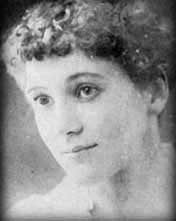
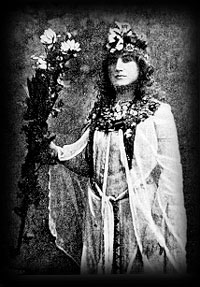
THE PRODUCER-DIRECTOR – Subject ran the room. Where MacGregor Mathers built the Golden Dawn’s system and then ruled it by decree from Paris, and W.B. Yeats wrote the poems and theorized the symbolism, Farr did the unglamorous load-bearing work: she actually administered the London temple at its peak, taught the practical curriculum, and kept the lights on. She is the order’s stage manager – the figure who makes the production happen while the credited names take the bow. The archetype is not the founder or the visionary. It is the competent operator who holds two incompatible worlds together – West End theater and ceremonial magic – by treating the boundary between them as if it were not there.
Essence Indicators
- Florence Beatrice Farr (born 7 July 1860, Bromley, Kent); West End actress, director, composer, journalist, novelist, and women’s-rights campaigner – the “New Woman” of the 1890s in a single biography
- Originated roles for the era’s leading playwrights: created Louka in George Bernard Shaw’s Arms and the Man (1894) and led in Yeats’s The Land of Heart’s Desire the same season; Shaw, who was in love with her, wrote parts with her in mind
- Initiated into the Isis-Urania Temple of the Golden Dawn in 1890 (sponsored by Yeats), motto Sapientia Sapienti Dona Data – “wisdom is a gift given to the wise”
- Rose to Praemonstratrix (chief instructor) of Isis-Urania, then to Chief Adept in Anglia when Westcott resigned his public role in 1897 – effectively the working head of the order’s most important lodge
- Founded the Sphere Group (1896), a secret skrying cabal inside the temple that ran the order’s most ambitious workings, including the evocation of the Mercurial spirit Taphthartharath “to visible appearance”
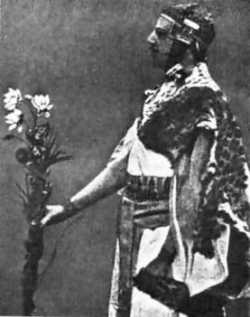
- Wrote Egyptian Magic (1896) and other ceremonial texts; studied Egyptology and Mesopotamian material at the British Museum; with Yeats developed “speaking to the psaltery,” chanting verse on a sustained note derived from the order’s practice of vibrating divine names
- Led the 1900 London revolt against Mathers: offered her resignation in January, was dismissed by his “belligerent reply” on 23 March, and with Yeats and Annie Horniman moved to expel the founder and reorganize the order he built
- Left England in 1912 at fifty-two to become Lady Principal of Ramanathan College, a Tamil girls’ school in Ceylon; diagnosed with breast cancer in 1916, underwent a mastectomy, and died in Colombo on 29 April 1917 (Muriel Pécastaing-Boissière, “‘Wisdom is a gift given to the Wise’: Florence Farr (1860-1917): New Woman, Actress and Pagan Priestess”, Cahiers victoriens et édouardiens 80 (2014), open access on OpenEdition)
Social Persona / Impression Management
Immediate impression: A celebrated stage actress who also happened to run a magical order – and saw no contradiction in it. Where Mathers performed Highland nobility and the next generation’s Crowley advertised depravity, Farr presented as exactly what the avant-garde already knew her to be: a professional of the theater who carried the same instincts backstage at Isis-Urania.
Energy: Capable, unsentimental, faintly amused. Contemporaries describe a striking, independent woman who took lovers, took positions, and took charge without asking permission for any of it. Yeats called her one of the few genuinely beautiful people he had known; the recorded manner is brisk rather than charismatic-in-the-pulpit.
Impression management strategy: COMPETENCE AS CREDENTIAL. Farr did not run the order on borrowed cosmic authority the way Mathers ran it on the Secret Chiefs. She ran it on the fact that she could do the work and the others increasingly could not – she taught the curriculum, led the skryers, and administered the temple. The theatrical career did double duty as persona: an actress who staged illusion for a living was the last person who needed to mystify herself to command a room. When the revolt came, her authority did not collapse with a doctrine, because it had never rested on one.
Forensic Archetype Comparison
| Pattern | Match Level | Evidence |
|---|---|---|
| The Operator | HIGH | Held the working leadership of Isis-Urania – Praemonstratrix, then Chief Adept in Anglia – and ran the temple’s practical life while the credited names performed or theorized. The defining pattern: she is the person who actually administered the thing. |
| The Bridge-Builder | HIGH | Moved between London theater and ceremonial magic with no apparent seam, and pulled the two together (the psaltery experiments, the Egyptian plays). The avant-garde and the occult underground met in her career and treated it as one room. |
| The Faction Leader | MODERATE | Led the 1900 London revolt against Mathers and helped expel the founder, but the goal was to save or reform the order, not to seize a throne – she had already offered to resign. Institutional self-defense, not a power grab. |
| The Authority Seeker | LOW | Claimed real teaching and administrative rank, but invented no nobility, channeled no unaccountable Chiefs through herself, and treated the top job as a duty she was prepared to hand off rather than a position she had to own. |
Psychometric Assessment
Big Five (OCEAN):
| Trait | Score | Evidence |
|---|---|---|
| Openness | 88/100 | Theater, composition, the psaltery, Egyptology, Qabalah, ceremonial magic, journalism, and feminist polemic – a genuinely wide range, with the nerve to fuse the stage and the temple into one practice. |
| Conscientiousness | 78/100 | Administered the order’s central lodge, taught a structured curriculum, ran a girls’ college in a new country in her fifties. A working manager who finished what she started. |
| Extraversion | 64/100 | A leading West End actress and the head of a magical lodge – comfortable at the front of a room – but the energy reads as a director’s command of a production rather than a performer’s need for the spotlight. |
| Agreeableness | 46/100 | Independent and cooperative within her circle, but capable of leading a revolt against her own order’s founder and of living entirely on her own terms in an era that punished women for it. Not built to defer. |
| Neuroticism | 38/100 | Low. The recorded life is one of steady reinvention – theater to order to Ceylon – met with composure, including a diagnosis she faced abroad and alone. |
Dark Triad:
| Trait | Score | Notes |
|---|---|---|
| Narcissism | 30/100 | Low-moderate. Sought and held genuine rank, but the self-presentation is that of a professional, not a self-deifier; she offered to vacate the top job rather than cling to it. |
| Machiavellianism | 34/100 | Low-moderate. Founded a secret group inside the order and helped engineer the founder’s expulsion – real political maneuvering – but in service of keeping the institution working, not of personal dominion. |
| Psychopathy | 12/100 | Low. No pattern of callous exploitation. The Sphere Group was a working cabal of equals; the conduct toward students and colleagues was that of a teacher, not a predator. |
MBTI: ENTJ (“The Commander”) – but a builder’s ENTJ rather than a tyrant’s. Dominant extraverted thinking organizes the temple, the curriculum, and later a college; auxiliary introverted intuition supplies the synthesis that lets the stage and the ritual chamber be the same place. Where Mathers’s ENTJ commanded by decree and detonated what it could not own, Farr’s commanded by running the work and was willing to let go of it.
Why This Profile Matters
The popular history of the Golden Dawn is a history of men: Mathers built it, Yeats lent it his name, Crowley blew it up. Farr is the correction. For most of the order’s peak years it was Farr who actually ran the London temple – taught the techniques, led the workings, administered the lodge – while Mathers raged from Paris and the poets theorized. The Hidden Fire’s argument that the esoteric tradition was, at its best, trolling the gender norms of its own century runs straight through her: in 1890 a woman could not vote and was a legal subordinate to her husband, but she could be initiated into the inner mysteries of Hermetic magic and rise to lead the order. The occult was more feminist than the state, and Farr is the proof.
She also marks the difference between an order built to be owned and one run to be worked. Mathers could not let the Golden Dawn outgrow him and chose to burn it down rather than share it. Farr, holding the same office he had fled to Paris to keep, offered to resign it the moment the system stopped functioning – and when he refused to listen, led the faction that removed him. The founder who hoarded the work lost it; the producer who held the production together walked away from it on her own terms and went to teach schoolchildren on the other side of the world.
Threat Assessment
| Category | Level | Notes |
|---|---|---|
| Physical threat | NONE | An actress and instructor. The “workings” were skrying and ceremony; the only thing the Sphere Group evoked to visible appearance was a Mercurial spirit, and only to its own members. |
| Institutional threat | MODERATE | Helped lead the revolt that expelled the order’s founder and fractured its original form – a real institutional act, but a reformer’s, aimed at saving the working order rather than razing it. |
| Memetic threat | MODERATE | Her ceremonial writing, the psaltery method, and the Sphere Group workings fed the order’s practical tradition; her larger legacy is as the documented case for women’s equal standing in the Western esoteric revival, recovered by later scholarship. |
| Posthumous threat | ONGOING | Long filed under “Yeats’s collaborator” and “Shaw’s New Woman,” Farr has been steadily restored by historians of occultism and feminism as the operator who actually ran the order. The reputation rises as the men’s recede. |
Flame Warrior Classification
Primary: Big Cat (genuine organizational reach – she ran the order’s central lodge) Secondary: Philosopher (the ceremonial writing, the psaltery, the synthesis of stage and ritual) Notes: ATK 6 – her impact is real but quieter than the founders’: she shaped how the order actually worked and stands as the load-bearing case for women’s parity in the tradition, rather than authoring the system or detonating it. DEF 7 – the strongest armor in this cohort: her authority rested on demonstrable competence and a celebrated parallel career, not on a fabricated doctrine that could be exposed, so when the order fractured she did not fracture with it – she simply moved on. HP 6 – a full, self-directed life across three reinventions (theater, order, Ceylon college); the cancer cut it short at 56, but she met it on her own terms abroad, and the work and the reputation both outlasted her. She is the cohort’s rare subject whose power and survival point the same way: neither the maximum-legacy-minimum-survival of Mathers nor the scandal of the Beast, but a competent operator who held the production together and left the stage standing.
Cross-References
Farr is the working counterweight to MacGregor Mathers: she held the London leadership he had abandoned for Paris, and when his rule by decree and his Secret-Chiefs authority finally broke the order in 1900, she led the faction that dismissed and expelled him – the same authoritarian failure mode that fractured the Golden Dawn, met head-on from the operating side. She entered the tradition through W.B. Yeats, who sponsored her initiation in 1890 and collaborated with her for two decades on the psaltery experiments and the Egyptian plays; the two were also allies in the revolt against Mathers. She belongs to the same recovery as Dion Fortune – the later popularizer who, like Farr, demonstrates that the women of the Golden Dawn lineage were practitioners and leaders, not ornaments, however the popular histories filed them.
Sources: Florence Farr — Wikipedia; Farr, Florence (1860–1917) — Encyclopedia.com; Who was Golden Dawn’s Florence Farr? — The College of Psychic Studies; Florence Farr – The Evocation of Taphthartharath, and the New Woman of the Golden Dawn — The Old Craft
Cross-Referenced Dossiers
Prefer RSS? Subscribe here.