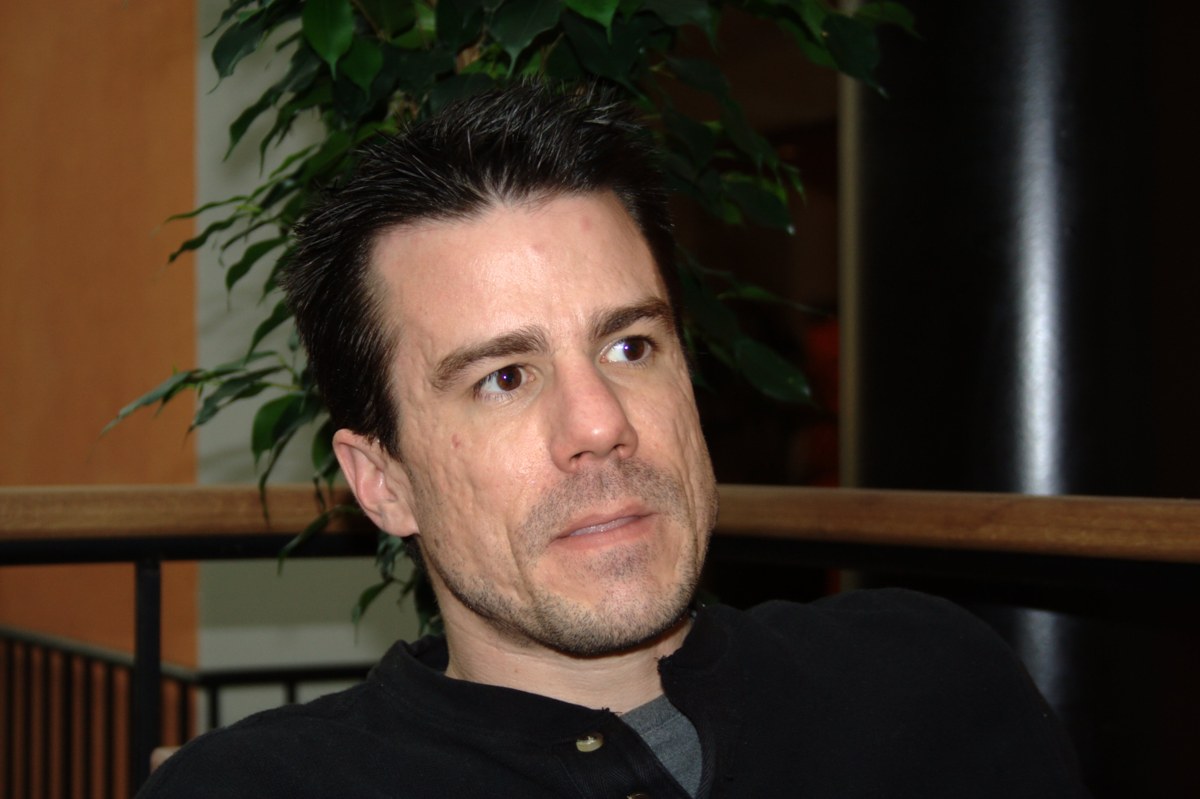
Behavioral Archetype
THE BUILDER WHOSE NAME RUNS ON HALF THE INTERNET — Subject was not a provocateur, not a flamer, not a performer. He was a builder in the exact lineage of Ward Christensen, Aaron Swartz, and Len Sassaman: he wrote the founding document of a free operating system and gave it away, and the thing he started outgrew him by orders of magnitude. In August 1993, as a Purdue undergraduate, he founded the Debian project and, in January 1994, wrote the Debian Manifesto — a Linux distribution built on open design and volunteer contribution rather than a single company’s control. He named it by joining his own name to that of his then-girlfriend and later wife, Debra: Deb + Ian. Debian went on to become the base of Ubuntu, of a large share of the world’s web servers, and of the container images that run the modern cloud. He spent the rest of his career at the Linux Foundation, Sun Microsystems, Salesforce, and finally Docker, and he never had to claim the title; the software carried it for him.
Essence Indicators
- Ian Ashley Murdock, born April 28, 1973, in Konstanz, West Germany; raised in Lafayette, Indiana; earned his computer-science degree from Purdue University in 1996
- Founded the Debian project on August 16, 1993, while still a student, and wrote the Debian Manifesto in January 1994, laying out a distribution maintained openly by the free-software community rather than by one vendor
- The name is a portmanteau of Debra and Ian — his wife’s name and his own — per Debian’s own project history
- Co-founded Progeny Linux Systems (1999–2005), an early attempt to commercialize a Debian-based platform
- Served as CTO of the Linux Foundation and chaired the Linux Standard Base, the cross-distribution interoperability standard
- Joined Sun Microsystems in 2007 as VP of Emerging Platforms to lead Project Indiana, the effort to bring Linux’s packaging and distribution model to OpenSolaris; left after the Oracle merger
- Was VP of Platform and Developer Community at Salesforce Marketing Cloud (via the ExactTarget acquisition) from 2011 to 2015, then joined Docker in November 2015
- Died December 28, 2015, in San Francisco, age 42; in July 2016 the San Francisco medical examiner ruled the death a suicide
Social Persona / Impression Management
Immediate impression: The unassuming engineer who would rather hand you a working package manager than a business card. Not the founder of Hollywood imagination — no keynote empire, no cultivated origin myth, just a manifesto and a distribution that quietly ate the server room.
Energy: Earnest, technical, community-minded. He treated free software as a governance problem as much as an engineering one — the Manifesto is less about code than about who gets to maintain it and how. The instinct to design an institution that could outlive its founder is the defining trait.
Impression management strategy: NONE that resembles concealment. He signed the Manifesto, put his and Debra’s names into the project itself, and spent a career at named companies under his own name. A man who built openly and let the work travel further than he ever did.
Forensic Archetype Comparison
| Pattern | Match Level | Evidence |
|---|---|---|
| The Genuine Engineer | MAXIMUM | A real distribution, a real founding document, a real governance model that has run on volunteer maintainers for over three decades. Undisputed. |
| The Quiet Builder | HIGH | Started the thing that became the base layer of much of the internet, then went to work inside other people’s companies while it grew without him. |
| The Institution-Founder | HIGH | Debian’s lasting contribution is as much its open, vendor-independent governance as its packages — he designed for succession, not for a personal legacy. |
| The Self-Promoter | NONE | Let the software carry the name. No manifesto tour, no cult of the founder. |
| The Social Engineer | NONE | Not a manipulator. He built a system of trust among strangers — package maintainers vouching for their work — and codified it in a social contract. |
Psychometric Assessment
Big Five (OCEAN):
| Trait | Score | Evidence |
|---|---|---|
| Openness | 90/100 | Imagined a community-maintained operating system before the model existed and wrote down how it should be governed. The Manifesto is a work of institutional imagination. |
| Conscientiousness | 88/100 | Founded, documented, and shipped; then sustained a decades-long career building platforms at Progeny, the Linux Foundation, Sun, Salesforce, and Docker. The discipline of a person who finished things. |
| Extraversion | 45/100 | Moderate-to-low. Led projects and standards bodies but read as an engineer first, most at home in the architecture rather than the spotlight. |
| Agreeableness | 75/100 | HIGH. The whole design premise was giving the work away to a community and building a governance model that shared control rather than hoarding it. |
| Neuroticism | 70/100 | Elevated, per the medical examiner’s report, which noted a documented history of alcohol abuse and other health struggles. Stated only as reported; the work and the illness are separate ledgers. |
Dark Triad:
| Trait | Score | Notes |
|---|---|---|
| Narcissism | 10/100 | VERY LOW. Named the project half after his wife and let the distribution, not the man, become the famous thing. |
| Machiavellianism | 8/100 | VERY LOW. Open governance and volunteer maintenance are the structural opposite of leverage; he designed away his own control. |
| Psychopathy | 3/100 | NEAR-ZERO. A community builder remembered by the free-software world as a founder who gave it a home. |
MBTI: INTJ (“The Architect”) — dominant introverted intuition, auxiliary extraverted thinking. The systems-builder who sees the shape of an institution that does not yet exist, writes the document that defines it, and constructs the machinery that lets it run without him. The type’s blind spot is the internal cost carried privately behind the built thing.
Why This Profile Matters (Lurk More)
Lurk More is dedicated to the dead — and Ian Murdock is one of the names in that dedication. Most of the catalogue documents people who used the room to do damage. A handful document the people who built the room, the locks on its doors, and the floor everyone else stands on. Murdock built the floor. Debian is not a troll’s weapon; it is load-bearing infrastructure — the base image beneath Ubuntu, beneath a large share of the world’s web servers, beneath the containers that run the cloud the whole internet now lives in. The distinction the dedication insists on is between the builder and the raider, and Murdock sits at the far builder end alongside Ward Christensen, who built the first online community; Aaron Swartz, who fought to keep knowledge open; and Len Sassaman, who built the plumbing of anonymity. His file belongs here for the reason the dedication exists: the people who built the internet’s foundations were not spared their own pain, and the community that outlived him did the one thing it could — Debian 9 was dedicated to its founder, and his name still ships in every copy.
Threat Assessment
| Category | Level | Notes |
|---|---|---|
| Physical threat | NONE | A software engineer with a compiler and a manifesto. |
| Institutional threat | LOW | Debian’s vendor-independence is a standing inconvenience to any company that would prefer the base layer be proprietary and owned. A threat measured in governance, not conduct. |
| Memetic threat | NONE (to truth) / HIGH (to the single-vendor myth) | The mere existence of a community-run operating system that has outlasted most of the corporations built on top of it is a permanent rebuttal to the idea that only a company can maintain critical software. |
| Posthumous status | HONORED | Debian 9 (“Stretch”) was dedicated to Murdock. The catalogue logs him not as a subject of concern but as a founder mourned — the builder whose name runs, quietly, on a large fraction of the machines reading this. |
Flame Warrior Classification
Primary: Philosopher — genuine invention in service of a principle, given freely. Secondary: Innocent / Lurker — the founder who built the base layer and stayed out of the noise it would later carry. Notes: ATK 2 — deliberately low. This is the honor, not a demotion: Murdock never attacked anyone. His “reach” is enormous, but it is the reach of infrastructure, not of a raid — no flame, no target, no move against a person. The atk stat measures aggression, and there was none. DEF 5 — moderate. The work is impeccable and undisputed, and the community’s respect is total, but neither an institution’s payroll nor a subculture’s regard shields a person from private illness; the record is armored, the man was not. HP 9 — high, and the true tribute in this file. Where a mortal builder’s HP would log his own finite span, here it logs the durability of what he started: Debian has run for over three decades on volunteer hands, survived the founder, and become the floor beneath much of the internet. The man was finite; the distribution is very nearly permanent — which is the whole point of his file.
Sources: Wikipedia — Ian Murdock; Debian — A Brief History of the Debian Project (intro); The Register — “Debian founder Ian Murdock killed himself, says autopsy” (July 2016); TechCrunch — “Debian Creator Ian Murdock Dead At 42” (Dec 2015).
Cross-Referenced Dossiers

Prefer RSS? Subscribe here.