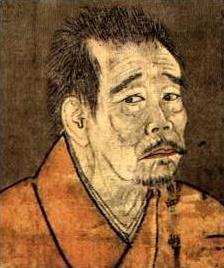
Behavioral Archetype
THE HOLY SCANDAL — Subject attacks an institution from inside it, using the institution’s own highest authority as the weapon. Ikkyu was a credentialed Zen master — formal dharma transmission, recognized lineage, eventually abbot of the single most important Rinzai temple in Japan — who spent his life demonstrating that the credential was worthless. He drank in taverns, frequented brothels, wrote frankly erotic poetry, gave dharma talks in bars, and held the corruption of the Zen establishment up to public ridicule. The provocation was not a lapse from his practice or a contradiction of it. It was the practice. Where Diogenes embodied his philosophy by abandoning every social signal, Ikkyu embodied his by violating every religious one — and, unlike Diogenes, did it while holding the office. He is the rare case of a man who tore up his own certificate of enlightenment and was later handed the keys to the temple anyway.
Essence Indicators
- Trolls the religious establishment from inside its own hierarchy. Wore the lineage, held the credential, then used both to prove that lineage and credential are spiritually empty. The institution could not disown him because he was its certified product.
- Received inka — formal recognition of enlightenment — from his teacher Kaso and reportedly destroyed it on the spot (variously: threw it in the fire, hurled it down and walked away), calling the paper meaningless. Repudiated the one document the whole system runs on. John Stevens’s account: “When Kaso presented Ikkyu with an inka, a seal of enlightenment, Ikkyu hurled it to the ground in protest and stomped away. Despite this … Kaso said, ‘Ikkyu is my true heir, but his ways are wild’” (Terebess Asia Online, Ikkyu Sojun, versions by John Stevens)
- Lived the scandal openly: sake, taverns, brothels, a long-term relationship late in life with the blind singer Mori, and erotic verse he never disowned. The point was not appetite for its own sake but the gap between what the monasteries preached about desire and how they actually behaved. His own verse: “Ten days in this temple and my mind is reeling! / Between my legs the red thread stretches and stretches. / If you come some other day and ask for me, / Better look in a fish stall, a sake shop, or a brothel.” And on the rule itself: “Follow the rule of celibacy blindly and you are no more than an ass; / Break it and you are only human” (Crazy Cloud Anthology, tr. John Stevens, Terebess)
- Wrote more than a thousand poems collected as the Kyounshu — the “Crazy Cloud Anthology,” after his own chosen name Kyoun, “Crazy Cloud.” The art was the argument, and it outlived every monk who was scandalized by it.
- Took on the rebuild, not just the wreck. Appointed abbot of Daitoku-ji in old age after the Onin War burned it down, he used his connections and fame to raise the funds and restore it — the provocateur turning, at the end, into the institution’s restorer without ever once conforming to it. Stevens dates it: “in 1474 Ikkyu was asked to become head abbot of Daitoku-ji … Daitoku-ji had been destroyed in the senseless Onin War, and in seven years Ikkyu succeeded in having it completely rebuilt” (Terebess)
Social Persona / Impression Management
Immediate impression: A disreputable old monk where a saint is expected — red-faced from sake, trailing scandal, carrying a wooden sword. The sword was the whole persona in miniature: a parody of the samurai’s blade, useless for combat, useful only to say that a lacquered scabbard tells you nothing about what is inside. Most Zen masters cultivated serene authority. Ikkyu cultivated the appearance of a holy embarrassment, because the embarrassment was the teaching.
Energy: Earthy, blasphemous, and tender by turns, with no transition between them. The same man wrote devotional Zen verse and graphic love poems and saw no contradiction, because the contradiction was the target. He attacked piety with sincerity rather than cynicism — he was not mocking enlightenment, he was mocking the people who had turned it into a robe and a rank.
Impression management strategy: Deliberate desecration as authentication. In a culture that read the robe, the temple, and the certificate as proof of attainment, Ikkyu trashed all three and dared the observer to find the attainment anyway. The strategy screens exactly as Diogenes’ filth did: the people scandalized into dismissing him were the people running on appearances; the ones who looked past the sake and the brothels were the only ones worth teaching. The disgrace is the doorway.
Forensic Archetype Comparison
| Pattern | Match Level | Evidence |
|---|---|---|
| The Radical Embodier | HIGH | Like Diogenes, Ikkyu is the argument — he does not lecture about institutional hypocrisy, he lives a scandal that makes the institution’s pretensions visible. Differs in that he kept the credential and the office instead of renouncing everything. |
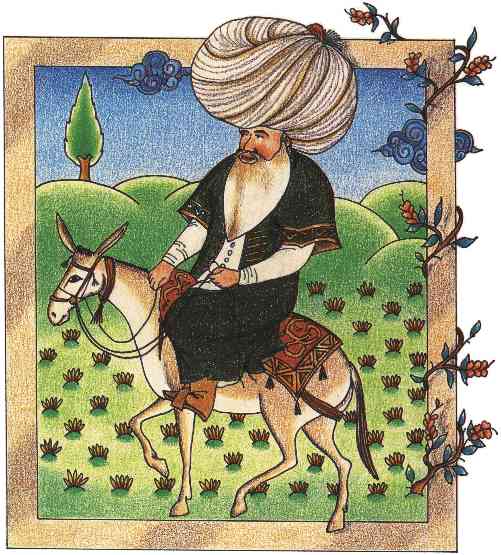
| The Wise-Fool Provocateur | HIGH | Shares Nasreddin Hodja’s core move — troll the religious hierarchy from a seat within it, protected because the institution cannot expel its own. Differs in register: Nasreddin disarms with warmth and laughter; Ikkyu confronts with scandal and erotic frankness. |
| The Court Jester | MODERATE | Licensed by his lineage and imperial parentage to mock from inside, but answered to no patron and accepted the abbacy only on his own terms, for the rebuild. |
| The Grievance Collector | LOW | The contempt was for hypocrisy as such, not for named enemies or personal slights. The barbs were aimed at “fame-and-fortune Zen,” not at men who had wronged him. |
| The Chameleon | LOW | One persona — the holy scandal — held with total consistency from the burned certificate to the abbot’s chair. The only thing that changed was the size of the platform. |
Psychometric Assessment
Assessment of a documented historical figure overlaid with several centuries of hagiography and folk legend; the legend is attributed as legend.
Big Five (OCEAN):
| Trait | Score | Evidence |
|---|---|---|
| Openness | 95/100 | Treated every boundary the tradition drew — celibacy, sobriety, decorum, the sacred/profane line itself — as a question rather than a wall. Fused erotic verse and Zen practice into a single discipline. |
| Conscientiousness | 60/100 | Repudiated rules and rank for a lifetime, yet shouldered the Daitoku-ji rebuild and saw it through. Disciplined toward the work, contemptuous of the forms. |
| Extraversion | 75/100 | Lived and taught in public — taverns, brothels, the marketplace, finally the temple. The provocation requires an audience and he never lacked one. |
| Agreeableness | 40/100 | Genuine tenderness in the love poetry sits next to open contempt for hypocritical monks (“they are my enemies”). Warm to people, merciless to pretension. |
| Neuroticism | 25/100 | Composed enough to destroy his own certification and walk away, and to take on a ruined temple at eighty without apparent fear of failing. Some genuine grief in the late poetry keeps this off the floor. |
Dark Triad:
| Trait | Score | Notes |
|---|---|---|
| Narcissism | 35/100 | Moderate. Chose the grand self-title “Crazy Cloud” and built a persona around scandal, but the persona consistently points away from himself toward the institution’s failings. |
| Machiavellianism | 35/100 | Low-moderate. Largely confrontational and transparent rather than scheming — but the wooden sword, the public spectacle, and the timing of the abbacy show a man who understood symbols and used them deliberately. |
| Psychopathy | 12/100 | Very low. No cruelty, no callousness; the defining note of the late work is tenderness toward a lover and grief at her loss. The provocation never curdled into contempt for persons. |
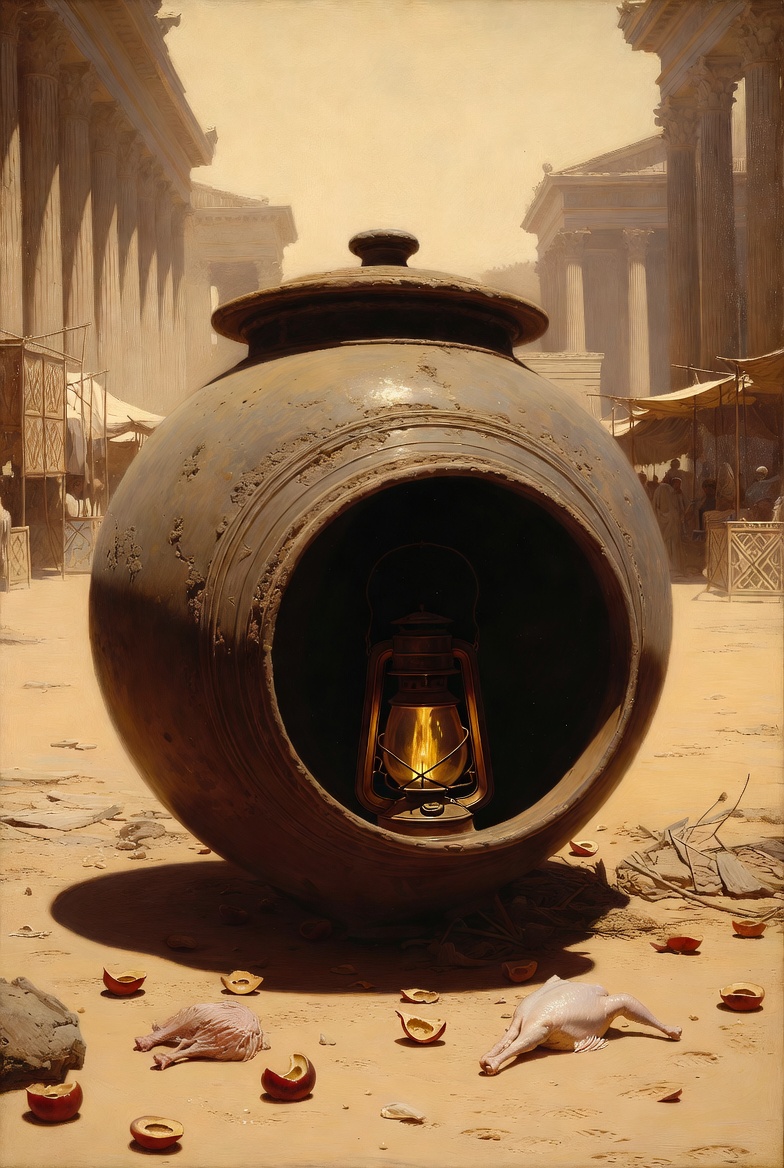
MBTI: ENFP (“The Campaigner”) — Dominant extraverted intuition, auxiliary introverted feeling. Improvisational, value-driven, allergic to rigid hierarchy, forever reframing the sacred in profane terms and the profane in sacred ones. Where Diogenes (ESTP) plucks the chicken, Ikkyu writes the poem — same demolition of false categories, delivered through feeling rather than the immediate physical gag.
Why This Profile Matters
The Fires of History argues that high-effort trolling is not a Western invention but a human universal — the immune response by which a culture tests its own certainties. Chapter 18, “The Koan and the Shitpost,” makes the case that the Zen master is structurally a troll: a person granted institutional authority to detonate other people’s false certainty for the purpose of liberation. If Linji (“if you meet the Buddha on the road, kill him”) is Zen’s Socrates, Ikkyu is its Diogenes — the wild man who makes the same point with his whole life instead of an aphorism.
His deeper function in the argument is as the proof that the provocateur and the sage are the same person, not opposed ones. Ikkyu did not troll despite being enlightened or troll his way to enlightenment as two separate acts. The provocation was the path. Burning the certificate was not anti-Zen; it was the most Zen thing in the building, because the certificate was exactly the kind of external idol Linji told you to kill. And the resolution is the tell: the institution he spent fifty years embarrassing did not destroy him. It made him abbot. A healthy tradition, like a healthy immune system, does not kill the irritant that keeps it honest — it absorbs the criticism, hands the critic the keys, and stays flexible enough not to calcify into the very hypocrisy he was pointing at. The culture that metabolizes its sacred fool, the way Daitoku-ji metabolized Ikkyu and the Islamic world metabolized Nasreddin, is the one that survives its own orthodoxy.
Threat Assessment
| Category | Level | Notes |
|---|---|---|
| Physical threat | NONE | A poet with a wooden sword. The only thing he ever cut down was an institution’s opinion of itself. |
| Institutional threat | NEUTRALIZED-BY-ABSORPTION | Demonstrated from inside the temple that robe, rank, and certificate certify nothing — the one thing a credentialing hierarchy needs unexamined. The establishment’s defense was not to expel him but to enthrone him. |
| Memetic threat | HIGH | The Kyounshu — over a thousand poems — has propagated for five centuries; Ikkyu became a folk hero of Japanese tale and later a children’s cartoon trickster, the iconoclast remembered as a saint. His art shaped the tea ceremony, ink painting, and Noh. |
| Civilizational threat | INVERTED | Not a threat to the tradition but a load-bearing part of it — the trickster Zen cannot remove without becoming the empty formalism he mocked. The proof is that the tradition kept him and venerates him still. |
Flame Warrior Classification
Primary: Enfant Provocateur (the deliberate scandal who attacks propriety by embodying its opposite) Secondary: Philosopher / Jester (every desecration resolves into a precise point about attachment and authenticity, delivered from a licensed seat inside the institution) Notes: ATK 9 — the move is genuinely Diogenes-grade and aimed at a harder target: not social convention but a sophisticated religious hierarchy’s claim to certify the inner life, attacked with its own credential. DEF 9 and HP 9 are nearly the Nasreddin defensive profile and for the same reason: you cannot destroy a troll the institution has decided to claim. Ikkyu’s armor was his impeccable lineage and imperial blood — the establishment could not credibly cast out its own certified master and the emperor’s son — and it held all the way to the abbot’s chair. HP 9 because he did not merely survive; he rose to lead the temple he had embarrassed for fifty years, rebuilt it, and is venerated five centuries later. He sits one notch below Nasreddin’s perfect 10/10 only because his weapon was scandal rather than affection — Daitoku-ji absorbed him, but it was a harder swallow than a beloved village imam, and the comic register that armored Nasreddin completely was, for Ikkyu, deliberately abrasive.
Sources: Ikkyu (Wikipedia); Lion’s Roar — “Love Letters Sent by the Wind,” John Stevens (Buddhadharma, 2004); Poetry Chaikhana — Ikkyu (Ikkyu Sojun); Terebess — Ikkyu Sojun (1394-1481): versions by John Stevens.
Cross-Referenced Dossiers
Prefer RSS? Subscribe here.