Behavioral Archetype
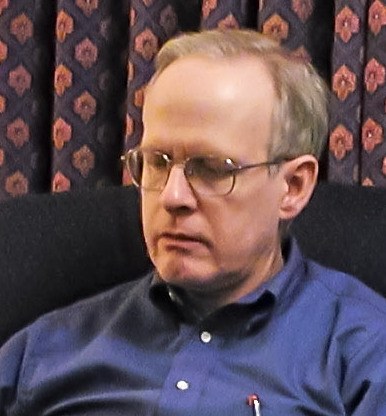
THE MAN WHO REFUSED TO LET THE INTERNET FORGET ITSELF — Subject is not a provocateur, not a flamer, not a brand. He is a salvage operator. In 1998 Jason Scott, a child of the BBS era who had been dialing in since the early 1980s, checked the World Wide Web for traces of the culture that raised him and found almost nothing had survived the jump to the web. So he started copying it down. The result was textfiles.com: thousands of the plain ASCII documents that were the literature of the BBS world, organized by category, rescued from a culture being forgotten in real time. Everything since — the five-and-a-half-hour BBS: The Documentary, the founding of Archive Team, the years at the Internet Archive — is the same act repeated at larger and larger scale. He is the structural opposite of the platform that deletes your account and tells you to download your data first. He is the guy who already downloaded it.
Essence Indicators
- Born September 13, 1970 (Jason Scott Sadofsky); a BBS caller since the early 1980s, which is to say he was inside the culture he would later spend his life preserving
- Put textfiles.com online in 1998; it had collected tens of thousands of files within years and still serves hundreds of thousands of visitors a month — anarchy, phreaking, hacking, art, ezines, the Hacker Manifesto, the whole transgressive literature of the modem era, kept exactly as written
- Spent four years and roughly two hundred interviews making BBS: The Documentary (2005), an eight-episode, ~5.5-hour record distributed on three DVDs — the definitive account of the era, made by someone who lived it because he understood no one else was going to
- Made GET LAMP (2010), a documentary on interactive fiction, applying the same archival impulse to a second dying medium
- Founded Archive Team in January 2009, a loose volunteer corps that races to copy websites before they are switched off. When Yahoo killed GeoCities — third most-visited site on the web at its peak — Archive Team saved hundreds of gigabytes of ordinary people’s pages from deletion
- Works at the Internet Archive as its software curator; in 2019 he put the source code for Infocom’s text adventures, Zork included, onto GitHub, moving software from “running once” to “preserved forever”
- Funded a year of full-time archiving in 2009 by Kickstarter, backed by more than three hundred patrons — the work paid for by the community that wanted the work to exist
- On stage at DEF CON 7 in 1999, already the insider-archivist: he dates his own BBS years to “1986 to 1988, when my dad found the big phone bill,” and describes hand-collecting the modem era’s transgressive text-file literature file by file. The preservation impulse stated from inside the culture, a decade before Archive Team made it a movement (talk below)
On Camera
DEF CON 7 (1999). Scott walks a hacker-con crowd through the text-file culture of the 1980s BBS scene – the ezines, philes, and manifestos that are the written substrate of everything Lurk More traces. Embedded as a primary source: the archivist inside the culture in real time, before textfiles.com had finished loading and long before Archive Team, explaining why the transgressive literature of the modem era was worth keeping exactly as written.
Social Persona / Impression Management
Immediate impression: The loud, funny, profane historian who treats deletion as a personal insult. Not the white-gloved institutional archivist — the one who shows up the night before the servers go dark with a script and a grudge.
Energy: Evangelical urgency. A man permanently aware that the clock is running on everything, and visibly unwilling to wait for permission, a budget, or a committee before saving it. The Library of Congress profiled him under the title “Rogue Archivist,” and the label stuck because it is accurate: he does the institutional job without waiting for the institution.
Impression management strategy: Total openness, played loud. Scott archives in public, argues in public, and tells you exactly what he is copying and why. There is no pose to maintain because the position is simple and stated plainly — the record matters, deletion is the enemy, and somebody has to do this. The performance, such as it is, exists to recruit: the more noise he makes, the more volunteers turn up to help him copy the next dying site.
Forensic Archetype Comparison
| Pattern | Match Level | Evidence |
|---|---|---|
| The Preservationist | MAXIMUM | textfiles.com, BBS: The Documentary, Archive Team, the Internet Archive — a quarter-century of doing one thing: keeping the record from vanishing. |
| The Anti-Troll | HIGH | The medium’s memory rather than its noise. He builds the archive every flame war is eventually deleted out of, and rescues it anyway. |
| The Genuine Builder | MAXIMUM | Real archive, real documentaries, real rescued data measured in terabytes. The work exists and is in daily use. |
| The Provocateur | LOW | Loud and combative in argument, but the fight is always over preservation, never picked for its own sake. |
| The Self-Promoter | LOW | High visibility, but it serves recruitment — the louder he is, the more hands turn up to copy the next dying site. The publicity is a means; the archive is the end. |
Psychometric Assessment
Big Five (OCEAN):
| Trait | Score | Evidence |
|---|---|---|
| Openness | 90/100 | Saw archival value in a culture everyone else treated as ephemeral junk — textfiles, BBS doors, GeoCities pages, interactive fiction — and built the institutions to keep it. |
| Conscientiousness | 85/100 | Two hundred interviews over four years for one documentary; decades of uninterrupted collection. The discipline of a man who finishes the boring, enormous part of the job. |
| Extraversion | 70/100 | HIGH for this catalogue. A public speaker and organizer who recruits volunteers by being loud, present, and impossible to ignore. |
| Agreeableness | 62/100 | Genuinely cooperative toward the mission and the community — but adversarial toward the platforms doing the deleting. The care is real; the patience for institutions that destroy data is not. |
| Neuroticism | 45/100 | Moderate. The urgency reads as anxiety with a productive outlet — the perpetual awareness that the data is disappearing faster than anyone is saving it. |
Dark Triad:
| Trait | Score | Notes |
|---|---|---|
| Narcissism | 18/100 | LOW. Visible, but the visibility is in service of the archive, not the man. The collection is the monument; he is its custodian. |
| Machiavellianism | 12/100 | LOW. No manipulation — he tells you precisely what he is copying and why. Strategy, yes; deception, no. |
| Psychopathy | 4/100 | VERY LOW. Earnest, generous, and fighting on behalf of other people’s deleted work. The far end of this catalogue from the predators. |
MBTI: ENTP (“The Debater”) — extraverted intuition spotting the value in what everyone else discards, paired with the argumentative energy to fight institutions, recruit volunteers, and make the case in public. The rare ENTP who turned the contrarian streak toward conservation instead of demolition.
Why This Profile Matters (Lurk More)
Lurk More is a book about what online community was before it was a product — and most of that history only still exists because Jason Scott copied it down. Chapter 3, “Before the Internet,” leans directly on his work: textfiles.com is where the BBS era’s literature survives, and BBS: The Documentary is the record the chapter draws from. He is the reason the book can describe a culture that the platforms it became would otherwise have erased without a trace. If Ward Christensen built the room — the first dial-up BBS, in a Chicago snowstorm in 1978 — Jason Scott is the man who, decades later, walked through every room like it before the lights went out and saved what was written on the walls. The two files are bookends of the same lineage: one invented online community, the other made sure it would be remembered. And Scott shares an ethic with Aaron Swartz — knowledge belongs in public, and the people deleting or locking it away are the problem to be routed around — but where Swartz was destroyed for acting on that belief, Scott has spent twenty-five years acting on it in the open and is still, daily, saving the record.
Threat Assessment
| Category | Level | Notes |
|---|---|---|
| Physical threat | NONE | An archivist with a backup script and a Kickstarter. |
| Memetic threat | NONE (to truth) / HIGH (to corporate amnesia) | Every site a platform quietly kills, Archive Team has likely already copied. The threat runs entirely against companies that would prefer their dead products forgotten. |
| Institutional threat | LOW (actual) / MODERATE (perceived) | “Rogue archivist” — he does the preservation work without waiting for permission, which unnerves institutions that prefer process to results. The data he saves is data that was being thrown away. |
| Civilizational threat | NONE | The rare file whose hazard score is a public service. The danger is zero; the debt — a generation of internet history that would otherwise be gone — is enormous. |
Flame Warrior Classification
Primary: Philosopher — genuine work, given to the public. Secondary: Archivist / Innocent — the keeper of the record, not a combatant in the fights it contains. Notes: ATK 8, DEF 7, HP 8. ATK 8 is reach: textfiles.com, a definitive documentary, Archive Team, and a curatorial seat at the Internet Archive add up to a man who has materially shaped what survives of internet history — though the work conserves rather than disrupts, which is why it stops short of the founders’ 9. DEF 7 because the record is solid and the mission is unimpeachable; the only exposure is the friction of being a “rogue” who moves faster than the institutions around him. HP 8 because he is alive, active, and — unlike most of this catalogue — running an operation explicitly built to outlast any single server, platform, or person, his own included.
Sources: Wikipedia — Jason Scott; Wikipedia — textfiles.com; textfiles.com (Jason Scott’s BBS-era archive); Library of Congress, The Signal — “Jason Scott, Rogue Archivist”; DEF CON 7 — “TEXTFILES, G-PHILES, AND LOG FILES” (video, 1999).
Cross-Referenced Dossiers

Prefer RSS? Subscribe here.