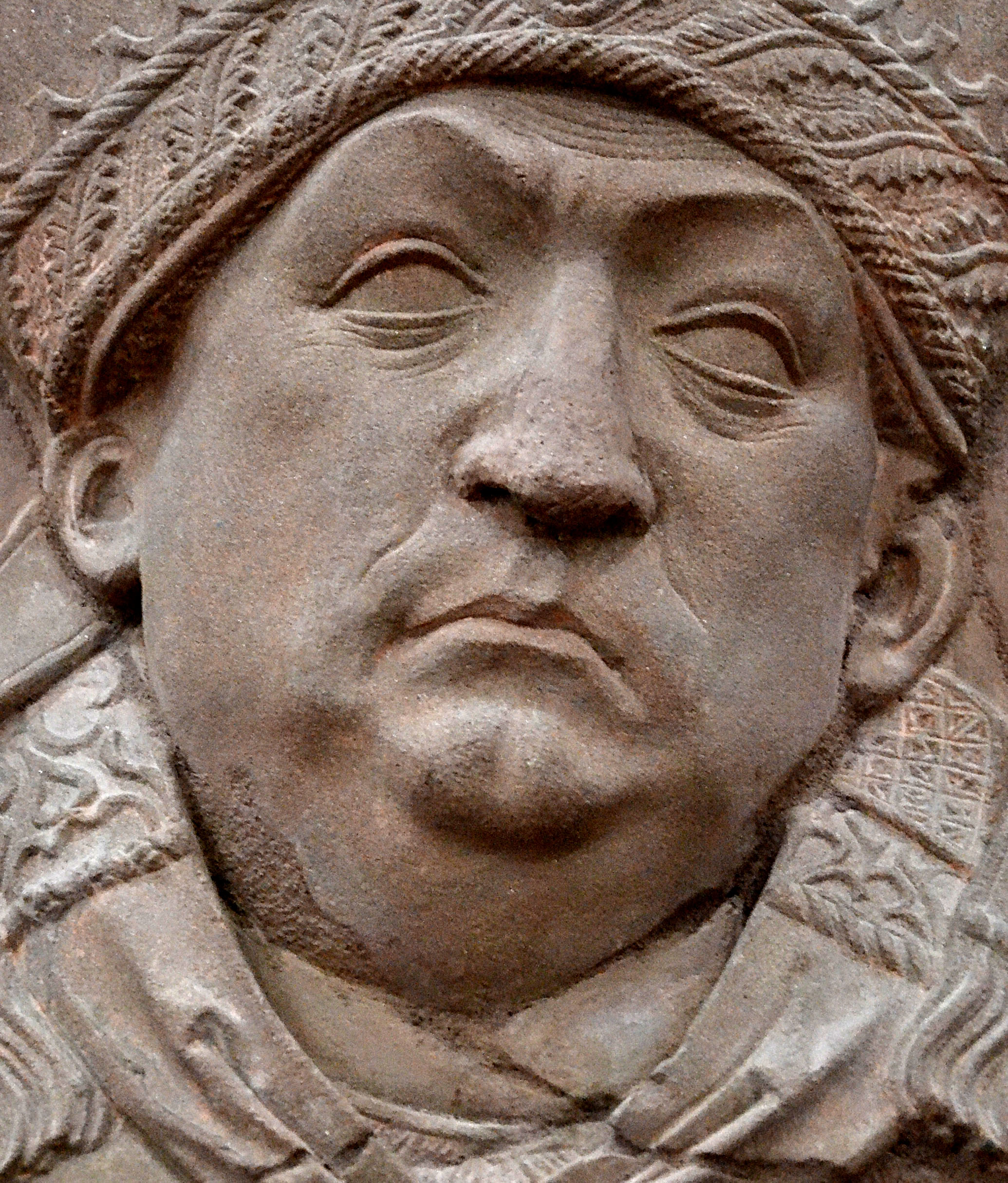
Behavioral Archetype
THE BOOK THAT LIES ABOUT ITSELF – Subject, a Benedictine abbot, wrote a three-volume work that for four centuries was read as a manual for summoning angels to carry messages across distances. The angelic invocations, the planetary hours, the spirit names: all of it was the disguise. The actual content was cryptography. The “spells” decode to ciphers; the astronomical tables in the third book are a key schedule; the “messages to spirits” are ciphertext. Trithemius did not hide a forbidden book inside an acceptable one. He hid the subject matter itself – secret writing – inside a book that was, in its entirety, an act of secret writing. The form was the content. The cover story was the demonstration.
Essence Indicators
- Born Johann Heidenberg in Trittenheim on the Moselle (1462); took the toponymic byname Trithemius
- Elected abbot of Sponheim in 1483 at age twenty-one; resigned 1506; became abbot of St. Jakob at Wurzburg, where he died
- Authored Steganographia (written c. 1499, circulated only in manuscript, not printed until 1606) – the work that reads as angel conjuration and decodes as cipher
- Authored Polygraphia (composed c. 1500-1510, published posthumously 1518 in Basel) – the first printed book on cryptography in Europe, with the subject stated openly rather than concealed
- Considered a founder of modern cryptography and the originator of steganography (the term derives from his title); also a founder of bibliography as a discipline (De scriptoribus ecclesiasticis)
- His students included Cornelius Agrippa and Paracelsus
- Decoded definitively only in the 1990s: Thomas Ernst solved Book III first (1996, in Daphnis), and Jim Reeds, independently, published the solution in Cryptologia in 1998
Social Persona / Impression Management
Immediate impression: A learned abbot with an alarming hobby. To his contemporaries, Steganographia looked like exactly what its surface claimed – a treatise on commanding spirits – and that reputation got the book placed on the Index Librorum Prohibitorum. The reputation was a side effect of the disguise working too well. The man writing about codes was condemned for the demonology he had invented to hide them.
Energy: Methodical, patient, doubled. Trithemius operated on two layers simultaneously and kept them perfectly aligned for the length of a three-volume work. This is not the energy of the provocateur. It is the energy of the encryptor: the discipline to make a thing mean one thing on the surface and another thing underneath, without the seam ever showing.
Impression management strategy: PLAUSIBLE COVER. The genius of the strategy is that the disguise and the secret are the same skill. A reader who could decrypt Book III had already proven he was the intended audience. A reader who could not saw angels and either recoiled or reported the abbot. The work sorts its own readership. The cover story is not a separate document bolted onto the real one – it is the ciphertext.
Forensic Archetype Comparison
| Pattern | Match Level | Evidence |
|---|---|---|
| The Cipher-Maker | EXTREME | This is the core identity. Polygraphia states the discipline openly; Steganographia performs it covertly. Together they are the founding documents of European cryptography. |
| The Camouflage Artist | HIGH | The angelic framework was not decoration – it was load-bearing concealment. The book’s apparent subject is the encryption layer for the book’s actual subject. |
| The Misunderstood Scholar | MODERATE-HIGH | Condemned and Index-listed for demonology he never practiced. The disguise outlasted the man by centuries and was mistaken for his beliefs. |
| The Narcissistic Operator | LOW-MODERATE | Trithemius inflated his own legend (the spurious chronicle of Hunibald, the padded library catalogue), but the cryptographic work needed no embellishment – it was simply that good. |
Psychometric Assessment
Big Five (OCEAN):
| Trait | Score | Evidence |
|---|---|---|
| Openness | 92/100 | Cryptography, steganography, bibliography, history, theology, and natural magic pursued as one continuous inquiry. Invented an entire field while disguising it as another. |
| Conscientiousness | 90/100 | Sustaining a flawless two-layer encryption across three volumes is conscientiousness as art form. The seam never showed for four hundred years. |
| Extraversion | 45/100 | Cloistered abbot and scholar. Operated through correspondence and manuscript circulation, not public confrontation. |
| Agreeableness | 50/100 | Cultivated patrons and pupils, but produced a body of work designed to admit only those who could break it. Selective by construction. |
| Neuroticism | 45/100 | Weathered condemnation, the loss of his Sponheim library, and accusations of dealing with demons. The composure of a man who knew the accusers had misread the book. |
Dark Triad:
| Trait | Score | Notes |
|---|---|---|
| Narcissism | 50/100 | Moderate. Padded his own bibliographies and forged a deep-history chronicle to flatter a patron. The self-mythology was real; the cryptographic substance did not depend on it. |
| Machiavellianism | 70/100 | High. The defining move – encode the real subject inside a deniable disguise so that detection requires already being the intended reader – is strategic concealment at the highest level. |
| Psychopathy | 8/100 | Minimal. A disciplined scholar and clergyman; the deception was epistemic, not predatory. |
MBTI: INTJ (“The Architect”) – Dominant introverted intuition, auxiliary extraverted thinking. Trithemius sees the hidden structure beneath the surface of things and then builds one: a system in which the meaning a reader extracts is a function of the reader’s own key. The intuition designs the double meaning; the thinking function holds it in perfect alignment for the length of a book.
Why This Profile Matters
Trithemius is the cleanest historical specimen of a recurring move in this archive: hide the dangerous knowledge inside a framework the authorities cannot parse, and let the disguise sort your audience for you. The alchemists did it with coded recipes. The Kabbalists did it with layered commentary. Agrippa, Trithemius’s own pupil, did it by publishing a savage recantation of all learning three years before publishing his magic book, so the denunciation was already on record. John Dee owned and studied Steganographia, and Dee’s angelic Enochian system – whether revealed or constructed – runs on the same fusion of cipher and conjuration. The chain of transmission (Trithemius to Agrippa to Dee) is the underground railroad of Western ceremonial magic, and it begins with an abbot who proved that the best place to hide a book about secret writing is inside a book that is itself secret writing.
Threat Assessment
| Category | Level | Notes |
|---|---|---|
| Physical threat | NONE | Abbot. Scholar. Lexicographer. |
| Institutional threat | MODERATE | Steganographia was placed on the Index Librorum Prohibitorum on the strength of its disguise – the Church condemned the angel-magic it could see and missed the cryptography it could not. |
| Memetic threat | HIGH | Founded cryptography and steganography as European disciplines. The tabula recta and the polyalphabetic methods in his work feed directly into Vigenère and the entire lineage of pre-modern ciphers. The word “steganography” is his. |
| Posthumous threat | ONGOING | The reputation as a conjurer of demons outlived the man by centuries; the truth – that the demons were a cipher – was not fully demonstrated until the 1990s. The book defended its secret for four hundred years after its author was dead. |
Deception Analysis
Primary deception modality: STRUCTURAL CONCEALMENT. Trithemius did not lie in the ordinary sense – he built an object whose surface reading and true reading were both authored, both intentional, and both correct at their own layer. The angel magic is not a false claim; it is a key. The deception is the architecture, not a statement within it.
Authenticity assessment: PARADOXICAL BY DESIGN. The work is at once completely deceptive (it is not about angels) and completely honest (it is exactly what its hidden layer says it is: a treatise on secret writing, secretly written). Whether Steganographia is cryptography disguised as magic or magic disguised as cryptography was, in Reeds’s own framing, the open question – and the fact that the question can be asked at all is the measure of how well the thing was made.
Flame Warrior Classification
Primary: Philosopher / Cloaked Secondary: Tireless (a four-century deception holds without maintenance only if it was built right the first time) Notes: ATK 8 – founding an entire discipline and concealing it inside a counterfeit of another discipline is a maximal intellectual strike. DEF 6 – the disguise was real armor: it absorbed the Inquisition’s attention onto the demonology and kept the cryptography unread for centuries; the cost was an Index listing and a posthumous reputation as a sorcerer. HP 6 – unlike most of this archive, Trithemius died an abbot in good standing, not in poverty or exile; the book took the damage so the man did not.
Sources: Wikipedia – Johannes Trithemius; Wikipedia – Polygraphia (book); Jim Reeds, “Solved: The Ciphers in Book III of Trithemius’s Steganographia,” Cryptologia 22:4 (1998); Reeds 1998 paper (full PDF, gwern.net mirror).
Cross-Referenced Dossiers

Prefer RSS? Subscribe here.