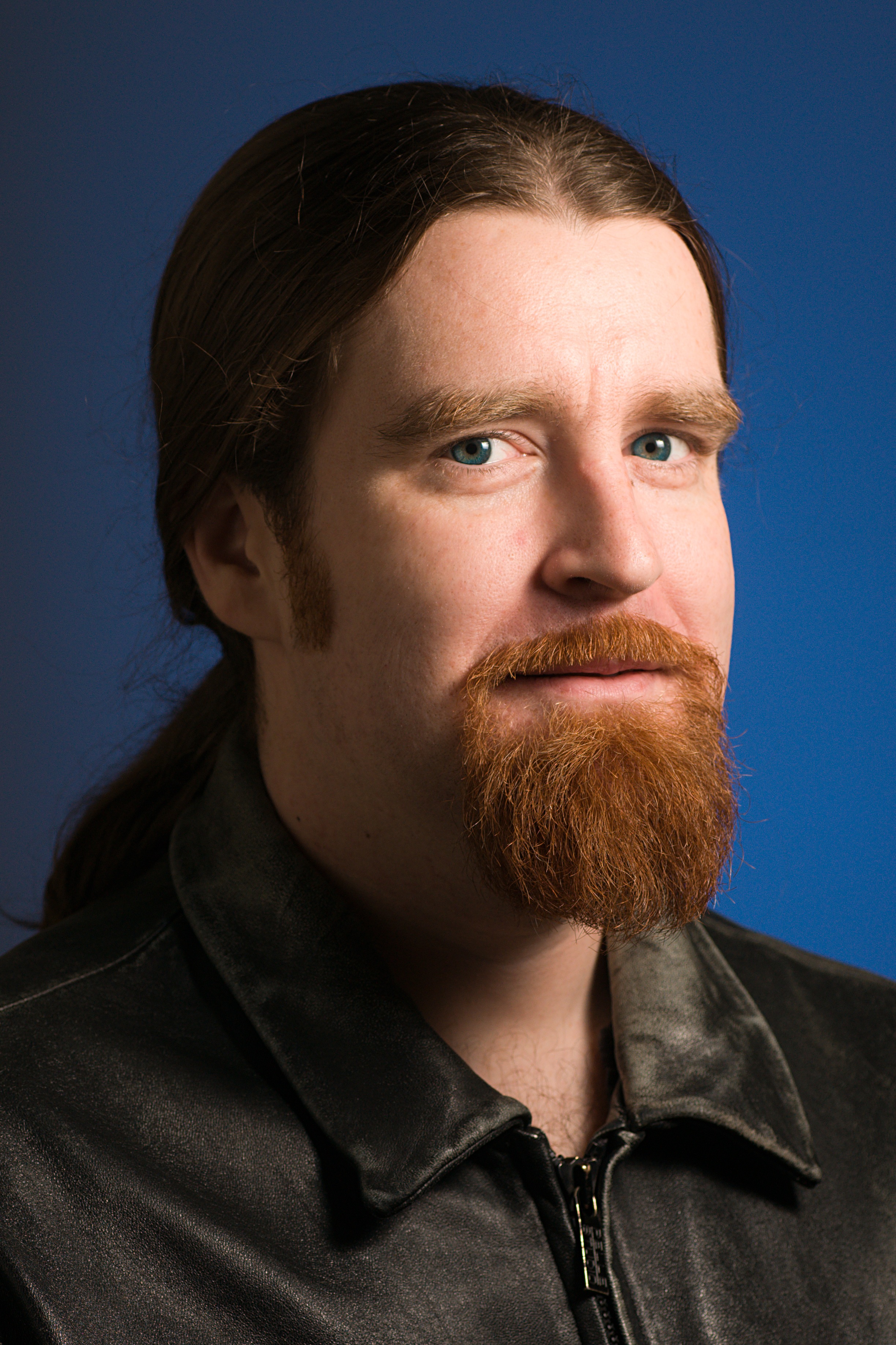
Behavioral Archetype
THE ENGINEER WHO GAVE STRANGERS THE RIGHT TO WHISPER — Subject was not a provocateur, not a flamer, not a performer. He was a builder in the exact lineage of Ward Christensen and Aaron Swartz: he wrote the plumbing that let ordinary people speak without being traced, and he gave it away. He maintained the Mixmaster anonymous remailer — the software that let a message cross the internet with its sender stripped off. He worked on PGP at Network Associates alongside its author, Phil Zimmermann. He was an early contributor to the Tor project’s privacy-research community. He did the academic work on anonymity and mix networks at KU Leuven that turned cypherpunk intuition into peer-reviewed cryptography. He died at 31, and the community that used his tools wrote his name into a place no institution can edit.
Essence Indicators
- Leonard Harris Sassaman, born April 9, 1980; moved to the San Francisco Bay Area in 1999 and became a fixture of the cypherpunk community, sharing a house with Bram Cohen (later the author of BitTorrent)
- Maintained the Mixmaster anonymous remailer code and ran the randseed remailer — the infrastructure of untraceable email, kept alive by a person, not a company
- Worked at Network Associates on PGP, the encryption package written by Phil Zimmermann; contributor to the OpenPGP IETF working group and the GNU Privacy Guard project
- Co-author of the Zimmermann–Sassaman key-signing protocol, the procedure that let strangers vouch for each other’s cryptographic keys
- Co-founded CodeCon with Bram Cohen — the conference built on the rule that you had to demonstrate working code, not slides
- Co-founded the HotPETS privacy-research workshop with Roger Dingledine of the Tor project and Thomas Heydt-Benjamin; presented X.509 certificate-authority attacks at Black Hat 2009 with Dan Kaminsky and Meredith Patterson
- PhD researcher in the COSIC group at KU Leuven in Belgium under Bart Preneel, with David Chaum among his advisors — the mix-network idea he built on was Chaum’s originally
- Married to security researcher Meredith Patterson; at 21 he helped organize the protests after the arrest of Russian programmer Dmitry Sklyarov
- Died July 3, 2011, in Leuven; his wife, after speaking to Belgian police, stated the death was “unambiguously suicide” after a long struggle with depression
Social Persona / Impression Management
Immediate impression: The rare cypherpunk who was as warm in a room as he was rigorous on a mailing list. Known for teaching, mentoring, and dragging people into the work — the opposite of the paranoid loner the word “cryptographer” conjures.
Energy: Intense, generous, evangelical about privacy as a civil right rather than a hobby. He treated anonymity not as a way to hide but as the precondition for anyone to speak freely, and he built accordingly.
Impression management strategy: NONE that resembles concealment. He signed his name to the protocol, ran the remailer under his own operation, spoke at the conferences, married inside the field. A man who built anonymity systems for the public and conducted his own life in the open. The tools were for the people who could not afford to be found; he was not one of them.
Forensic Archetype Comparison
| Pattern | Match Level | Evidence |
|---|---|---|
| The Genuine Engineer | MAXIMUM | Real remailer code, real PGP work, real peer-reviewed mix-network research at KU Leuven. The contributions are documented and undisputed. |
| The Quiet Builder | HIGH | Maintained critical infrastructure that most of its users never knew had a maintainer. Gave the work away through open protocols and open code. |
| The Rebel Leader | LOW-MODERATE | Organized the Sklyarov protests and co-founded conferences, but the leadership was civic and technical, not provocative. |
| The Self-Promoter | NONE | Let the protocol carry his name because he co-wrote it, not to market himself. No manifesto tour, no origin myth. |
| The Social Engineer | NONE | Not a manipulator. He built systems so that trust between strangers could be verified mathematically instead of faked. |
Psychometric Assessment
Big Five (OCEAN):
| Trait | Score | Evidence |
|---|---|---|
| Openness | 92/100 | Moved fluidly between running production remailers, shipping PGP, co-founding conferences, and formal academic cryptography. The range inside a 31-year life is the tell. |
| Conscientiousness | 85/100 | Maintained infrastructure others depended on for years, pursued a doctorate, co-authored a standardized protocol. The discipline of a person who finished and shipped. |
| Extraversion | 60/100 | Moderate-high for this file. Taught, mentored, evangelized, and worked the conference floor. Sociable in a subculture famous for not being. |
| Agreeableness | 72/100 | HIGH. Built privacy tools for people he would never meet and gave them away; remembered by the community as generous with time and help. |
| Neuroticism | 78/100 | High. A long, documented struggle with depression. His wife described the death as unambiguous. The vulnerability was real and separate from the work. |
Dark Triad:
| Trait | Score | Notes |
|---|---|---|
| Narcissism | 12/100 | VERY LOW. Signed his name to shared work and let the protocol travel without him. The invention was the point. |
| Machiavellianism | 10/100 | VERY LOW. Anonymity systems are the opposite of leverage — they exist to remove the operator’s power over the user. |
| Psychopathy | 4/100 | NEAR-ZERO. Remembered for warmth, teaching, and care for people who needed protection they could not build themselves. |
MBTI: INTP (“The Architect / Logician”) — dominant introverted thinking, auxiliary extraverted intuition. The systems-builder who reasons a problem down to its cryptographic core and constructs the machinery that makes the abstract right — the right to speak unobserved — a working reality. The type’s shadow is the internal weather it carries privately while solving everyone else’s exposure.
Why This Profile Matters (Lurk More)
Lurk More is dedicated to the dead — the martyrs “for the lulz,” the people the internet mourns at DEF CON and encodes into blockchains. Most of the catalogue documents people who used the room to do damage. A handful document the people who built the room and the locks on its doors. Sassaman is one of the latter. Anonymity is not a luxury of trolls; it is the load-bearing condition under which a whistleblower, a dissident, or an ordinary person can say a true thing to power and survive it — the same principle that runs through Aaron Swartz’s open-access fight and the same builder-ethic that starts with Ward Christensen — the same dedication that names Barnaby Jack, Ian Murdock, Adrian Lamo, and Terry Davis among the honored dead. Sassaman wrote the plumbing for that survival and asked nothing for it. His file belongs here for the reason the dedication exists: the cypherpunks who built privacy for everyone else were not spared their own pain, and the community that outlived him did the one thing it could — it made his name permanent in a ledger no institution controls.
Threat Assessment
| Category | Level | Notes |
|---|---|---|
| Physical threat | NONE | A cryptographer with a keyboard and a remailer. |
| Institutional threat | MODERATE | Anonymous remailers and strong crypto are exactly the tools states spend decades trying to weaken. Building and maintaining them put him structurally against surveillance interests — a threat measured in capability, not conduct. |
| Memetic threat | HIGH (to the surveillance model) | Every message that crosses a mix network without a return address is a standing argument that anonymity is achievable and worth defending. The tools outlived the man and keep making the case. |
| Posthumous status | HONORED | The Bitcoin blockchain, block 138725, carries an ASCII-art tribute assembled by Dan Kaminsky — “LEN ‘rabbi’ SASSAMA[N] 1980-2011,” a brilliant mind and a kind soul. The catalogue logs him as a builder mourned, not a subject of concern. |
Flame Warrior Classification
Primary: Philosopher — genuine invention in service of a principle, given freely. Secondary: Innocent / Lurker — the engineer who built the channels the loud would later shout through and stayed largely out of the shouting. Notes: ATK 7 — the reach of the work is real: Mixmaster, PGP contributions, mix-network research, and a key-signing protocol that shipped into practice. This is privacy infrastructure that millions used without knowing his name, though it is tooling rather than a mass movement, so it sits below the field’s very top rung. DEF 3 — thin institutional protection. An academic post and a subculture’s respect do not shield a person from depression, and the illness was the adversary that mattered. HP 0 — dead at 31, by his wife’s account unambiguously by his own hand. The HP stat is the ledger of the dedication: the people who built the tools of protection could not always protect themselves.
Sources: Wikipedia — Len Sassaman; The Register — “Cryptographer Len Sassaman, RIP” (July 2011); IEET — “Sad News: IEET Affiliate Len Sassaman Has Died”; Nakamoto Research — Len Sassaman.
Cross-Referenced Dossiers

Prefer RSS? Subscribe here.