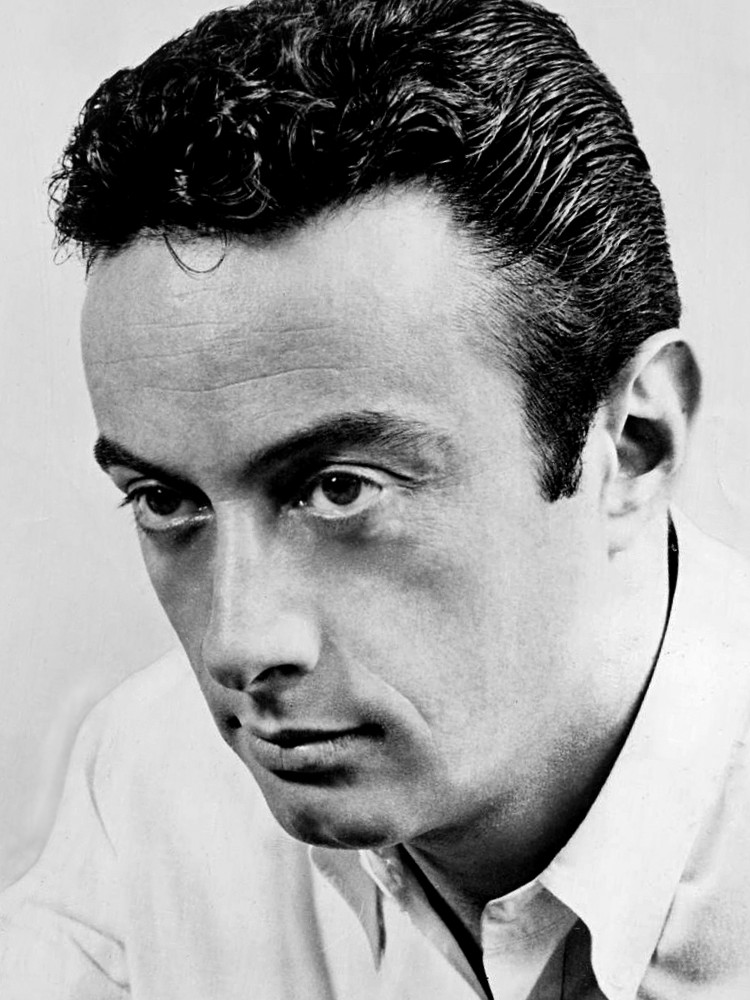
Behavioral Archetype
THE OBSCENITY MARTYR — Subject identified the words a society forbids, said them aloud on stage, and forced the legal system to prosecute the words rather than any actual harm. Distinguished from Wilde (who provoked through beauty) and Kaufman (who dissolved the boundary between performance and reality) by provoking through pure lexical transgression: the demonstration that a free society which jails a man for saying cocksucker into a microphone has already lost the argument it thinks it is winning. The act was the indictment. The indictment was the act.
Essence Indicators
- Treats forbidden vocabulary as a diagnostic instrument — the words a jurisdiction will arrest you for saying are a precise map of that jurisdiction’s anxieties
- Demonstrates compulsive escalation: each arrest produced a new bit about the arrest, performed in the next club, generating the next arrest (San Francisco 1961 → Chicago 1962 → New York 1964)
- Weaponizes the courtroom as a venue — turned the trial transcript into the performance, reading his own banned material into the legal record so the state had to transcribe the obscenity it was prosecuting
- Converts linguistic analysis into provocation (“to is a preposition, come is a verb”) — the bit is a grammar lesson the audience cannot un-hear
- Operates on a delayed-detonation timeline — the verdict that destroyed him outlived him (he died with the appeal undecided) and was pardoned decades after the words stopped being able to hurt anyone
- On the Steve Allen Show in 1959 – years before the obscenity trials – he names his own reputation to the camera: “controversial and irreverent, and also the semantic bear trap of bad taste… I will always be accused of bad taste.” The wit and the linguistic precision are right there on network TV, which is the point: he was prosecuted for words wielded by a man who understood exactly what words do (appearance below)
On Camera
Steve Allen Show, April 5 1959 (Historic Films archive). The rare filmed Bruce, in the network-TV register – verbal, precise, playing with semantics and his own “bad taste” reputation, before the obscenity prosecutions that ended him. Embedded as a primary source for the intelligence behind the words: this is the man the state decided the vocabulary of was a crime. The Carlin contrast this file draws – martyr vs. institution the martyrdom produced – starts here.
Social Persona / Impression Management
Immediate impression: A jazz musician’s cadence applied to moral philosophy. Subject did not present as a vulgarian; he presented as a diagnostician who happened to use the forbidden words as specimens. The profanity was never the point — it was the bait that exposed the machinery deciding what may be said.
Energy: Restless, associative, improvisational. Subject built routines the way a soloist builds a chorus — looping back, escalating, riffing on the room and on his own prior arrests. By the final years the energy was also visibly degrading: drug dependency, mounting legal bills, and blacklisting compressed the act into long courtroom monologues nobody had asked to hear.
Impression management strategy: SELF-AS-EVIDENCE. Where Franklin deployed personas to manage impressions, Bruce abolished the persona and made himself the exhibit. The strategy was to be so precisely, legally unacceptable that any prosecution would have to put the First Amendment itself on trial. The state obliged. It convicted the man and, in doing so, convicted itself in the eventual record.
Forensic Archetype Comparison
| Pattern | Match Level | Evidence |
|---|---|---|
| The Provocateur | EXTREME | Subject built an entire act around identifying and crossing the exact line the law would prosecute. Each crossing was deliberate, repeated, and documented by undercover police in the audience. |
| The Martyr Operator | HIGH | Subject pursued a course he knew led to ruin — blacklisting, bankruptcy, imprisonment — because the ruin was the argument. A free-speech case requires a defendant willing to be the defendant. |
| The Compulsive Escalator | HIGH | The arrests fed the act and the act fed the arrests. Subject could not stop, partly by design and partly by addiction. The loop consumed him on schedule. |
| The Pathological Liar | LOW | Subject deceived no one. The words were exactly the words. The provocation was the truth of the vocabulary, not any falsehood about it. |
Psychometric Assessment
Big Five (OCEAN):
| Trait | Score | Evidence |
|---|---|---|
| Openness | 92/100 | Subject treated language, religion, law, sex, and race as a single open field for improvisation. The routines dismantled taboos most performers would not approach, in forms (the legal-transcript bit, the grammar-of-obscenity bit) nobody had used before. |
| Conscientiousness | 38/100 | Low. Subject was disciplined about the craft of the routine but catastrophically undisciplined about everything that sustains a career — finances, legal counsel (he fired his lawyers and defended himself), and a daily regimen of heroin, methamphetamine, and hydromorphone. |
| Extraversion | 80/100 | Operated exclusively through live performance and required a room to work. The act was a conversation with an audience and, increasingly, with the state. |
| Agreeableness | 25/100 | Low. Subject said the unsayable to audiences, judges, and clergy alike, and showed no interest in softening it. The charm was real but it had a blade in it. |
| Neuroticism | 70/100 | High. The final years show mounting paranoia (often justified — he was under surveillance), obsessive fixation on his own legal persecution, and the despair of a man watching every venue in America close its doors to him. |
Dark Triad:
| Trait | Score | Notes |
|---|---|---|
| Narcissism | 55/100 | Moderate. Subject needed the stage and believed in his own importance, but the late-career monologues suggest a man more obsessed with vindication than with adoration. He wanted to be right, on the record, more than he wanted to be loved. |
| Machiavellianism | 35/100 | Low-moderate. Subject was a tactician of the routine but a disaster of strategy. Firing his attorneys and reading the banned material into the court record was principled and self-destructive in equal measure. |
| Psychopathy | 22/100 | Low. The work is shot through with genuine moral seriousness — about hypocrisy, about religion, about the gap between stated and actual values. The provocation served conviction, not predation. |
MBTI: ENTP (“The Debater”) — Dominant extraverted intuition firing off associative riffs, auxiliary introverted thinking imposing a ruthless internal logic on the bit. Subject saw the contradiction in every respectable position and could not leave it alone. The thinking function is what elevated the obscenity above shock value: each forbidden word was deployed to expose a logical inconsistency in the rules forbidding it. The intuition found the targets; the thinking built the indictment.
Why This Profile Matters
Bruce is the case that proves obscenity prosecution is a confession. Every word the state arrested him for saying is now a word the state’s own transcripts preserve forever — the prosecution had to enter the obscenity into evidence to convict him of it. The man lost every fight and won the war by attrition: his co-defendant’s New York conviction was overturned on appeal, his own was left standing by his death, and in 2003 it became the first posthumous pardon in New York State history. He is the entry in this file who demonstrates that the slowest possible troll — one that detonates decades after the troll is dead — can still be the most decisive, because the establishment is eventually forced to admit, in writing, that it was the one behaving obscenely.
Threat Assessment
| Category | Level | Notes |
|---|---|---|
| Physical threat | NONE | A man with a microphone and a habit. |
| Institutional threat | EXTREME | Forced the American legal system to litigate the boundary of protected speech in public, on the record. The cases reshaped obscenity law and the working assumptions of every comedian who came after. |
| Memetic threat | HIGH | The defense of Bruce — petitions signed by Dylan, Allen, Bellow, Miller, Sontag; later by Robin Williams and the Smothers Brothers — turned a comedian’s rap sheet into a free-speech canon. “The things Lenny Bruce got arrested for” is now a syllabus. |
| Posthumous threat | RESOLVED IN HIS FAVOR | Co-defendant’s conviction overturned; his own, left standing by his death, pardoned (2003) — the first posthumous pardon in state history, the Governor calling it “a declaration of New York’s commitment to upholding the First Amendment.” The state that jailed him now cites him as precedent. As with Wilde: kill the troll, then put him on the stamp. |
Flame Warrior Classification
Primary: Provocateur / Crusader Secondary: Target (Bruce became the designated obscenity defendant — the man whose prosecution let the establishment perform its own moral seriousness, until the performance curdled and the establishment became the spectacle) Notes: The Provocateur and Target classifications are inseparable here, which is rare. Most provocateurs avoid becoming targets; Bruce sought the target role because the case required a body to convict. He is the inverse of Kaufman: where Kaufman weaponized uncertainty about whether anything was real, Bruce weaponized the brute reality of specific words against a system that pretended they could be legislated away. He shares Wilde’s fate — destroyed for what he was rather than for any harm he caused — but where Wilde was destroyed for existing, Bruce was destroyed for speaking, which is the more legally consequential offense and the one the courts eventually had to concede. ATK 9, DEF 1, HP 4. The ATK is the precision — he found the exact words that would trigger prosecution and said them on purpose. DEF is catastrophic: no legal strategy, no financial reserve, no instinct for self-preservation, and an addiction that finished the job the courts started. HP 4 reflects a career and a life cut short at 40, blacklisted into a corner. The posthumous vindication is, as with Wilde, a separate metric the living man never got to collect.
See also: Andy Kaufman (the performer who weaponized uncertainty where Bruce weaponized certainty) and Oscar Wilde (the other free-speech martyr destroyed by the establishment and posthumously claimed by it).
Sources: Wikipedia; Britannica; The Trials of Lenny Bruce (Famous Trials, Douglas O. Linder) (“In 1970, New York’s highest court affirmed a lower appellate court’s reversal of Howard Solomon’s conviction”; in 2003 “Bruce’s 1964 conviction in the Cafe Au Go Go trial remains on the books”); Biography — The Official Website of Lenny Bruce; Seattle Times / AP — “Comedian Lenny Bruce granted posthumous pardon” (Dec. 24, 2003); Historic Films Archive — Lenny Bruce on the Steve Allen Show, 1959 (video).
Cross-Referenced Dossiers

Prefer RSS? Subscribe here.