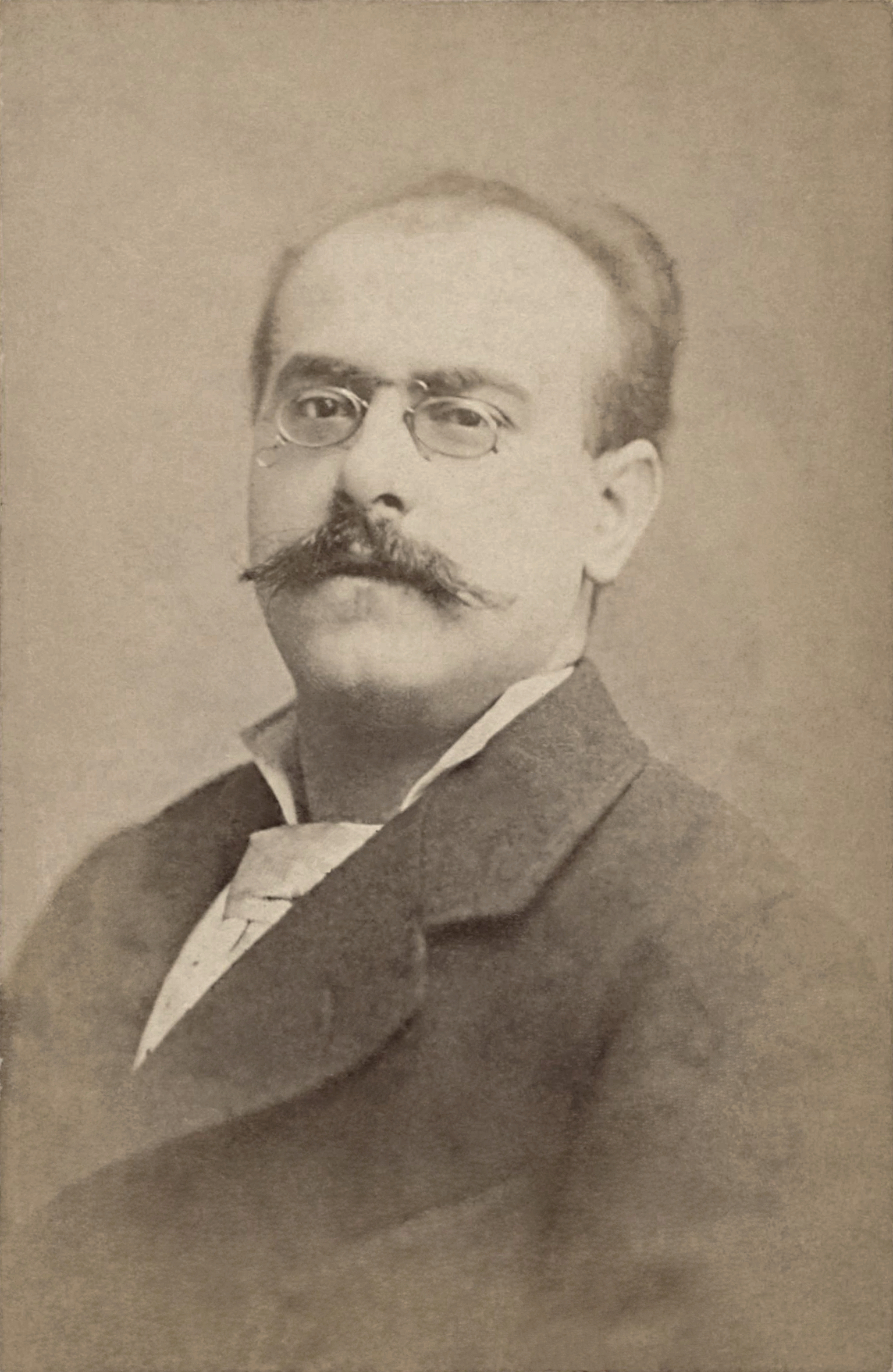
Related research: THE SATANIC PANIC (1980s-1990s).
Behavioral Archetype
THE LONG-CON HOAXER — Marie Joseph Gabriel Antoine Jogand-Pagès spent twelve years building a fictional Satanic conspiracy inside Freemasonry, fed it to the Catholic Church as fact, secured a private papal audience on the strength of it, and then stood up in a packed Paris hall on 19 April 1897 and announced he had invented the whole thing. The con is not the lie — anyone can lie. The con is the patience: a fake conversion as the setup, twelve years of fabricated exposés as the body, and a press conference as the punchline, all engineered to demonstrate the credulity of the institution that swallowed it. He called it “the most colossal hoax of modern times,” and styled himself the king of modern pranksters. The fabrications outlived the confession by more than a century.
Essence Indicators
- Anti-clerical polemicist in his twenties (excommunicated, sued, fined); the 1885 “conversion to Catholicism” was theater staged to acquire credibility he then spent
- Invented Palladism — a non-existent Satanic high-degree rite — and attributed its leadership to the real Albert Pike, a dead man who could not object
- Manufactured a fictional whistleblower, Diana Vaughan, “ex-Palladist” convert, and serialized her memoirs; bishops cited her and an international congress debated her testimony as evidence
- Fabricated, during the hoax, the “Lucifer is god of Freemasonry” passage falsely attributed to Pike (printed by de la Rive in 1894 as Pike’s instructions of “14 juillet 1889”: “Oui, Lucifer est Dieu, et malheureusement Adonaï l’est aussi”) — a quote that still circulates as gospel
- Confessed in full, on his own initiative, on his own stage — the reveal was always part of the design, not a forced exposure
- What he paid, before the hoax and after it. The cost in the record is money and standing, spent long before the confession. Lionel Ratichaux’s 1934 account lists the judgments: the tribunal of Auch fined him 50 francs on 15 November 1879 for libelling the abbé Duc, and a judgment of 29 December 1881 awarded Pius IX’s nephew 60,000 francs in damages over Taxil’s book on the dead Pope; Ratichaux adds that Taxil then stalled in the procedure until a limitation period got him out of it. The same account has the Masonic lodge excluding him on 27 October 1881 (Ratichaux, “Les impostures de Léo Taxil,” Magazine Sept, September 1934, pp. 8-14, French Wikisource transcription). Taxil’s own confession puts him in Geneva “absconding from a few press sentences,” and prints the League’s resolution of 27 July 1885 expelling “the individual named Gabriel Jogand-Pagès, called Léo Taxil, one of the founders of the Anticlerical League,” who “has disowned all the principles he stood up for” (Taxil’s confession, Le Frondeur, 25 April 1897, trans. Bernheim, Samii and Serejski, Heredom 5 (1997)). He also says the hoax cost him his silence: “it was necessary, indispensable, to entrust no one with my secret, absolutely no one, not even my most intimate friends, not even my wife, at least in the beginning” (same text)
- The confession survives in full and in his own voice. Le Frondeur printed the transcript of the Société de Géographie evening on 25 April 1897; the English translation by Alain Bernheim, A. William Samii and Eric Serejski appeared in Heredom 5 (1997) and is online at the Grand Lodge of British Columbia and Yukon, whose translators warn that “Taxil’s text is colloquial and ungrammatical in many places, as well as being a verbal presentation” (same). The close: “I will admit to a further crime. I committed infanticide. Palladism is now dead for good. Its father just murdered it.” His account of the method is as plain: “my first books on Freemasonry consisted in a mixture of rituals, with short innocent parts inserted, apparently harmlessly interpreted,” and on motive, “No! I was not avenging myself, I was having fun.” He opens by thanking the Catholic press for “suddenly undertaking a campaign of vociferous attacks six or seven months ago,” without which the question “might possibly have passed completely unnoticed”
- The authorship of the Pike text is in his own mouth. On 19 April 1897 he told the hall that Masonic journals “such as La Renaissance Symbolique, swallow a dogmatic circular about luciferian occultism, a circular dated July 14, 1889, written by myself in Paris, and which I disclosed as having been brought from Charleston to Europe by Miss Diana Vaughan on behalf of Albert Pike, its author.” Of Pike himself: “Through us, he became the first luciferian Pope, supreme chief of all freemasons of the globe, conferring regularly each Friday, at 3 p.m., with Master Lucifer in person” (Taxil’s confession)
- Where the “Lucifer is God” text first sits in print, and what it was built from. A. C. de la Rive’s La Femme et l’Enfant dans la Franc-Maçonnerie Universelle (Delhomme & Briguet; the preface is dated Paris, 15 March 1894) introduces the passage as the instructions that Albert Pike, in “le 14 juillet 1889, ère vulgaire,” sent to the 23 Supreme Councils, and prints, on pp. 588-589, “La religion maçonnique doit être, par nous tous, initiés des hauts grades, maintenue dans la pureté de la doctrine luciférienne,” followed by “Oui, Lucifer est Dieu, et malheureusement Adonaï l’est aussi” (de la Rive, archive.org scan). The scan reads “Qui” for “Oui” in its text layer; the page image is the authority for the letter. Pike’s own Morals and Dogma, in the chapter for the nineteenth degree, has the real Lucifer paragraph, and it says something else. The Apocalypse is, to those who receive that degree, “the Apotheosis of that Sublime Faith which aspires to God alone, and despises all the pomps and works of Lucifer,” and the next sentence turns to the name: “LUCIFER, the Light-bearer! Strange and mysterious name to give to the Spirit of Darkness!” (Pike, Morals and Dogma, XIX, Grand Pontiff). The forged instruction asserts a god of that name and Adonay as his dark twin; the real paragraph is about the name, and sits beside “the Spirit of Darkness”
- The text outlived the confession in print, and the reprint cites the chain. Edith Starr Miller, as Lady Queenborough, published Occult Theocrasy in 1933 and gives the doctrine as explained in the “Instructions” issued by Pike “on July 14, 1889, to the 23 Supreme Councils of the world,” recorded by de la Rive at page 588, then prints “Yes, Lucifer is God, and unfortunately Adonay is also God.” The same book lists Taxil, Bataille and Vaughan among the exposures and says of 19 April 1897 that Taxil “publicly repudiated his own allegations against Freemasonry” (Miller, Occult Theocrasy, 1933, archive.org scan). Miller is cited here as a subject text and a reprint, never as authority for Pike
- A contemporary said so before he did. Arthur Edward Waite, Devil-Worship in France (London: George Redway, 1896) (Amazon), a year before the confession: Taxil “has created the Question of Lucifer in its connection with the Palladian Order. He is the original source of information as to the existence of that association; no one had heard of it previously” (Waite, Project Gutenberg #21258)
- The fiction printed its own denial. Diana Vaughan’s Mémoires d’une ex-palladiste (Paris: A. Pierret, 1895-1897), under a heading addressed “A Miss Pike et à M. Roome,” reproduces the rebuttal of William Oscar Roome, an old friend of Pike, to a Cincinnati paper in late August 1896: he had Pike’s letters and manuscripts, “le nom de Lucifer n’y est jamais écrit” (Vaughan, Mémoires, archive.org scan). Taxil printed the objection and answered it in Diana’s voice
- The paper trail before the con. Les Débauches d’un confesseur (Paris: Librairie anticléricale, 1884) carries the names “Léo Taxil et Karl Milo” on its title page, and the opening page announces itself as “cette première Livraison,” a serial sold in instalments (archive.org scan). The anti-Masonic series opens in the voice of the convert. In the preface to Les Frères Trois-Points (Paris: Letouzey et Ané) the author assures the reader that “l’auteur lui-même, après avoir douté au début de ses investigations, en a bientôt acquis la certitude absolue” (archive.org scan)
- The Church’s side of the correspondence, as Taxil read it to the hall. Cardinal Parocchi to Diana Vaughan, 16 December 1895: “Your conversion is one of the most magnificent triumphs of grace that I am aware of.” Monsignor Vincenzo Sardi, the Pope’s private secretary, 11 July 1896: “Keep on, Miss, keep on writing and unmasking the iniquitous sect!” The Civiltà Cattolica of September 1896: “Miss Diana Vaughan, called from the depths of darkness to the light of God, prepared by divine Providence.” Taxil also says Msgr. Lazzareschi, “delegate of the Holy See to the Anti-Masonic Union’s central Committee,” had a thanksgiving triduum celebrated at the Sacred Heart in Rome, and that a Jesuit bishop, “Msgr. Meurin, bishop of Port-Louis (Mauritius), who came to Paris in order to consult me” (Taxil’s confession). These are his reading of letters aloud; the Vatican’s own file is not on the page
- The strongest case against the page’s own thesis is a French magazine’s, written the week after. Edmond Frank in L’Illustration of 1 May 1897 sets out the four acts, the second of which is the “Invention of Palladism or High Luciferian Masonry,” prices the accomplice at “the modest monthly appointment of 150 francs” (Taxil says the same sum), and asks what the author has won: “What has he gained? His dignity.” Frank closes that the prankster is “such a superb example of credulity in sincerely believing oneself the greatest hoaxer of the century” (Frank, trans. Suzanne D’Aoust, Grand Lodge of British Columbia). The Gale Encyclopedia of Occultism and Parapsychology adds that the revelations “were profitable for Taxil” (Vaughan, Diana), and Taxil’s own speech says that once the German Mason Findel’s pamphlet had landed the Vatican “wondered whether they were not confronted with a hoax about to smash the Church instead of serving it” and named a secret commission of inquiry. The reveal was staged; it was also staged with a commission and a pamphlet war closing in
On the record, by date:
- A. Pierret, éditeur, 37 rue Étienne-Marcel, Paris: the house on the title page of the Mémoires d’une ex-palladiste; Taxil paid the typist who played Diana Vaughan 150 francs a month (1895-97) (Frank; Taxil’s confession)
- Libel judgments listed by Ratichaux: Auch, 15 November 1879 (50 francs fine, 500 damages); Angers, 3 May 1880; Montpellier, 29 December 1881 (60,000 francs damages to Pius IX’s nephew); Paris, 13 April 1883 (12,000 francs damages) (1879-83) (Ratichaux)
- Freemasonry: a lodge member at the lowest grade, expelled 27 October 1881 per Ratichaux, “in 1881” per Taxil (to 1881) (Ratichaux; Taxil’s confession)
- Publisher: Librairie anticléricale, Paris, for Les Débauches d’un confesseur with Karl Milo (1884) (archive.org)
- Publisher: Letouzey et Ané, Paris, for Les Frères Trois-Points (Révélations complètes sur la franc-maçonnerie) (1885-86) (archive.org)
- Anticlerical League of Paris: one of its founders; expelled by resolution of its Paris groups (1885) (Taxil’s confession)
- Left France for Geneva, “absconding from a few press sentences,” in his own words (before 1885) (Taxil’s confession)
- Catholic authors: Msgr. Meurin, Jesuit bishop of Port-Louis, who by Taxil’s account came to Paris to consult him; the Civiltà Cattolica and, in England, the Tablet, which printed the tales (1895-97) (Taxil’s confession; Mayers)
- Catholic anti-Masonic movement: attended the Congress of Trent; corresponded with the Anti-Masonic Union in Rome, whose secretary general Rodolfo Verzichi wrote on 27 May 1896 and whose delegate of the Holy See was Msgr. Lazzareschi; Diana Vaughan’s series Les Palladistes français ran in the weekly L’Anti-Maçon (1895-97) (Taxil’s confession; Vaughan, Mémoires, cover matter)
- None. The Geneva exile is listed above; the American origin of his invented heroine was a device (“We merely turned her into an American, born by chance in Paris”) (Taxil’s confession)
- No post, contract or commission is recorded. The documented tie is access: Taxil’s account of an audience with Leo XIII, the Cardinal Secretary of State and the Cardinal Vicar, and the Pope’s private secretary writing to Diana Vaughan; the Vatican named a secret commission of inquiry when the doubts grew (c. 1887 to 1896) (Taxil’s confession)
- Between December 1895 and September 1896 a Cardinal Vicar, the Pope’s private secretary, the secretary general of the Anti-Masonic Union and the Civiltà Cattolica all wrote to or about one invented woman, whose memoirs were published by a Paris house and whose series ran in the movement’s own weekly, while the man behind her stood on the other side of the ledger: fined by the courts, expelled by the League and the lodge. Taxil’s count of his accomplices is two: “We were three and that was enough.”
Social Persona / Impression Management
Immediate impression: The repentant sinner turned crusader. Taxil presented as the prodigal returned — a former enemy of the Church now devoting his pen to defending it against the diabolical Masons. The institution wanted that story badly enough not to check it.
Energy: Industrious, prolific, relentless. Where a lesser hoaxer drops one forgery and runs, Taxil ran a publishing operation — book after book, serialized installment after installment, a fictional cast maintained across years. The output is the cover: nobody producing this much could possibly be making it up.
Impression management strategy: Supply the demand. Leo XIII’s 1884 encyclical Humanum Genus had already condemned Freemasonry; the Church had stated the conclusion and now wanted the evidence. Taxil read the order book and filled it. He never had to argue anyone into belief — he handed credulous customers exactly the product they had pre-ordered, wrapped in the apparatus of the convert’s testimony. It is the same engine Alexander Hislop ran on the opposite side of the same conflict, welding a manufactured Satanism to a present enemy — except Hislop believed his own construction, and Taxil knew his was fiction from the first word.
Forensic Archetype Comparison
| Pattern | Match Level | Evidence |
|---|---|---|
| The Long-Con Hoaxer | MAXIMUM | Twelve-year sustained fabrication with a planted setup (the conversion) and a designed reveal (the press conference). The duration is the signature. |
| The Serial Deceiver | MAXIMUM | An entire fictional ecosystem — Palladism, Diana Vaughan, the Dr. Bataille pseudonym, the Pike attribution — maintained simultaneously and cross-referenced for years. |
| The Deadpan Satirist | HIGH | Like Jonathan Swift, the surface is straight-faced and the target is institutional credulity; unlike Swift, Taxil never signaled the irony until the curtain call, and the marks acted on it as fact. |
| The Demonizer | HIGH | Took a real fraternity and rebuilt it as a unified Satanic system welded to a contemporary enemy — the same move as Hislop, run knowingly. |
| The Whistleblower | NONE | Exposed nothing real; the only thing he exposed was the audience, and only because he chose to. |
Psychometric Assessment
Big Five (OCEAN):
| Trait | Score | Evidence |
|---|---|---|
| Openness | 80/100 | HIGH. Sustained invention of a theology, a rite, a membership, and a cast of characters across twelve years requires real generative range. Exhibit: by his own account the plan of the Charleston temple was “a plan which I designed myself,” and the “immense secret workshops” under Gibraltar were his invention too (Taxil’s confession). |
| Conscientiousness | 72/100 | HIGH. The con held together because the details were managed — a fictional correspondent, deflected interview requests, a serialized timeline that stayed internally consistent. Exhibit: “a fixed agreement with her: 150 francs per month for typing manuscripts as well as for letters which should be copied by hand,” and Sophie Walder’s letters written by a friend of Miss Vaughan’s, so that the correspondents never met (Taxil’s confession). |
| Extraversion | 70/100 | HIGH. A showman who built toward a stage. The confession was a performance staged before a packed hall, by choice. Exhibit: the transcript’s editors record that “one could get in only by showing nominal invitation cards which had been sent one month in advance,” and that a typewriter “offered by Miss Diana Vaughan” was raffled first; Frank adds that the organizer admitted selecting the audience (Taxil’s confession; Frank, L’Illustration). |
| Agreeableness | 22/100 | LOW. The entire project is contempt operationalized — for the Church, for its readers, for the dead man he ventriloquized. Exhibit: he tells the hall “even the Freemasons who were most hostile to me will acknowledge that I did not harm anyone,” in a speech whose stage directions record “Rascal! Scoundrel! Blackguard! Rogue!” from the floor (Taxil’s confession). |
| Neuroticism | 30/100 | LOW. Twelve years of maintained deception under libel exposure, ended on his own terms with reported amusement, suggests an unusually steady operator. Exhibit: of the League’s expulsion vote in 1885 he says “Though I felt affected, I kept cool in the middle of a true tempest” (Taxil’s confession). |
Dark Triad:
| Trait | Score | Notes |
|---|---|---|
| Narcissism | 65/100 | HIGH. The reveal was the point — a public demonstration that he had fooled an institution and its hierarchy, delivered to their faces. Exhibit: telling the hall about the Marseille sharks hoax of 1873 he says “The author of the hoax was not found out. Here he stands before you” (Taxil’s confession). |
| Machiavellianism | 92/100 | VERY HIGH. The conversion-as-setup is pure instrumental staging; every move served the eventual demonstration, and the means were calibrated to the mark. Exhibit: when the bishop of Charleston denied the Masonic temple the books described, Diana Vaughan “replied to Msgr. Northrop’s interview; she said the Bishop of Charleston was himself a Freemason and she received the Pope’s blessing” (Taxil’s confession). |
| Psychopathy | 35/100 | LOW-MODERATE. The deception was cold and the disregard for the marks total, but there is no record of personal cruelty; the harm was institutional and reputational, not physical. Exhibit: his own account of the Jesuit retreat at Clamart, where he confessed an invented murder (“my big sin was a murder, a first-class murder”) and notes “My prank thus allowed me to test the secrecy of confession” (Taxil’s confession). |
MBTI: ENTP (“The Debater”) — the provocateur who constructs an elaborate argument-as-prank to expose a contradiction in his target, runs it to its limit, and reveals it for the satisfaction of having been right about the credulity all along.
Why This Profile Matters
Taxil is the purest case the Fires series has of a troll who refutes his own work and watches nothing change. He fabricated a conspiracy, confessed to fabricating it on a public stage, and the conspiracy survived the confession by more than a century. Palladism, Diana Vaughan, and the bogus Pike “Lucifer” quote remained in circulation as though 19 April 1897 had never happened — debunked continuously, believed continuously, because the fabrication served a demand the correction could not satisfy.
That is the mechanism The Hidden Fire tracks through the demonization of the esoteric: the manufactured Satanism does not need to be true, it needs to be wanted. Hislop built the reusable engine and believed in it; Taxil ran the same engine knowing it was empty and proved, by confessing, that the belief never depended on the evidence in the first place. The parallel to the Protocols of the Elders of Zion is exact — exposed as fabrication, circulated anyway. Taxil is the patron case of the long con whose author signs the confession and finds it makes no difference.
The correction was on the table a year before he signed it, and it lost. Waite’s Devil-Worship in France (1896) said that Taxil was “the original source of information as to the existence of that association.” The Tablet of October 1896, reporting that the Anti-Masonic Congress had set up a “special committee” for the “burning questions” about Diana Vaughan, allowed that Waite’s book “traverses and impugns these statements, but without any conclusive refutation of their general drift” (Mayers, “Miss Diana Vaughan” and the myth of “Luciferian Freemasonry” in English Catholic newspapers, 1894-1897; revised from the Journal for the Study of Antisemitism 5:1, 2013). The paper was not a fringe sheet: the Tablet “was owned by Herbert Vaughan, the Cardinal Archbishop of Westminster and head of the English Catholic hierarchy (the shared surname with Diana being coincidental)” (Mayers). The refutation that finally worked came from the forger, which is also why it changed so little.
The Pike passage is the part that still works as evidence, and every link in its chain is in print and cited above: Taxil says he wrote the circular of 14 July 1889; de la Rive printed it in 1894 as Pike’s instructions; Miller reprinted it in 1933 with de la Rive’s page number; and Pike’s own paragraph on Lucifer, in Morals and Dogma, does not say it. None of the links needs the others to be believed, which is the flaw in the forgery that Taxil used and then demonstrated. Humanum Genus, the Vatican’s own text and the context for the whole demand, speaks of “the kingdom of Satan” and never uses the word Lucifer (Leo XIII, Humanum Genus, 20 April 1884).
Threat Assessment
| Category | Level | Notes |
|---|---|---|
| Physical threat | NONE | A journalist with a printing press. |
| Institutional threat | HIGH | Penetrated the Catholic information environment to the level of a papal audience and an international anti-Masonic congress on the strength of pure invention. |
| Memetic threat | EXTREME | The Pike “Lucifer” quote and the Satanic-Masonic motif have propagated for over 125 years across fundamentalist, conspiratorial, and online culture, immune to the author’s own retraction. Exhibit: Occult Theocrasy (1933) reprints the passage as Pike’s doctrine thirty-six years after the confession, and its own list of exposures names Taxil (Miller). |
| Civilizational threat | MODERATE-HIGH | The lasting hazard is the demonstration itself: that a knowing fabrication, once it meets a pre-existing demand, becomes permanent infrastructure that confession cannot dismantle. |
Flame Warrior Classification
Primary: Imposter Secondary: Troller Also reads as: Primary: Impostor — the operator whose entire presence is a constructed false identity deployed against a target that trusts it. Secondary: Jekyll & Hyde — the public penitent and the private hoaxer were the same man, by design, the whole time. Notes: ATK 10, DEF 7, HP 6. ATK 10 because the move reached the top of a global institution and seeded conspiracy beliefs still live a century later — few trolls in history land harder. DEF 7 because the fake conversion and the convert’s-testimony framing insulated him for twelve years and the self-timed confession denied anyone else the satisfaction of exposing him; not a perfect 10 because he was a known, named, suable public figure throughout. HP 6 because the man died at 53 a decade after the reveal, but the fabrications did not die at all — they are the part of him still in active circulation.
The receipts behind each number. ATK 10: Taxil reads into the record Cardinal Parocchi’s letter of 16 December 1895 (“Your conversion is one of the most magnificent triumphs of grace that I am aware of”), Monsignor Sardi’s of 11 July 1896 (“Keep on, Miss, keep on writing and unmasking the iniquitous sect!”) and the Civiltà Cattolica of September 1896, and says Leo XIII “received me for three quarters of an hour” (Taxil’s confession). DEF 7: the same text has him leaving for Geneva “absconding from a few press sentences” and expelled from the Anticlerical League, with the judgments of 1879 to 1883 listed by Ratichaux (Ratichaux), set against twelve years of access and a Waite exposure in 1896 that the Catholic press called inconclusive (Mayers). HP 6: he died at 53, and the artifact is the circular of 14 July 1889 that he says he wrote (Taxil’s confession), printed as Pike’s by de la Rive in 1894 (de la Rive) and again in 1933 (Miller).
Against peers on the same values: Voltaire holds 10 / 7 / 8 at 89.0, the same ATK and DEF with two more HP points, because his leverage rests on 21,221 letters and a body of work in his own name and Taxil’s rests on a forgery in someone else’s. Hafiz holds 9 / 10 / 10 at 88.0, a point under Taxil on ATK and three above on DEF, with patrons in two courts and poems that settled his own burial where Taxil was fined, expelled and sued, and an HP built on translations and a living practice of divination where Taxil’s is a text with no author’s name on it. The tie at 88.0 is two different shapes of leverage: Hafiz is protected and durable, Taxil hit hardest and stood exposed.
Attested and Attributed
| Claim | Status | Source |
|---|---|---|
| The man is Gabriel Jogand-Pagès, called Léo Taxil | Attested: the League’s resolution of 27 July 1885, as Taxil read it to the hall, names “the individual named Gabriel Jogand-Pagès, called Léo Taxil” | Taxil’s confession |
| He wrote anticlerical books before 1885 and was sued for them | Attested: the title page of Les Débauches d’un confesseur (Librairie anticléricale, 1884) names Léo Taxil and Karl Milo; the judgments of 1879, 1880, 1881 and 1883 are listed by Ratichaux (1934), a Catholic account | archive.org; Ratichaux |
| He was excommunicated | Attributed: the account in hand has Taxil announcing that his books were on the Index, then publishing “une prétendue bulle d’excommunication,” which he later said he had taken from Sterne’s Tristram Shandy; no ecclesiastical record of an excommunication is on this page | Ratichaux |
| The conversion and the hoax began in April 1885 | Attested by Taxil: “the hoax also started in April, on April 23, 1885” | Taxil’s confession |
| Leo XIII received him in private | Attributed: Taxil’s own account, “the Holy Father received me for three quarters of an hour”; Frank’s article gives the same exchange of words; no Vatican record is cited here | Taxil’s confession; Frank |
| Humanum Genus condemned Freemasonry and created the demand | Attested as the Vatican’s text: it divides mankind into two kingdoms, “The other is the kingdom of Satan, in whose possession and control are all whosoever follow the fatal example of their leader and of our first parents,” and names the Freemasons as the organised partisans of evil; the English text does not use the word Lucifer. Taxil’s reading: “this encyclical agreed with a well-established idea of the militant Catholics” | Leo XIII, 1884; Taxil’s confession |
| Palladism was his invention | Attested: his own confession, and Waite in 1896 (“no one had heard of it previously”) | Taxil’s confession; Waite |
| Pike was its founder | Forgery by Taxil’s account: “Through us, he became the first luciferian Pope”; the real Pike text on Lucifer is in Morals and Dogma XIX and does not say it; Pike’s friend Roome denied it in 1896 and the denial is printed in Taxil’s own Mémoires | Taxil’s confession; Pike; Vaughan, Mémoires |
| “Oui, Lucifer est Dieu, et malheureusement Adonaï l’est aussi” is Pike’s | Forgery, by Taxil’s claim of authorship for the circular of 14 July 1889: the earliest printing in hand is de la Rive’s (preface dated 15 March 1894, pp. 588-589); Miller reprinted it as Pike’s in 1933 | de la Rive; Miller; Taxil’s confession |
| “Dr. Bataille” and Diana Vaughan were collaborators, and Diana was a typist | Attested by Taxil: two collaborators, a doctor friend and a typist paid 150 francs a month; Frank prices her at the same sum. The archive.org record for Le Diable au XIXe siècle catalogues the author as “Dr Bataille (Dr Charles Hacks)”; that is a library record, not a primary | Taxil’s confession; Frank; archive.org |
| The Church answered with letters, a blessing and a thanksgiving | Attributed: Taxil read the letters of Parocchi (16 December 1895), the Anti-Masonic Union (27 May 1896) and Sardi (11 July 1896) to the hall and said “these have not been forged”; the Vatican file is not in hand | Taxil’s confession |
| An international anti-Masonic congress debated her | Attested in part: Taxil “left for the Congress of Trent”; the Tablet reported in October 1896 that the congress set up a “special committee” for the questions about Diana Vaughan | Taxil’s confession; Mayers |
| He confessed on 19 April 1897 at the Société de Géographie | Attested: transcript in Le Frondeur, 25 April 1897 (English, Heredom 1997); Frank in L’Illustration, 1 May 1897; de la Rive’s own recantation in the same month, “can now be considered as not having existed” | Taxil’s confession; Frank; Grand Lodge of British Columbia |
| “The most colossal hoax of modern times” | Attributed: Frank reports it as Taxil’s own term; the transcript, in the translators’ English, has “the most fantastic hoax of modern times” and credits “the biggest hoax of modern times” to American newspapers | Frank; Taxil’s confession |
Sources: Wikipedia — Léo Taxil; Wikipedia — Taxil hoax; Grand Lodge of British Columbia — Leo Taxil’s confession; Edmond Frank, “A hoax,” L’Illustration, 1 May 1897 (Grand Lodge of British Columbia transcription); Pope Leo XIII, Humanum Genus (1884); Taxil’s confession, Le Frondeur, 25 April 1897, trans. Bernheim, Samii and Serejski, Heredom 5 (1997); A. C. de la Rive, La Femme et l’Enfant dans la Franc-Maçonnerie Universelle, 1894; Albert Pike, Morals and Dogma, XIX; Arthur Edward Waite, Devil-Worship in France, 1896; Edith Starr Miller, Occult Theocrasy, 1933; Diana Vaughan, Mémoires d’une ex-palladiste, 1895; Taxil and Milo, Les Débauches d’un confesseur, 1884; Taxil, Les Frères Trois-Points; Lionel Ratichaux, “Les impostures de Léo Taxil,” 1934; Simon Mayers, “Miss Diana Vaughan” and the myth of “Luciferian Freemasonry”; Encyclopedia of Occultism and Parapsychology, “Vaughan, Diana”.
LULZ Index
Best act 12 of 15 4 acts scored
12of 15
Taxil fakes a conversion to start the Palladist hoax
C+++ T+++ F+++ H++ A+
H readers and Catholic press were fooled, no one hurt
the hoax also started in April, on April 23, 1885
freemasonry.bcy.ca first-hand12of 15
Taxil confesses the Palladist and Diana Vaughan hoax
C+++ T+++ F+++ H++ A+
C twelve years, the Church and the Pope fooled H the fabrications outlived the confession by a century
Confessed in full, on his own initiative, on his own
freemasonry.bcy.ca first-hand11of 15
Taxil's Marseille sharks hoax
C++ T++ F++ H+++ A++
A unclaimed until 1897
The author of the hoax was not found out. Here he stands before you
freemasonry.bcy.ca first-hand11of 15
The forged Pike circular "Lucifer is God"
C+++ T+++ F++ H+ A++
H a quote that still circulates as gospel against Masons A circulated under de la Rive's name
passage falsely attributed to Pike
archive.org scholarly
C craft T target F funny H harmless A anonymous One plus a point, three at most. The number rates the act, not the person. How the code reads The whole index
Cross-Referenced Dossiers
The scores on this file are computed by a published rule from sourced records, the same rule for every troll. Nobody types a number: a score moves only when a record does. How the scoring works
Prefer RSS? Subscribe here.