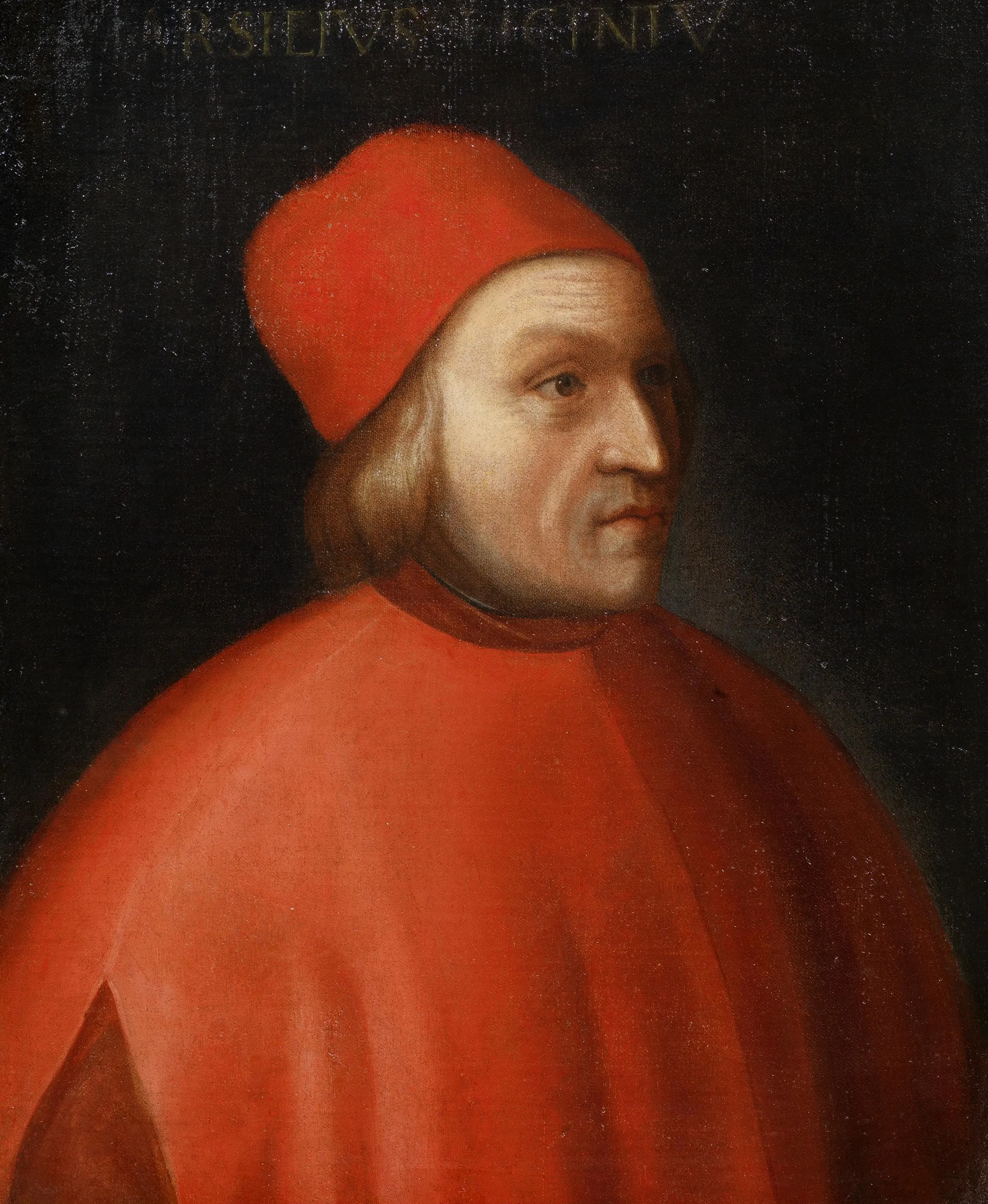
Behavioral Archetype
THE TRANSMITTER – Subject is the rarest specimen in this file: a provocateur who provoked nothing on purpose. Ficino was a quiet, sickly, devout Florentine priest who spent his life at a desk translating Greek into Latin under Medici patronage. He picked no fights, burned no books, conjured no angels. What makes him load-bearing is the payload he imported. In 1463 he translated the Corpus Hermeticum into Latin; over the following decades he translated the complete Plato and the Neoplatonists; and in doing so he reintroduced the entire Hermetic and Neoplatonic source tree to Western Europe. Nearly every magus profiled elsewhere in this archive – Agrippa, Dee, Bruno, and the four centuries of ceremonial magic that followed – is running code that Ficino compiled. The scholar is upstream of the sorcerers. He is in this archive not for what he did but for what he released.
Essence Indicators
- Born Marsilio Ficino at Figline Valdarno, 19 October 1433, son of Cosimo de’ Medici’s personal physician
- In 1462 Cosimo de’ Medici installed him at a villa at Careggi and commissioned the translation of Plato; this circle became the Accademia Platonica, the model for every later “Platonic Academy”
- Translated the Corpus Hermeticum (the Pimander) into Latin in 1463 – Cosimo ordered him to interrupt the Plato project and do Hermes first, on the belief that Hermes Trismegistus predated Plato and was therefore closer to the original divine revelation
- Completed the first full Latin translation of Plato’s surviving works (drafted by 1469, published 1484), plus Plotinus, Porphyry, Iamblichus, and Proclus – the entire Neoplatonic corpus
- Ordained a priest in 1473; wrote the Theologia Platonica (1474) arguing the immortality of the soul as a bridge between Platonism and Christianity
- Authored De Vita Libri Tres (Three Books on Life, 1489) – a physician’s manual of astrological medicine, talismans, diet, and music aimed at melancholic scholars, drawing planetary influence (his own Saturnine temperament especially) down into daily practice
- Accused of magic and heresy before Pope Innocent VIII over De Vita in 1489-90; talked, wrote, and patron-leveraged his way to acquittal
Social Persona / Impression Management
Immediate impression: A small, frail, soft-spoken cleric who plays the lyre, quotes Plato in the original, and would rather discuss the ascent of the soul than anything happening in the room. Ficino presented as exactly what he was – a scholar-priest – and the presentation was not a cover. The dangerous material arrived wrapped in genuine piety, which is a more durable wrapper than any deliberate hedge.
Energy: Gentle, melancholic, contemplative. Contemporary accounts and his own voluminous letters describe a man of fragile health and Saturnine disposition who built a wide correspondence network across Europe and held it together by warmth rather than force. The intensity was real but turned inward, onto the text and the soul, not outward onto opponents.
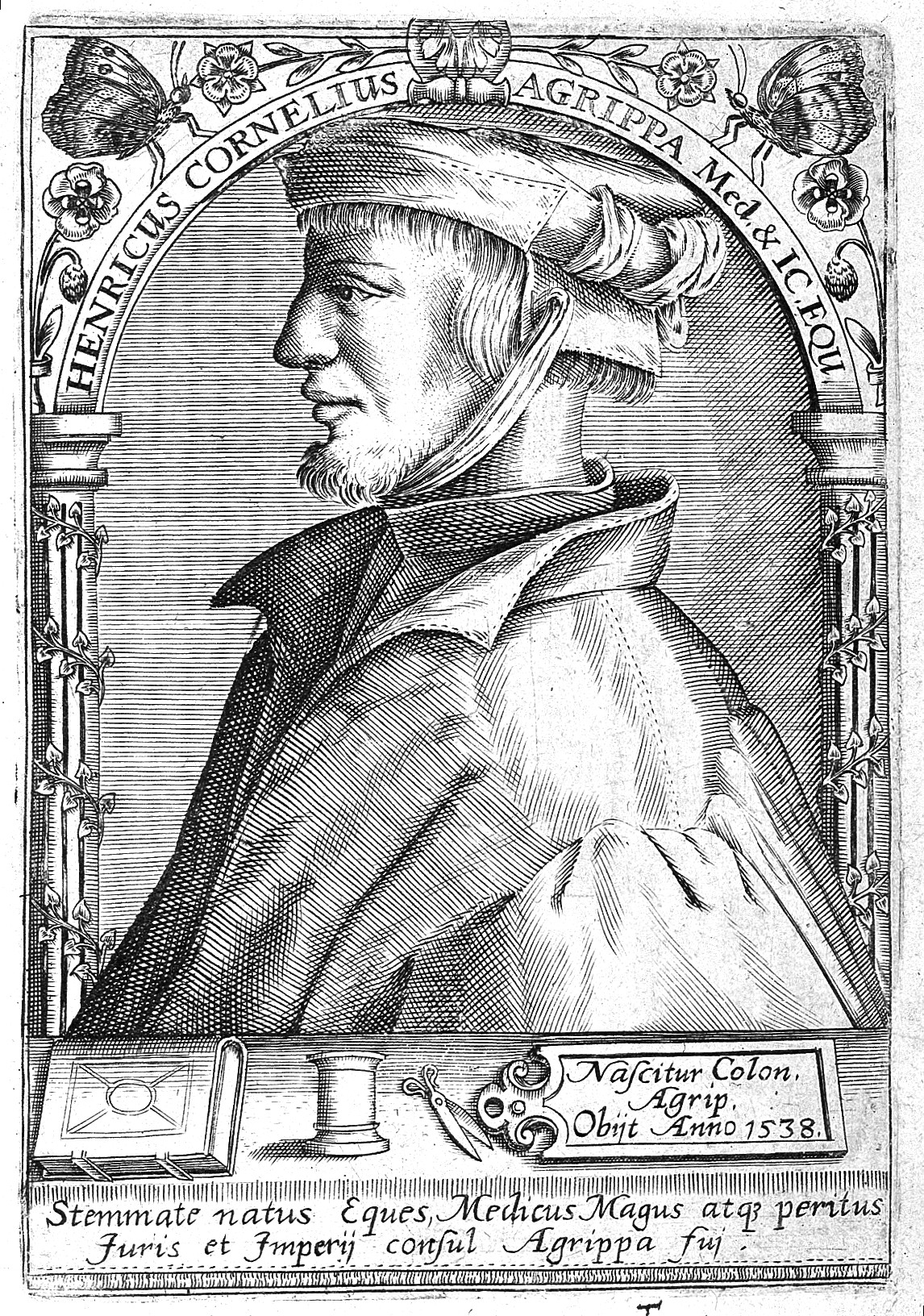
Impression management strategy: PIOUS RESPECTABILITY. Ficino framed the recovery of pagan and Hermetic wisdom as a prisca theologia – an “ancient theology” running from Hermes and Zoroaster through Plato to Christ, all of it secretly pointing at Christian truth. The frame let him import frankly magical material under the banner of devotion. Where Agrippa shipped a recantation as cover and Dee leaned on royal service, Ficino’s cover was sincere belief: the magic was permissible because it was, to him, piety. The Inquisition was not entirely convinced, but the patrons held.
Forensic Archetype Comparison
| Pattern | Match Level | Evidence |
|---|---|---|
| The Transmitter / Translator | EXTREME | The defining identity. He did not author the Hermetic tradition; he ported it. The entire downstream tradition runs on his Latin. |
| The Court Scholar | HIGH | Operated inside Medici patronage for nearly forty years – villa, commission, protection, audience. The work existed because the money did. |
| The Provocateur | LOW | Subject provoked almost nothing deliberately. The 1489 heresy scare was a consequence of the material, not a sought confrontation. This is why the troll score is low: he is a scholar who happened to be standing at the source of the fire. |
| The Narcissistic Operator | LOW | The grandiosity is in the project (reconcile all wisdom under Christ), not the person. The self-presentation is humble to the point of self-effacing. |
Psychometric Assessment
Big Five (OCEAN):
| Trait | Score | Evidence |
|---|---|---|
| Openness | 97/100 | Reconciled Platonism, Neoplatonism, Hermeticism, astrology, music theory, and medicine with Christian theology into a single synthesis. Treated no source of ancient wisdom as out of bounds. |
| Conscientiousness | 92/100 | Decades of sustained, exacting translation of difficult Greek – the complete Plato and the Neoplatonic corpus – delivered. The discipline of a man who finishes the manuscript. |
| Extraversion | 40/100 | Low-moderate. A retiring, sickly scholar who nonetheless maintained one of the great humanist letter-networks of the age. Sociable on the page, withdrawn in the body. |
| Agreeableness | 72/100 | High for this cohort. Warm, loyal to patrons and friends, conciliatory by temperament. He smoothed conflict rather than starting it – the opposite of Paracelsus. |
| Neuroticism | 65/100 | Moderate-high. His self-diagnosed Saturnine melancholy was the explicit subject of De Vita; the fragile health and depressive temperament were lifelong and documented in his own hand. |
Dark Triad:
| Trait | Score | Notes |
|---|---|---|
| Narcissism | 25/100 | Low. The ambition is doctrinal, not personal. He wanted the wisdom recovered, not himself monumentalized. |
| Machiavellianism | 38/100 | Low-moderate. He navigated the 1489 heresy charge shrewdly and used patronage well, but strategy was a survival tool, not a worldview. He hedged far less than Agrippa (Mach 72). |
| Psychopathy | 5/100 | Minimal. Deep emotional engagement with friends, patrons, faith, and text throughout. A pastoral, affectionate figure on the record. |
MBTI: INFJ (“The Advocate”) – Dominant introverted intuition, auxiliary extraverted feeling. Pursues a single unifying vision (all wisdom converging on the one truth) and communicates it through warm, sustained personal relationship – the letters, the circle, the patient teaching. The intuition sees the grand synthesis; the feeling function builds the human network that carries it.
Why This Profile Matters
Ficino is the import event. Before 1463 the Corpus Hermeticum was inaccessible Greek sitting in a monastery; after Ficino it was Latin, in print, and quotable by every literate magus in Europe. Everything in the Renaissance occult revival – Pico della Mirandola’s Christian Kabbalah, Agrippa’s three-tier system, Dee’s angel work, Bruno’s Hermetic cosmology, and the long chain that runs through the Rosicrucians and Eliphas Levi into the Golden Dawn – depends on the source code Ficino compiled and distributed. He also demonstrates the most durable smuggling technique in the file: not the pre-emptive recantation and not royal cover, but sincere piety as wrapper. Ficino genuinely believed the magic was a form of devotion, which made it far harder to attack than any deliberate hedge, because there was nothing staged to expose. The lesson the tradition learned from him is that the safest way to release dangerous material is to mean it.
Threat Assessment
| Category | Level | Notes |
|---|---|---|
| Physical threat | NONE | A frail scholar-priest who played the lyre. The danger in his vicinity ran toward him. |
| Institutional threat | MODERATE | The prisca theologia quietly relativized Christianity’s claim to be the sole vessel of truth, and De Vita drew a formal magic-and-heresy charge. Both unsettled the Church; neither was meant to. |
| Memetic threat | EXTREME | The single largest source-injection in the history of Western esotericism. Four centuries of Hermetic and Neoplatonic magic descend from translations he made at one desk. The Yates thesis – that this revival helped drive the Renaissance itself – is contested in scope but uncontested in pointing at Ficino as the origin. |
| Posthumous threat | ONGOING | The Latin Hermetica and the complete Plato remained the standard channels for generations. Every later magus who “rediscovered the ancients” was, in practice, reading Ficino. |
Deception Analysis
Primary deception modality: NONE – AND THAT IS THE POINT. Ficino ran no con. He did not disguise the material, stage a renunciation, or pretend the Hermetica were something they were not. He sincerely believed Hermes Trismegistus was an ancient sage whose wisdom prefigured Christ, and he translated and framed the texts accordingly. (He was wrong about the dating – the Hermetica are late-antique, not primordial, as Isaac Casaubon would prove in 1614 – but the error was honest scholarship, not deceit.) The absence of deception is precisely what makes him effective: there is no hidden lever to pull, no hedge to call. The wrapper is real belief.
Authenticity assessment: MAXIMUM. Ficino was exactly what he appeared to be – a devout, melancholic, brilliant scholar-priest who thought he was serving God by recovering the oldest wisdom in the world. That sincerity is what let the most combustible material in the Western canon pass into general circulation under a churchman’s signature.
Flame Warrior Classification
Primary: Philosopher / Tireless Secondary: None. Subject committed to a single scholarly project – the recovery and reconciliation of ancient wisdom – for four decades without provocation, recantation, or self-promotion. Notes: ATK 9 – not for combat, which he never engaged, but for the sheer downstream reach of the payload he released; the Hermetic and Neoplatonic source tree he imported reshaped an entire civilization’s esoteric and philosophical inheritance. DEF 6 – the highest defensive rating in the Renaissance-magus cohort, earned not by a staged hedge (cf. Agrippa, DEF 5) but by sincere piety plus four decades of unbroken Medici patronage; he drew a heresy charge over De Vita and walked away acquitted. HP 5 – the highest in the cohort: he died at 65, in his own bed at Careggi, honored and mourned, having outlived every patron and most rivals. Where Dee died broke and Paracelsus died wandering, the man who started the fire died comfortable. The arsonist is the one who never struck a match.
Sources: Stanford Encyclopedia of Philosophy – Marsilio Ficino; Britannica – Marsilio Ficino; Frances Yates, Giordano Bruno and the Hermetic Tradition (Chicago / Routledge, 1964); Wikipedia – Marsilio Ficino.
Cross-Referenced Dossiers
Prefer RSS? Subscribe here.