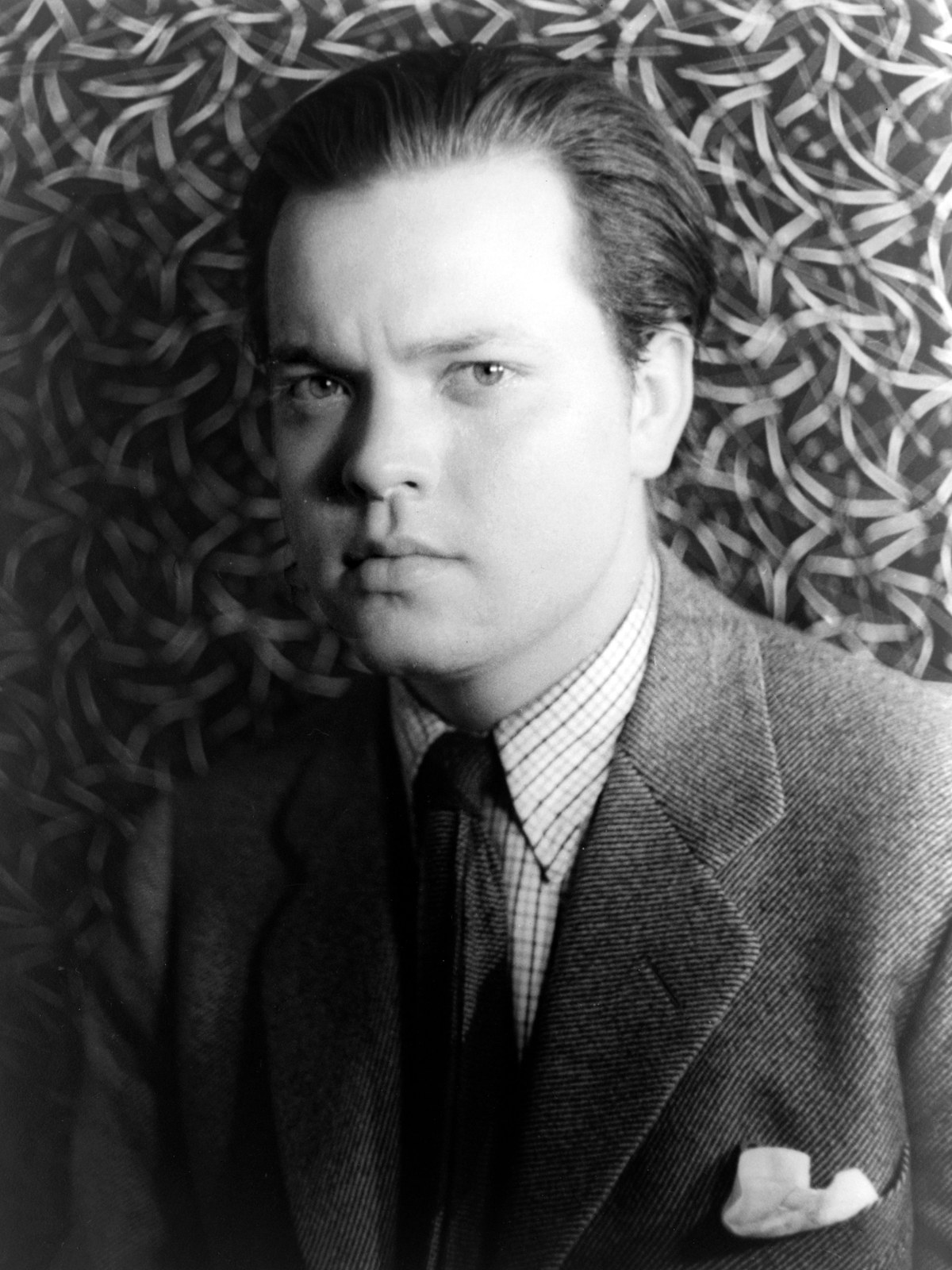
Behavioral Archetype
THE ILLUSIONIST – Welles is the entry in this file whose most famous “prank” was mostly written by his victims. On Halloween eve 1938 he dressed a radio drama in the grammar of breaking news and frightened a small audience; the newspapers, who had a commercial reason to make radio look dangerous, then manufactured the legend of a nation in flight. He is therefore two cases at once: a genuine provocateur who borrowed the authority of a medium, and the innocent pretext for a far larger hoax staged by the press against radio. Thirty-five years later he made a whole film confessing that authorship, expertise, and authenticity are themselves performance – and hoaxed the viewer in the act of explaining hoaxes. The media-troll as artist, and as the artist most honest about the trick.
Essence Indicators
- American actor, director, and broadcaster (May 6, 1915 – October 10, 1985) whose work sits at the origin of the broadcast-hoax tradition and its most self-aware coda.
- On Sunday, October 30, 1938, CBS Radio aired his Mercury Theatre on the Air adaptation of H.G. Wells’s The War of the Worlds (scripted by Howard Koch), 8–9 pm ET, unsponsored – styled as simulated news bulletins interrupting dance-band programming to report a Martian landing at Grover’s Mill, New Jersey.
- The received story – a million-plus Americans fleeing their homes – is the version that became cultural shorthand for “media power over a gullible public.” The scholarship says otherwise: a C.E. Hooper survey that night found only about 2 percent of households tuned in.
- “F for Fake” (1973): a late “film essay” on forgery and fakery, built around art forger Elmyr de Hory and his fraudulent biographer Clifford Irving – ending with Welles spinning a false story he had promised was true, hoaxing his own audience about hoaxing.
- The 1938 broadcast was labeled fiction at its open, middle, and close; it was drama, not deception for gain. The “panic” is the part that was faked – by others.
Social Persona / Impression Management
Immediate impression: Commanding, theatrical, the voice a whole nation already trusted before it was misused. Welles was a showman who understood the authority of a format better than the institutions that owned it.
Energy: Grand and controlled. The 1938 broadcast is a director’s exercise in pacing – the slow accelerando from dance music to catastrophe is the whole effect.
Impression management strategy: THE MAGICIAN WHO SHOWS THE WIRES. Unlike the cruel hoaxer, Welles never denied the trick; the drama announced itself as drama, and by 1973 he had turned the reveal into the entire subject. The pose is not deniability but disclosure – he shows you the illusion and then dares you to say you were not complicit in believing it.
Forensic Archetype Comparison
| Pattern | Match Level | Evidence |
|---|---|---|
| The Media Hoaxer | HIGH | Borrowed the news-bulletin format to stage a mass-scale fiction; the founding case of the broadcast tradition. |
| The Artist-Provocateur | EXTREME | The provocation was craft, not cruelty; F for Fake makes the deception its explicit theme. |
| The Culture Jammer | MEDIUM | The broadcast was drama, not a critique of the press – but the affair became an involuntary demonstration of the press’s own bad faith. |
| The Cruel Troll | NONE | No private victim, no gain; the drama was labeled fiction and the harm was press-authored. |
Psychometric Assessment
Big Five (OCEAN):
| Trait | Score | Evidence |
|---|---|---|
| Openness | 96/100 | Restless formal inventor across radio, theatre, and film; each medium bent to a new trick. |
| Conscientiousness | 62/100 | Meticulous within a work, famously undisciplined across a career of abandoned and butchered projects. |
| Extraversion | 78/100 | The showman’s temperament – the voice, the presence, the appetite for the center of the frame. |
| Agreeableness | 50/100 | Neither cruel nor courtier; combative with backers, generous with collaborators. |
| Neuroticism | 45/100 | Grandiosity braided with real professional anxiety about money and control. |
Dark Triad:
| Trait | Score | Notes |
|---|---|---|
| Narcissism | 60/100 | Genuine grandiosity, but subordinated to the work and, later, self-mockery. |
| Machiavellianism | 45/100 | A master manipulator of an audience’s attention – for effect, not for gain over a mark. |
| Psychopathy | 10/100 | Very low; the absence of a real victim in the marquee case is the defining fact. |
MBTI: ENFP (“The Campaigner”) – the improvisational showman-idealist, more interested in what an audience will believe than in what it can be made to do.
Why This Profile Matters
Welles is the file’s cleanest illustration that the retelling can be a bigger hoax than the prank. The 1938 broadcast reached a small audience and was labeled fiction throughout; modern scholarship holds “the supposed panic was so tiny as to be practically immeasurable on the night of the broadcast” (Pooley & Socolow, Slate, 2013). The nationwide-hysteria story was manufactured afterward by newspapers, which had been losing advertising to radio through the Depression and “seized the opportunity presented by Welles’ program to discredit radio as a source of news” – the New York Times editorialized under the headline “Terror by Radio.” The legend was then given false academic weight by Hadley Cantril’s 1940 The Invasion from Mars, which conflated being “frightened” with being “panicked.” Media historian W. Joseph Campbell, quoted in Wikipedia’s summary of the current historiography, concurs: the mass hysteria “did not occur on anything approaching a nationwide dimension” (War of the Worlds (1938 radio drama)). So the real panic-spreaders were the rival medium with the motive – a layered institutional misdirection in which the hoaxer misled a few and the institutions covering the hoax misled the many, for their own reasons. The legend endures, in Pooley and Socolow’s phrase, because it “so perfectly captures our unease with the media’s power over our lives” (Bunk History).
Where Joey Skaggs and Alan Abel built the media hoax into a deliberate curriculum with the reveal engineered from the start, Welles arrived at the same self-awareness by a different road. “F for Fake” (1973) is the tradition becoming conscious of itself: a film about a forger and his fraudulent biographer that enacts its own thesis by hoaxing the viewer, and that explicitly circles back to the 1938 broadcast as part of Welles’s “own history with fakery” (F for Fake). It is the coda the whole broadcast-hoax lineage points toward – the man who staged the marquee illusion spending a full film admitting that authorship and authenticity are partly performance, and proving it in the act of confessing.
Threat Assessment
| Category | Level | Notes |
|---|---|---|
| Physical threat | NONE | An artist and broadcaster; no physical operation, no violence. |
| Institutional threat | MEDIUM | The broadcast embarrassed radio’s competitors into a self-serving campaign – the institutions did the damage, to radio and to the record. |
| Individual threat | NONE | No private victim; the drama was labeled fiction and produced no gain at anyone’s expense. |
| Memetic threat | HIGH (durable) | The 1938 legend became the standard classroom example of media credulity – ironically, itself a myth – and the founding reference point of the broadcast-hoax form. |
Flame Warrior Classification
Primary: Evil Clown (the trick carries a barb – here, unintentionally, aimed at the press that inflated it) Secondary: Philosopher (the high-effort provocation as craft, culminating in a film that theorizes its own deception) Notes: ATK 8 – a national medium at its peak of trust, bent into the grammar of a real emergency; enormous reach and an even larger afterlife. DEF 7 – strong but not total: the drama was labeled fiction and Welles never denied the trick, so he was hard to expose, but he had no built-in reveal like Skaggs or Abel and spent years living down a “panic” he did not actually cause. HP 8 – the career took real damage afterward, yet the legend, the broadcast, and F for Fake all outlived him; scored as an artist-provocateur whose myth was co-authored by the medium he embarrassed, not as a man who set out to make a nation run.
Sources: Pooley & Socolow, “The Myth of the War of the Worlds Panic” — Slate (2013); The War of the Worlds (1938 radio drama) — Wikipedia; F for Fake — Wikipedia; “The Myth of the War of the Worlds Panic” — Bunk History
Prefer RSS? Subscribe here.