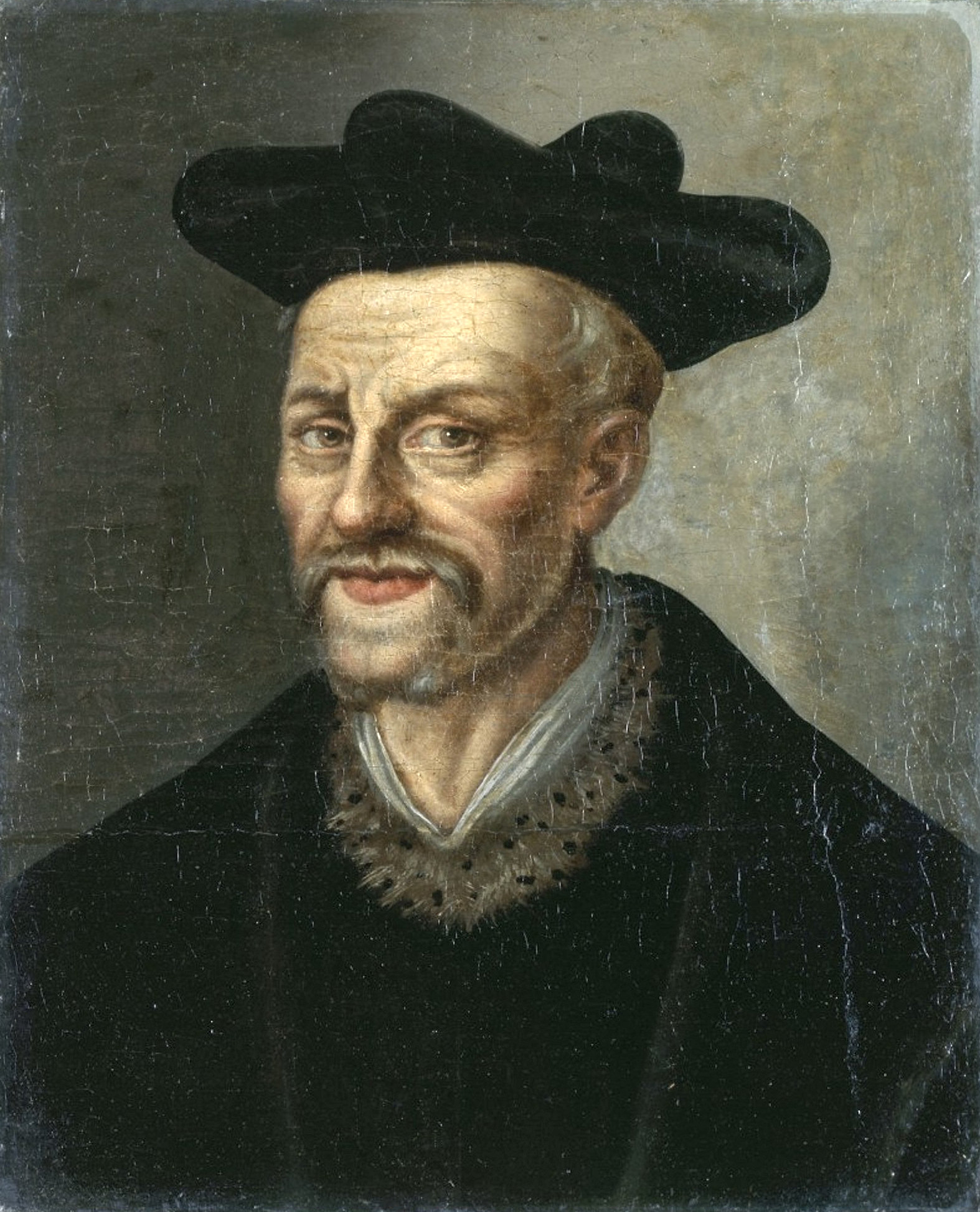
Behavioral Archetype
THE LEARNED GROTESQUE — Subject fuses two registers the establishment keeps carefully separated: the scholarly and the scatological. The attack works because the reader cannot dismiss it as either. Pure obscenity is beneath notice; pure erudition is safe. Rabelais welds them together — a giant’s bowel movements footnoted with Greek, theology delivered through a drunkard’s monologue — and the result cannot be filed under either heading. The Sorbonne could condemn the filth or answer the learning. It could not do both at once, and trying made it look ridiculous, which was the point.
Essence Indicators
- Deploys genuine humanist scholarship (Greek, law, medicine, theology) as the delivery mechanism for systematic mockery of the institutions that produced it
- Demonstrates the survivor’s instinct — published the most dangerous material of the French Renaissance and died in bed, while contemporaries burned
- Operates from inside every institution he attacks: Franciscan, then Benedictine, then secular priest, then physician, then satirist of all four
- Uses the grotesque body (eating, drinking, excreting, copulating) as a deliberate weapon against the “classical body” of official culture
- Hides authorship behind an anagram while remaining an open secret — deniability without true concealment
Social Persona / Impression Management
Immediate impression: A learned man, almost overqualified — a monk who reads Greek, a physician who lectures on Galen and Hippocrates, a humanist correspondent of Erasmus’s circle. The credentials are real. That is precisely what makes the obscenity land: it arrives signed by someone the establishment is obliged to take seriously.
Energy: Abundant, overflowing, deliberately excessive. Where Swift devastates with economy — A Modest Proposal is 3,000 words — Rabelais buries the target under sheer volume: catalogues that run for pages, lists of insults, mock-genealogies, a library of invented book titles. The maximalism is the method. Official culture prizes restraint and proportion; Rabelais answers with a flood.
Impression management strategy: CREDENTIALS AS COVER, ANAGRAM AS PLAUSIBLE DENIABILITY. Pantagruel (1532) and Gargantua (1534) appeared under “Alcofribas Nasier” — an anagram of François Rabelais that fooled no one and protected everyone. The pseudonym was thin enough that the learned recognized him and thick enough that he could, if pressed, decline to have written it. Combined with the patronage of the du Bellay brothers and, eventually, a royal printing privilege from François I, the persona gave him room to publish what should have been fatal.
Forensic Archetype Comparison
| Pattern | Match Level | Evidence |
|---|---|---|
| The Calculated Predator | MODERATE-HIGH | The obscene-erudite fusion is a deliberate, repeatable weapon, deployed across four books over two decades against the same targets — the Sorbonne, scholasticism, monastic hypocrisy. |
| The Chameleon | HIGH | Franciscan to Benedictine to secular priest to working physician to anonymous satirist. Each identity was genuine and each was a position from which to attack the next institution. |
| The Serial Deceiver | LOW-MODERATE | The “Alcofribas Nasier” anagram is the only real deception, and it was transparent. The satire itself does not pretend to be anything other than satire. |
| The Grievance Collector | MODERATE | Genuine, sustained contempt for the Paris Faculty of Theology and the scholastic establishment that censored him — but the contempt is channelled into comedy, not nursed in private. |
Psychometric Assessment
Big Five (OCEAN):
| Trait | Score | Evidence |
|---|---|---|
| Openness | 96/100 | Among the highest in the file. Subject moved fluently across theology, medicine, law, classical philology, and invented an entire comic-prose idiom in the process. The neologisms alone (he coined a substantial vocabulary) reflect a mind generating language faster than the culture could absorb it. |
| Conscientiousness | 70/100 | High but undisciplined by design. The scholarship is rigorous; the structure is deliberately chaotic. He could have written tidily and chose the digression, the catalogue, the overflow. |
| Extraversion | 68/100 | The prose is gregarious, performative, addressed directly to “drinkers and pox-sufferers.” The voice assumes a crowd. |
| Agreeableness | 30/100 | Wrote pages of mock-praise that are pure demolition, catalogued his enemies as figures of fun, and aimed the grotesque squarely at the men who held power over him. Genial in tone, savage in target. |
| Neuroticism | 38/100 | Low. The defining trait is composure under genuine danger — he kept publishing through condemnation and the burning of fellow humanists, apparently undeterred. |
Dark Triad:
| Trait | Score | Notes |
|---|---|---|
| Narcissism | 50/100 | Moderate. The anonymity cuts against personal fame-seeking, but the sheer self-assertion of the voice — and the confidence to mock the most powerful theological body in France — implies a healthy estimate of his own correctness. |
| Machiavellianism | 80/100 | High. The whole operation is strategic: the anagram, the cultivation of powerful patrons, the royal privilege, the timing of each book around shifts in court favor. He managed his cover as carefully as his comedy. |
| Psychopathy | 22/100 | Low. The work is animated by appetite, generosity, and a humanist’s faith in education and the body — not by cruelty. The laughter is Bakhtin’s “ambivalent” laughter, which includes the laugher. |
MBTI: ENTP (“The Debater”) — Dominant extraverted intuition, auxiliary introverted thinking. Subject generates possibilities and connections without restraint (the digressive structure, the invented catalogues) while grounding the chaos in real analytical command of his sources. The temperament that argues every position for the pleasure of the argument, then footnotes it in Greek.
Why This Profile Matters
Rabelais is the documented bridge between the medieval carnival and everything this file catalogues afterward. Mikhail Bakhtin spent a career — a dissertation begun in 1940, suppressed under Stalin, published as Rabelais and His World in 1965 — formalizing what Rabelais did by instinct: that the grotesque, the obscene, and the inversion of hierarchy are not decadence but a social mechanism. Degradation, in Bakhtin’s reading, “digs a bodily grave for a new birth.” Strip away the academic vocabulary and Bakhtin is describing high-effort trolling: public, aimed at the powerful, grounded in the body, and including the joker in the joke. Rabelais is the case study the theory was built on. He is also the rare operator who proves the method is survivable — condemned repeatedly, burned never.
Threat Assessment
| Category | Level | Notes |
|---|---|---|
| Physical threat | NONE | A physician with a quill. |
| Institutional threat | HIGH | Pantagruel and Gargantua were condemned by the Sorbonne (Paris Faculty of Theology); the Tiers Livre was placed on the banned list in 1546 and the Quart Livre suspended by the Paris Parlement in 1552. The work outlived every prohibition. |
| Memetic threat | EXTREME | His name became an adjective. “Rabelaisian” is the standard English word for exuberant, grotesque, scatological satire — a four-century-old operator who is still the dictionary entry for the entire mode. Every comic who has buried a serious point under an avalanche of filth is working his territory. |
| Posthumous threat | ONGOING | The work survived the Index, survived the Wars of Religion, and was canonized as the foundation of French prose. The establishment that banned him now teaches him. As with Wilde: kill the troll, then put him on the syllabus. |
Flame Warrior Classification
Primary: Philosopher / Evil Clown Secondary: Eagle Scout (genuine humanist commitment — the satire defends education, tolerance, and the body against a culture that subordinated all three to scholastic abstraction; the obscenity is in service of a real moral program, not nihilism). Notes: ATK 9, DEF 8, HP 6. ATK 9 because the erudite-obscene fusion is a genuinely original weapon and the founding instance of an entire satirical mode — one notch below Swift’s single-strike perfection because Rabelais works by accumulation rather than the killing blow. DEF 8 — the highest defensive rating among the satirists here — because the survival is the achievement: the anagram, the powerful patrons, the royal privilege, and the ambiguity of the text itself let him publish the most dangerous comedy of the French Renaissance and die of natural causes. HP 6 reflects a full life and career, cut by nothing more dramatic than age, in an era that burned men for far less.
Sources: Wikipedia; Encyclopaedia Britannica; Gargantua and Pantagruel (Project Gutenberg); Bakhtin’s carnival theory and the Rabelais connection (thefire.lol research). See also Jonathan Swift (satirical lineage — the economy of the killing blow against Rabelais’s flood) and Oscar Wilde (canonized by the establishment that first condemned him).
Cross-Referenced Dossiers
Prefer RSS? Subscribe here.