Behavioral Archetype
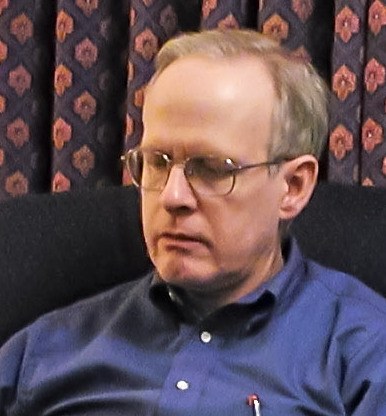
THE HARDWARE HALF OF THE BLIZZARD — Subject was not a provocateur, not a flamer, not a self-promoter. He was a builder, and specifically the builder who made things physical. When the Great Blizzard of 1978 trapped two Chicago computer hobbyists indoors in late January, Ward Christensen wrote the software and Randy Suess soldered together the hardware — an S-100 bus computer wired to a single modem — and then hosted the result in his own home, paying for the phone line out of pocket. On February 16, 1978, CBBS went online: the first dial-up bulletin board system, the seed of every forum, comment thread, and social network that followed. Christensen has the famous name; Suess built and ran the box. The first online community in history sat on a machine in his apartment, and he kept the lights on.
Essence Indicators
- Born Randy John Suess, January 27, 1945, in Skokie, Illinois; served in the Navy and studied at the University of Illinois at Chicago Circle before working as an engineer at IBM and later Zenith
- Met Ward Christensen as fellow members of CACHE, the Chicago Area Computer Hobbyists’ Exchange — the club, not a company, is where the first online community came from
- During the January 1978 blizzard, assembled the CBBS hardware while Christensen wrote the software; the system went live February 16, 1978, and ran from Suess’s own home on a single phone line that, by the time he retired it, had taken more than half a million calls
- Published the build himself, with Christensen, in BYTE (November 1978), “Hobbyist Computerized Bulletin Board”: the system “was conceived, designed, built, programmed, tested, and installed in a 30 day period (January 16 1978 to February 16 1978) by the two of us.” Christensen wrote the purpose, Suess the hardware; Suess donated “his D C Hayes modem board, PolyMorphics VTI, SwTPC keyboard, power supply, chassis, IMSAI 8080 processor card and Vector memory board” (BYTE vol. 3 no. 11, Internet Archive)
- A licensed ham radio operator (call sign WB9GPM) who helped maintain repeaters for the Chicago FM Club — the same instinct that builds a BBS: keep the shared channel running for everyone else
- In 1982 built “wlcrjs,” which became Chinet — the first public-access Unix system, carrying email and Usenet for hundreds of users — and kept it running for the rest of his life; chinet.com is still online today
- Shared the 1992 Dvorak Telecommunications Excellence Award with Christensen for the first BBS; appeared in BBS: The Documentary (2005) and otherwise never campaigned for the title of co-inventor of online community
Social Persona / Impression Management
Immediate impression: The hobbyist with the soldering iron and the spare phone line — the man who would rather host the system than headline it. No manifesto, no keynote tour, no startup he flipped. A guy who ran a public service out of his home because he wanted the room to exist.
Energy: Quiet competence with a faint grin. Where Christensen was the reticent IBM programmer, Suess was the gregarious tinkerer who liked the gear and liked the people on it — and who kept Chinet alive for nearly four decades, long after it could possibly have paid him back, because the community was the point.
Impression management strategy: None worth the name. Suess let the CBBS story carry both their names and never inflated his half; the standing reply was that Christensen wrote the code and he built the box. He hosted the first online community on his own dime and the second-oldest public-access system in the world after it, and asked for nothing but a working machine and a line that stayed up.
Forensic Archetype Comparison
| Pattern | Match Level | Evidence |
|---|---|---|
| The Quiet Builder | MAXIMUM | Built and hosted the hardware for the first BBS, then built and ran Chinet for thirty-seven years. The work is physical, dated, and undisputed. |
| The Anti-Troll | MAXIMUM | The structural inverse of this catalogue. He built and powered the room every troll would later shout in, and kept paying the phone bill. |
| The Genuine Engineer | MAXIMUM | Real S-100 hardware, a real system that took half a million calls, a real public-access Unix host still answering today. No myth required. |
| The Self-Promoter | NONE | Let the famous name be the other guy’s and never corrected the balance in his own favor. |
| The Credit-Seeker | NONE | Shared the award, shared the story, and spent the recognition on keeping the machine running rather than on himself. |
Psychometric Assessment
Big Five (OCEAN):
| Trait | Score | Evidence |
|---|---|---|
| Openness | 86/100 | Helped imagine a mode of human connection that did not yet exist — strangers leaving messages for each other through machines — and then built the first public-access Unix system on top of the same instinct. |
| Conscientiousness | 90/100 | Hosted CBBS on his own line, then ran Chinet for thirty-seven years. Keeping a shared system alive that long is conscientiousness measured in decades. |
| Extraversion | 48/100 | MODERATE. More sociable than his famously reticent partner — the host who liked the gear and the callers both — but still a man happiest behind the machine, not in front of a crowd. |
| Agreeableness | 82/100 | HIGH. Ran public services out of his home for strangers, maintained ham repeaters for the club, shared the credit without a fuss. Generosity was the operating principle. |
| Neuroticism | 28/100 | LOW. Untroubled by which name the history books reached for first; steady enough to keep one system running for nearly four decades. |
Dark Triad:
| Trait | Score | Notes |
|---|---|---|
| Narcissism | 7/100 | VERY LOW. Let the co-inventor framing settle on his partner and kept tinkering. The invention mattered; the billing did not. |
| Machiavellianism | 5/100 | VERY LOW. No positioning, no leverage. You do not run a free public-access host for thirty-seven years as a power play. |
| Psychopathy | 3/100 | VERY LOW. Earnest, generous, building and hosting things for other people to the end. The far pole of this catalogue from the predators. |
MBTI: ISTP (“The Virtuoso”) — the hands-on builder who would rather understand and assemble the physical thing than theorize about it. Introverted thinking applied to an S-100 bus, a modem, and a phone line until it became the social layer of a civilization. Where Ward Christensen reads as ISTJ — the methodical programmer — Suess is the tinkerer who makes the hardware actually work and then keeps it working.
Why This Profile Matters (Lurk More)
Lurk More is a book about what online community was before it was a product — and the answer is two hobbyists in a snowstorm, not a company. Chapter 3 devotes a full section to “Christensen and Suess: The Blizzard That Started Everything,” and Suess is the half of that pair the marketing departments forget entirely. The point of his file is the same correction made on a smaller scale: the first online community did not run in a data center owned by anyone. It ran on a machine Randy Suess built and hosted in his own home, on a phone line he paid for, because he and his friend thought it would be useful. The SysOp powering a box in a spare room out of pocket because he wants the room to exist is the antithesis of the attention economy that swallowed his invention — and Suess did it twice, building Chinet after CBBS and keeping it alive for thirty-seven years. He belongs in the catalogue for the same reason Ward Christensen does, and downstream of both sits Aaron Swartz: the builders who made the thing, gave it away, hosted it on their own dime, and declined the credit.
Threat Assessment
| Category | Level | Notes |
|---|---|---|
| Physical threat | NONE | A Navy veteran and engineer with a soldering iron and a ham license. |
| Memetic threat | NONE (to truth) / HIGH (to the founder myth) | CBBS, dated February 16, 1978, and Chinet, running since 1982, are permanent rebuttals to every platform that claims it invented online community. The hazard runs entirely against the marketing departments. |
| Civilizational threat | NONE | Another file whose hazard score is a tribute. The danger here is zero; the debt — for the hardware that held the first online room, and the host who kept it lit — is total. |
| Posthumous status | HONORED | Died December 10, 2019. The catalogue logs him not as a subject of concern but as the builder whose machine every later entry was standing on without crediting. |
Flame Warrior Classification
Primary: Philosopher — genuine invention, built and hosted freely. Secondary: Innocent / Lurker — the builder who powered the forum and stayed quietly out of the fights it hosted. Notes: ATK 8, DEF 8, HP 1. ATK 8 is the build itself: the hardware that held the first online community, plus Chinet, the first public-access Unix system, run for thirty-seven years. (One rung below his partner’s ATK 9 only because Christensen also wrote the file-transfer protocol that made the medium portable — a second invention, not a lesser man.) DEF 8 because the record is impeccable and undisputed: the date is the date, the box was his, the call count is the call count. HP 1 because the man was mortal and gone at 74, while CBBS, Chinet, and the entire medium that descends from a single phone line in his apartment outlived him — which is the whole point of his file.
Sources: Wikipedia — Randy Suess; Engadget — “Online bulletin board inventor Randy Suess dies at 74” (Dec 2019); Chinet — Public Access since 1982; Wikipedia — CBBS; Ward Christensen and Randy Suess, “Hobbyist Computerized Bulletin Board,” BYTE, November 1978 (Internet Archive).
Cross-Referenced Dossiers

Prefer RSS? Subscribe here.