Related research: Discordianism, Chaos Magick, SubGenius, and the Satanic Temple.
Behavioral Archetype
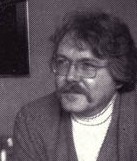
THE STRAIGHT MAN OF THE APOCALYPSE – Shea was the half of the Illuminatus! partnership who kept his feet on the ground while Robert Anton Wilson walked through the ceiling. The two met in the late 1960s editing the letters page at Playboy, where the slush pile of reader conspiracy theories – the Illuminati, the Trilateralists, the assassination grids – gave them the raw material for the most baroque conspiracy satire in American letters. (bobshea.net (Robert Shea’s official site, maintained by his son and literary executor Michael E. Shea), ‘About Robert Shea’) Wilson supplied the guerrilla ontology and the psychedelic cosmology. Shea supplied the plot, the pacing, and a working novelist’s instinct for keeping the reader turning pages through 800 of them. The result, The Illuminatus! Trilogy (1975), fed every conspiracy theory ever submitted to a men’s magazine into a blender and served it as fiction so committed to its own paranoia that readers could no longer tell where the joke ended. Shea’s contribution was the part that is easy to overlook precisely because it works: somebody had to make the chaos legible. Then he walked away from the cosmic-trickster business entirely and spent the rest of his life writing straight historical novels. After Illuminatus! was published Shea left Playboy to write full time; the two authors’ philosophical and political disagreements, in his son’s account, made the book “a dialogic novel in which no single point of view is privileged.” (bobshea.net (Robert Shea’s official site, maintained by his son and literary executor Michael E. Shea), ‘About Robert Shea’)
Essence Indicators
- Co-wrote The Illuminatus! Trilogy (1975) with Wilson, mining years of Playboy Forum conspiracy mail for the source material
- Was the realist of the pair – the structural craftsman who turned Wilson’s ontological vertigo into a novel with an actual plot
- A genuine anti-authoritarian, not a poseur: edited the anarchist zine No Governor (eleven issues) and, per his son, “never trusted the government” but “didn’t believe in all the conspiracy theories” (bobshea.net, ‘A Q&A with Mike Shea’ (Cleveland Okie e-mail interview with Michael E. Shea, 2007, reproduced on the official site)) – declining to believe it was secretly competent enough to run a real conspiracy
- After Illuminatus! turned almost entirely to historical fiction – Shike (medieval Japan), All Things Are Lights (the Cathars and courtly love), The Saracen (medieval Italy), Shaman (19th-century Illinois) – abandoning the conspiracy genre he helped invent (bobshea.net (Robert Shea’s official site, maintained by his son and literary executor Michael E. Shea), ‘About Robert Shea’)
- Settled into life as, in his son’s phrase, “a quiet Chicago Suburbanite”: daily meditation, voracious reading, sketching and painting; the apocalypse novelist who liked routine
- Shea’s earliest published fiction was magazine science fiction: “The Helpful Robots” and “Resurrection” in Fantastic Universe (September and December 1957) and “Mutineer” and “Star Performer” in If (1959 and 1960). (bobshea.net (Robert Shea’s official site, maintained by his son and literary executor Michael E. Shea), ‘About Robert Shea’ (Stories listing))
- A further historical novel, Lady Yang, “a tragic story of an idealistic empress of medieval China,” was completed but never published. (bobshea.net (Robert Shea’s official site, maintained by his son and literary executor Michael E. Shea), ‘About Robert Shea’) (bobshea.net, ‘A Q&A with Mike Shea’ (Cleveland Okie e-mail interview with Michael E. Shea, 2007, reproduced on the official site))
Social Persona / Impression Management
Immediate impression: Unremarkable on purpose. Where Wilson read as a stoned guru and Greg Hill as a Californian prankster, Shea read as exactly what he was – a professional editor and novelist from the Chicago suburbs who happened to have co-authored a deranged masterpiece. Colleagues remembered “friendliness and curiosity, cheerfulness and courage.” (bobshea.net (Robert Shea’s official site, maintained by his son and literary executor Michael E. Shea), ‘About Robert Shea’) The man who wrote the most paranoid novel of the 1970s was, in person, a meditator who painted.
Energy: Calm, dry, grounded. The straight man’s energy. Shea did not perform the chaos he wrote; he was its bookkeeper. The fireworks in Illuminatus! are Wilson’s; the load-bearing structure is Shea’s, and structure does not call attention to itself.
Impression management strategy: UNDERSTATEMENT BY DEFAULT. Shea never positioned himself as a prophet, a pope, or a guerrilla ontologist. He was a writer who did a job, did it brilliantly once, and then changed lanes. The refusal to mythologize his own role – to let Wilson be the public face of the book they wrote together – is itself a kind of discipline. He had no interest in being a guru, which is rarer among countercultural authors than it should be. A celebratory reading of Shea’s work held in Winnetka, Illinois on March 26, 1994 drew more than 100 people, among them Robert Anton Wilson, who spoke; Shea was survived by his son Michael E. Shea. (bobshea.net (Robert Shea’s official site, maintained by his son and literary executor Michael E. Shea), ‘About Robert Shea’)
Forensic Archetype Comparison
| Pattern | Match Level | Evidence |
|---|---|---|
| The Conspiracy Satirist | EXTREME | Illuminatus! is the canonical work of conspiracy-as-satire – the novel that takes every paranoid theory seriously enough to render it absurd. Shea co-built the entire apparatus. |
| The Trickster | MODERATE | Shea participated in the great Discordian-adjacent prank of the century, but he was the trickster’s collaborator, not the trickster himself. The guerrilla ontology was Wilson’s doctrine; Shea was along for the ride and supplied the vehicle. |
| The Craftsman | HIGH | Shea’s defining trait is competence. He could structure a sprawling, multi-perspective, time-jumping novel and keep it readable. His later historical fiction is the work of a disciplined professional, not a chaos magician. |
| The Anti-Authoritarian | HIGH | The anarchism was real, sustained, and earned – No Governor, a documented hostility to state power – not a countercultural pose adopted for a season. |
Psychometric Assessment
Big Five (OCEAN):
| Trait | Score | Evidence |
|---|---|---|
| Openness | 82/100 | High but not stratospheric. Co-wrote a genre-detonating experimental novel, then spent twenty years on meticulously researched historical fiction across four continents and eight centuries. Curious and wide-ranging, but anchored to craft rather than to perpetual reinvention. |
| Conscientiousness | 78/100 | The structural engine of Illuminatus! and a steady output of long, well-researched historical novels point to genuine discipline. The daily meditation and routine reinforce it. Shea finished things. |
| Extraversion | 42/100 | Introverted. The quiet suburbanite who painted and meditated, content to let his louder collaborator be the public face. |
| Agreeableness | 68/100 | Warm and well-liked – “friendliness and curiosity, cheerfulness and courage.” His anti-authoritarianism was directed at institutions, not people. |
| Neuroticism | 35/100 | Stable. A man who wrote about cosmic paranoia for a living and then went home to a placid suburban routine is not himself a paranoid. |
Dark Triad:
| Trait | Score | Notes |
|---|---|---|
| Narcissism | 18/100 | Low. Shea ceded the spotlight to Wilson and never built a personal mythology. He let the work speak and then moved on from it. |
| Machiavellianism | 30/100 | Low-moderate. Illuminatus! is a calculated piece of cultural mischief, but Shea’s role was craft, not manipulation, and his politics were anti-power by conviction. |
| Psychopathy | 4/100 | Negligible. Empathy, warmth, and steadiness across every account. |
MBTI: INTP (“The Logician”) – introverted thinking with auxiliary extraverted intuition. Where Wilson’s ENTP led with outward-facing idea-generation, Shea led with internal analysis and structure, using intuition to populate the framework. The Ti builds the scaffold; the Ne fills it with conspiracies. It is the difference between the man who imagines the cathedral and the man who makes sure it will stand up.
Why This Profile Matters
The Hidden Fire traces the Illuminati myth from Adam Weishaupt’s real Bavarian society to its second, deliberate amplification in the twentieth century – and Illuminatus! is the hinge of that second act. The book takes the genealogy further in Lurk More, where Operation Mindfuck and the Discordian flooding of the information environment become the direct ancestor of internet conspiracy culture and the trolling of truth itself. Shea matters because he is the reminder that this machinery was built by craftsmen, not just by mystics. The most influential conspiracy satire ever written required someone who could actually plot a novel. He is also the control case for the whole Discordian cluster: the participant who took the anti-authoritarianism seriously, declined the guru robes, and went home. Not every trickster wants to become a religion. Shea wrote the book and then quietly closed it.
Threat Assessment
| Category | Level | Notes |
|---|---|---|
| Physical threat | NONE | A meditating suburban novelist. The most dangerous instrument he wielded was a plot outline. |
| Institutional threat | MODERATE | Illuminatus! did real damage to the public’s ability to take official narratives at face value, and the anarchist convictions behind No Governor were sincere. But Shea aimed at credulity and authority through fiction, not action. |
| Memetic threat | HIGH | Illuminatus! seeded a vocabulary and a posture – the Illuminati as a knowing in-joke, the fnord, the conspiracy-as-satire mode – that propagated through fandom, gaming, and the early internet. The half-life is long; the trilogy is still in print and still cited. |
| Posthumous threat | MODERATE | The conspiracy-satire genre Shea helped found has curdled in the disinformation age, where the irony has been stripped out and the paranoia kept. The damage running through the culture is real, but it is more Wilson’s reality-tunnel epistemology than Shea’s plot mechanics that the modern conspiracy ecosystem inherited. |
Flame Warrior Classification
Primary: Philosopher / Trickster (the collaborator, not the cult leader) Secondary: Craftsman – the one who builds the siege engine somebody else aims Notes: ATK 6 – Illuminatus! is a high-impact cultural weapon, but Shea’s personal reach is dampened by his deliberate retreat into historical fiction and his ceding of the public role to Wilson; the move landed, the man stepped back. DEF 7 – well protected by ordinariness. You cannot mob a quiet suburbanite who has stopped giving interviews about the cosmic conspiracy and is busy researching the Cathars; there is no guru persona to attack. HP 0 – deceased, 1994, colon cancer, aged 61. The straight man took his final exit first; Wilson outlived him by thirteen years and went to Chicago to mourn.
Sources: Wikipedia — Robert Shea; Robert J. Shea’s Homepage (bobshea.net); Wikipedia — The Illuminatus! Trilogy; Penguin Random House — Robert Shea.
Cross-Referenced Dossiers

Prefer RSS? Subscribe here.