Behavioral Archetype
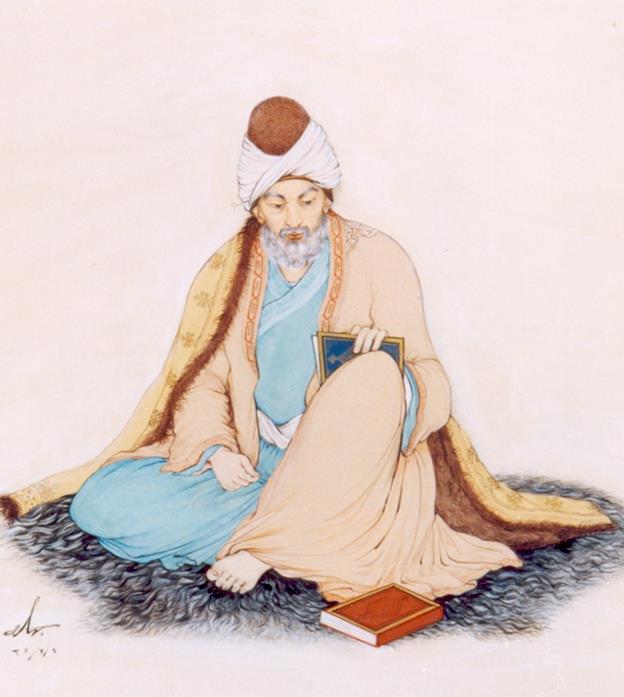
THE INSIDER WHO DEFECTED UPWARD — Subject was the establishment incarnate: a credentialed Islamic jurist and theologian in Konya, son of a respected preacher, teaching the fine points of law to his own students. (The Poetry Foundation, “Jalal al-Din Rumi” (poet biography); Jane Ciabattari, “Why is Rumi the best-selling poet in the US?”, BBC Culture, 21 October 2014 (quoting biographer Brad Gooch)) Then a wandering, uncredentialed dervish named Shams of Tabriz walked into his life in 1244 and detonated it. (The Poetry Foundation, “Jalal al-Din Rumi” (poet biography)) The jurist became a dancer; the scholar became a poet; the insider became a mystic. What followed was not an attack on faith but an end run around its bureaucracy — poetry that systematically privileged love over law, ecstasy over sobriety, and direct experience over scholarly learning, and did so from inside the credentialing system it quietly rendered insufficient.
The provocation is structural, not insulting. Subject never told the legal establishment it was wrong. He demonstrated, in twenty-six thousand couplets, that it was beside the point — that you could master every text and miss the thing the texts were about. (Jane Ciabattari, “Why is Rumi the best-selling poet in the US?”, BBC Culture, 21 October 2014 (quoting translator Jawid Mojaddedi)) That is a far more dangerous move than blasphemy. A heretic can be refuted. A man who out-loves you cannot.
Essence Indicators
- Operates from inside the institution he transcends — a jurist who kept the credentials and abandoned the certainty. The establishment could not expel a scholar of its own making.
- Routes around legalism rather than confronting it: substitutes the lover’s vocabulary (wine, longing, union, annihilation) for the jurist’s vocabulary (rule, ruling, permitted, forbidden) and lets the reader notice the second has gone missing.
- Calls his own Masnavi a work “the roots of the roots of the roots of the religion” — a claim of access to the core that implicitly demotes the surrounding apparatus of formalism and juridical nitpicking.
- Made grief generative. The poetry is the wound left by Shams’s disappearance (c. 1247, probably murdered by jealous followers) refusing to close — provocation as the by-product of an inconsolable love, not its goal. (Jane Ciabattari, “Why is Rumi the best-selling poet in the US?”, BBC Culture, 21 October 2014 (quoting Brad Gooch); The Poetry Foundation, “Jalal al-Din Rumi” (poet biography))
- Belongs to everyone now. An ecstatic Persian Sufi writing about the dissolution of the self in divine love became, in translation, the best-selling poet in the twenty-first-century United States — outliving every order that ever tried to domesticate him.
- Beyond the Masnavi, the output from age 37 to 67 runs to some 3,000 ghazals and 2,000 quatrains, dictated while he whirled. (Jane Ciabattari, “Why is Rumi the best-selling poet in the US?”, BBC Culture, 21 October 2014 (quoting Brad Gooch))
- Died at Konya on 17 December 1273; the anniversary is still marked at his tomb each year with a whirling ceremony. (Jane Ciabattari, “Why is Rumi the best-selling poet in the US?”, BBC Culture, 21 October 2014)
- Born in 1207 at Balkh (a Tajik birthplace, Vakhsh, is also claimed), he was sent to Aleppo and Damascus to finish his religious training before taking over his father’s teaching post in Konya. (The Poetry Foundation, “Jalal al-Din Rumi” (poet biography)) (Jane Ciabattari, “Why is Rumi the best-selling poet in the US?”, BBC Culture, 21 October 2014)
Social Persona / Impression Management
Immediate impression: A revered teacher and saint, not a provocateur. Subject presents as the opposite of the wild outsider — robed, learned, surrounded by disciples, founder of a tradition. The radicalism is buried inside the reverence, which is precisely why it could not be suppressed. You cannot burn a man the whole city loves for being holy.
Energy: Ecstatic, tender, overflowing. Where al-Hallaj burned with confrontation, Subject burns with longing. The register is invitation, not indictment — the door held open rather than the wall torn down. It disarms by being impossible to be offended by.
Impression management strategy: PLAUSIBLE SANCTITY. Subject’s cover is total orthodoxy of form — Quranic in idiom, devout in posture, scholarly in pedigree — wrapped around a content that quietly relocates authority from the mosque’s jurists to the individual heart’s direct experience of God. Where Hafiz used plausible deniability (“is the wine literal or divine?”), Subject uses plausible orthodoxy: every line is defensibly pious, and the cumulative effect is the demotion of the entire legal establishment to a necessary-but-insufficient foyer. The mask is never dropped because there is no mask — he means all of it, which is the most secure cover of all.
Forensic Archetype Comparison
| Pattern | Match Level | Evidence |
|---|---|---|
| The Insider Defector | HIGH | A fully credentialed jurist who used the institution’s own authority to legitimize a practice — ecstatic, music-and-dance mysticism — that its jurists condemned. The threat is internal, not external. |
| The Cult Leader | LOW-MODERATE | Gathered devoted disciples and a tradition formed around him (the Mevlevi). But the authority claimed was God’s, not his own; the self was the thing to be annihilated, not aggrandized. |
| The Methodological Deconstructor | MODERATE | Like Socrates, demonstrates that the credentialed expert can master the form and miss the substance. Differs in medium: ecstatic verse and lived practice, not interrogative dialectic. |
| The Grievance Collector | NONE | No enemies list, no score-settling, no resentment. The animating force is love and loss, not grievance. The single cleanest absence of Dark-Triad motive in this file. |
| The Martyr | LOW | Unlike al-Hallaj, Subject was never executed or persecuted to death. He died revered, in his bed, at 66. He found the survivable form of the same heresy. |
Psychometric Assessment
Big Five (OCEAN):
| Trait | Score | Evidence |
|---|---|---|
| Openness | 98/100 | Abandoned a settled scholarly career for ecstatic mysticism on the strength of a single encounter. Folded music, dance, Persian lyric, and Quranic exegesis into one practice. Recognized no boundary between the sacred and the sensuous. |
| Conscientiousness | 80/100 | Decades of juristic discipline; dictated a coherent twenty-six-thousand-couplet work over the last twelve years of his life. But the defining act — dropping the lectures to spend all his time with Shams — was the deliberate abandonment of disciplined respectability. |
| Extraversion | 60/100 | Taught publicly and drew crowds, but the engine was an interior love relationship — first with Shams, then with the divine. The ecstasy was performed (sama, whirling) yet sourced from solitude and longing. |
| Agreeableness | 80/100 | Warm, inviting, beloved — the rare figure in this file whose provocation lands as tenderness. The disagreeableness is entirely structural: he disagrees with the sufficiency of the law, never with any person. |
| Neuroticism | 35/100 | Composed and saintly in public bearing, but the poetry is the record of an unhealed grief. Not instability — a man who built a cathedral out of a wound and never pretended the wound had closed. |
Dark Triad:
| Trait | Score | Notes |
|---|---|---|
| Narcissism | 15/100 | Low. The entire program is the annihilation of the self (fana) in the divine. The ego is the obstacle, not the project. The cultural cult of personality around “Rumi” is a posthumous, largely Western invention he would not recognize. |
| Machiavellianism | 25/100 | Low-moderate. There is real strategy in the form — Quranic idiom and total piety as the carrier wave for a radical relocation of authority — but it reads as instinctive, not calculated. He found the survivable channel without appearing to look for it. |
| Psychopathy | 3/100 | Near-zero. The defining quality is overflowing empathy and love. The inverse of the cold detachment this trait measures. |
MBTI: INFJ (“The Advocate”) — Dominant introverted intuition, auxiliary extraverted feeling, mirroring al-Hallaj. Subject apprehends a transcendent truth through interior vision and is compelled to give it to the world — but where al-Hallaj delivered it as a confrontational declaration that got him killed, Subject delivered the same truth as an invitation that got him loved. Same type, opposite survival outcome. The difference is the entire lesson.
Why This Profile Matters
The Fires of History (Chapter 20, “Trolling and the Sacred”) and The Hidden Fire (Chapter 5, “The Sufi Trolls of Islam”) use the Sufi poets to make the argument that the sacred troll does not choose between serving the faith and disrupting the institution — that, when an institution has drifted far enough from its own ideals, these are the same act. Subject is that argument’s gentlest and most successful exhibit.
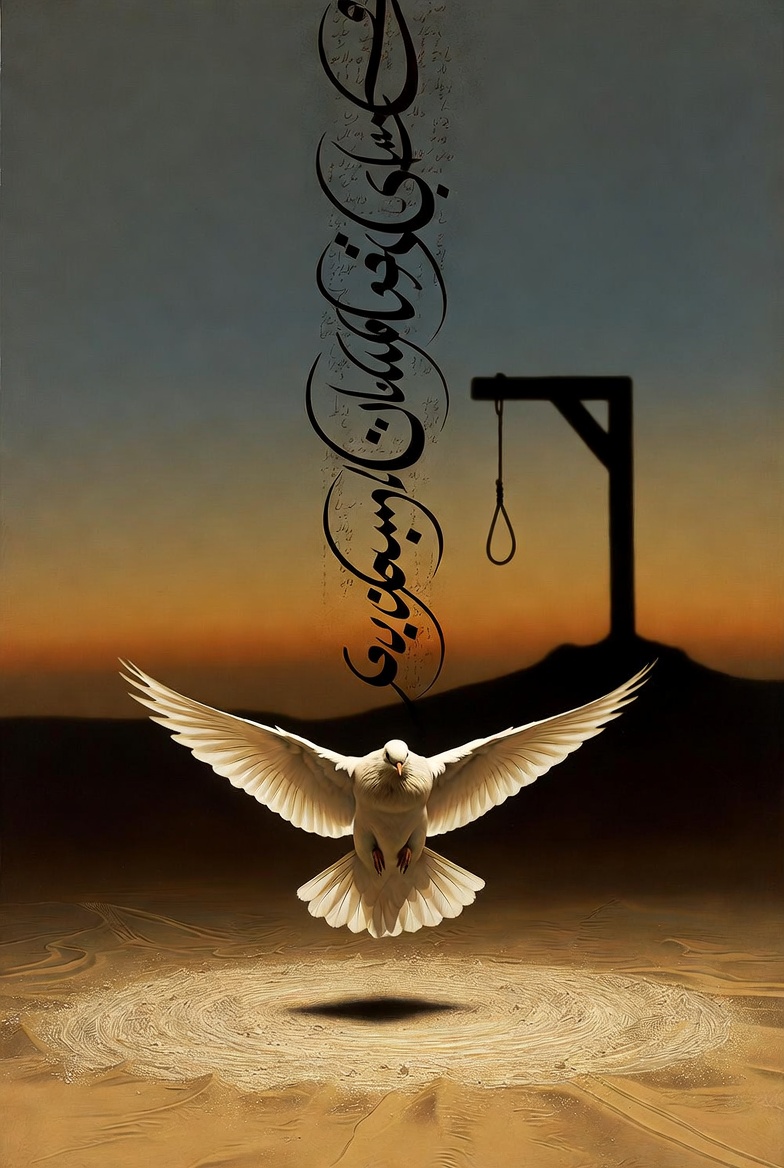
He is the deliberate counterweight to al-Hallaj, who ran the identical play and was scourged, crucified, decapitated, and scattered in the Tigris for it. Both men held that the boundary between the self and God could dissolve and that institutional mediation was therefore optional. Al-Hallaj said it out loud as a declaration — Ana al-Haqq, “I am the Truth” — and the Abbasid state answered with maximum violence. Subject said the same thing as a love poem, kept his credentials, kept his life, and was made a saint. He is the Sufi proof of the same lesson that Nasreddin Hodja embodies in the Anatolian wisdom-fool tradition a generation later in the same region: the provocation a culture metabolizes — absorbs, loves, and keeps inside the structure — outlasts every empire that tried to silence the version it killed.
The afterlife is the punchline, and it is the book’s. A thirteenth-century Persian mystic, writing about the annihilation of the ego in divine love, became the best-selling poet in a secular twenty-first-century superpower — quoted by people who cannot pronounce his name and have no idea they are reading a man who quietly demoted the entire apparatus of legalistic religion. The establishment’s worst nightmare is not that the mystic will be silenced. It is that he will be beloved, indefinitely, and that the love is the proof he was right.
Threat Assessment
| Category | Level | Notes |
|---|---|---|
| Physical threat | NONE | A teacher and poet. The only thing in danger is the reader’s certainty that the law is the whole of the faith. |
| Institutional threat | MAXIMUM-LATENT | If direct experience of the divine is available to any sincere heart, the jurists, the formalists, and the credentialing apparatus become a foyer rather than the house. The threat is maximal but slow-acting and impossible to prosecute, because every individual line is defensibly pious. |
| Memetic threat | EXTREME | The Masnavi — “the Quran in Persian” — has been read continuously for 750 years and remains the most widely read poem in the Muslim world and, in translation, among the best-selling poetry in the West. The Mevlevi (whirling dervish) order propagated the practice for seven centuries. (The Poetry Foundation, “Jalal al-Din Rumi” (poet biography)) |
| Posthumous threat | PERMANENT-AND-GROWING | Unlike most figures in this file, Subject’s reach has increased over time. His tomb in Konya is a pilgrimage site; the whirling ceremony is UNESCO-inscribed intangible heritage; his translated verse outsells living poets. (UNESCO Intangible Cultural Heritage, “Mevlevi Sema ceremony” (Türkiye), Representative List entry; Jane Ciabattari, “Why is Rumi the best-selling poet in the US?”, BBC Culture, 21 October 2014) The container was never destroyed, and the idea kept compounding. |
The Mevleviye dates its founding to 1273 in Konya and spread through the Ottoman Empire; its Sema ceremony was proclaimed a Masterpiece of the Oral and Intangible Heritage in 2005 and inscribed on UNESCO’s Representative List in 2008. (UNESCO Intangible Cultural Heritage, “Mevlevi Sema ceremony” (Türkiye), Representative List entry)
Deception Analysis
Primary deception modality: STRATEGIC SINCERITY. There is no lie in the content and no irony in the delivery — and that is the deception’s whole power. Subject means every devout word, which is exactly why the devout cannot object to the cumulative effect: a body of work in which the law is never attacked and never needed. Where Hafiz hid the theology under deniable wine and al-Hallaj hid nothing at all, Subject hides the radicalism in plain, pious sight. The cover is the truth.
Authenticity assessment: ABSOLUTE. The grief is real, the love is real, the annihilation of the self is the actual program and not a pose. The provocation is a true by-product of a true devotion. This is the rarest profile in the file: a subject whose “trolling” is entirely sincere and entirely effective at once, because the sincerity is the technique.
Flame Warrior Classification
Primary: Philosopher (each verse resolves into a relocation of religious authority from the institution to the heart, delivered so beautifully the target recites it) Secondary: Eddie Haskell, inverted — flawless deference to orthodox form as the carrier for a content that quietly empties the form of its monopoly; the establishment is complimented to death Notes: ATK 10 — the Masnavi is still relocating the center of gravity of a world religion 750 years on, and doing it to readers who do not know it is happening. DEF 9 — near-total, and granted by his audience: the community’s love is his armor, the same armor that protects Nasreddin Hodja and that al-Hallaj refused. He loses a point only because the latent institutional threat means a sufficiently alert jurist could have moved against him, and some did grumble — they simply never had grounds. HP 10 — he did not merely survive; he died revered, founded an order, and grew more influential every century since. The contrast with al-Hallaj (ATK 10, DEF 0, HP 0) is the file’s cleanest pair: the same heresy, the same century’s worth of conviction, delivered as a wall versus delivered as a door. One was scattered in a river. The other is on a million coffee mugs. Both were right.
Sources: Britannica — Rumi; The Poetry Foundation — Jalal al-Din Rumi; Encyclopaedia Iranica — Rumi, Jalāl-al-Din vii. Philosophy; Wikipedia — Rumi.
Cross-Referenced Dossiers


Prefer RSS? Subscribe here.