Behavioral Archetype
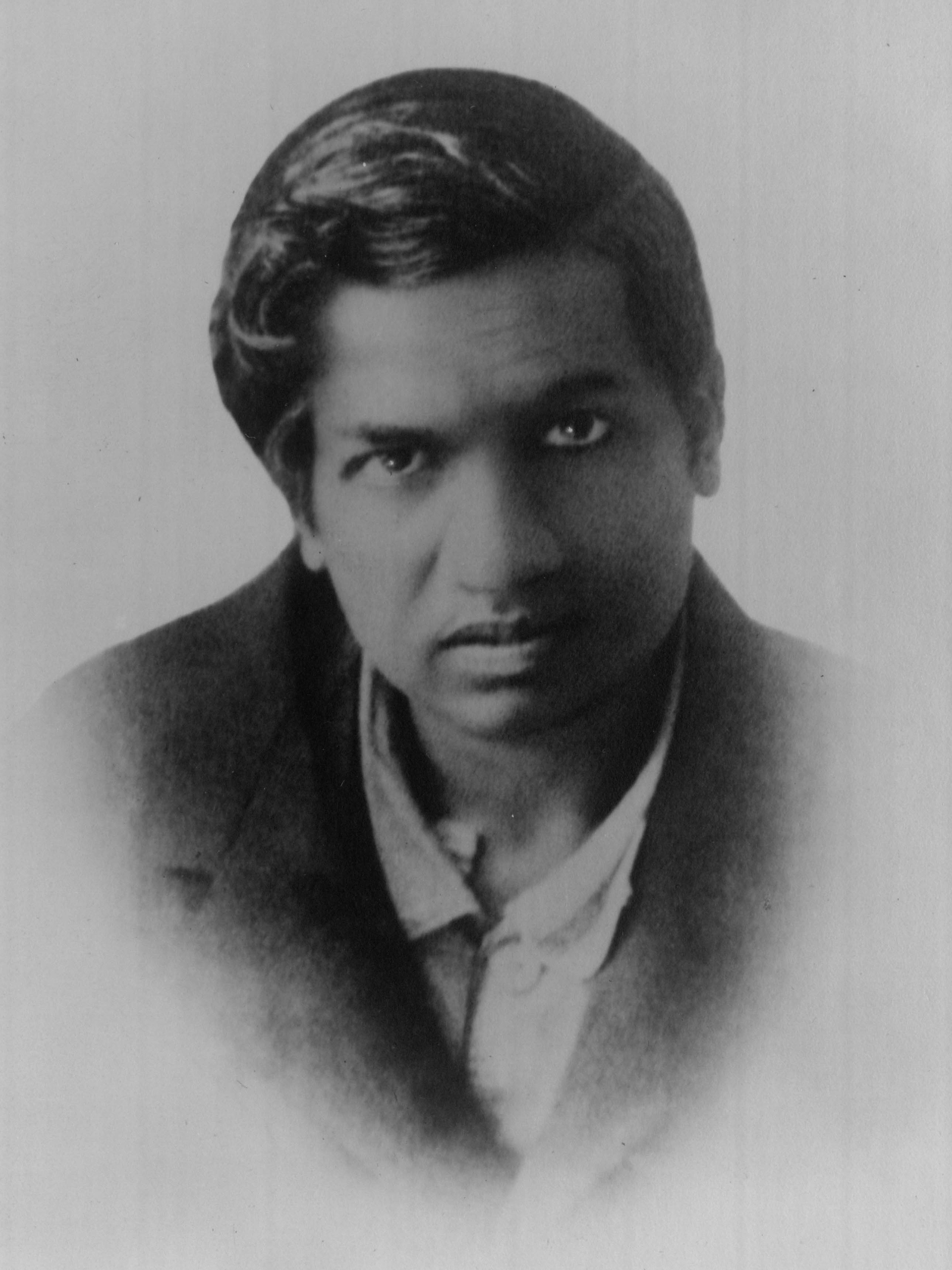
THE MAN WHO MAILED THE ANSWERS — Subject, an untrained clerk with no institutional standing, sent the leading mathematician in England a stack of correct results with no proofs attached, in a form the recipient could not initially distinguish from a hoax. Ramanujan was not trolling. He was a devout provincial autodidact trying, in earnest, to find anyone on earth who could follow him. But the artifact he produced — extraordinary claims, no derivations, delivered cold by a stranger from outside the field — is structurally identical to the artifact a troll produces. The establishment’s first instinct was the establishment’s first instinct always is: prank. The formulas were real. The instinct was the failure.
Essence Indicators
- Mailed G.H. Hardy at Cambridge an unsolicited letter in January 1913 containing roughly 120 theorems stated without proof — page after page of identities presented as if self-evident
- Had no formal training beyond a single outdated textbook (G.S. Carr’s Synopsis of Elementary Results in Pure Mathematics), from which he rebuilt large tracts of modern analysis alone
- Produced nearly 3,900 results over a short working life, recorded in his notebooks; most have since been proven correct, many decades after his death
- The “lost notebook” — his final year’s work — surfaced only in 1976, when George Andrews found it in a Cambridge library box; it contained the mock theta functions, which remain an active research frontier a century on
- The provocation was never aimed at anyone. The form of the work, not its intent, is what the field misread
- Died in 1920 at thirty-two, of illness and malnutrition, in Kumbakonam, having given the discipline more than it could process in his lifetime or for generations after
Social Persona / Impression Management
Immediate impression: A shipping clerk at the Madras Port Trust with no degree, no patron, and no credentials the European academy recognized. By every marker the establishment uses to pre-sort signal from noise, Ramanujan read as noise. The letter that reached Hardy had already been ignored by at least two other British mathematicians, who returned no answer. The persona was genuine — he really was an obscure clerk — and that genuineness is precisely what nearly buried the work.
Energy: Sincere, deferential, and quietly certain. Ramanujan did not posture or provoke. He wrote to Hardy as a supplicant seeking judgment, not as a rival issuing a challenge. The certainty was internal and unshakeable; he simply knew the formulas were right, and attributed many of them to divine origin. Where Fermat felt nothing and Cantor was wounded, Ramanujan was earnest to the point of vulnerability.
Impression management strategy: NONE, AND IT NEARLY KILLED THE WORK. Like Cantor, Ramanujan had no strategy for clearing the establishment’s filter because he did not know the filter existed. He led with the conclusions and omitted the scaffolding — the exact format guaranteed to trip a gatekeeper’s crank-detector. Hardy’s saving grace was not the system; it was one man deciding, on a second look, that the results “must be true because, if they were not true, no one would have had the imagination to invent them” (Hardy, “The Indian Mathematician Ramanujan,” American Mathematical Monthly 44, 1937; quoted with that citation in arXiv:1707.03379).
Forensic Archetype Comparison
| Pattern | Match Level | Evidence |
|---|---|---|
| The Inadvertent Provocateur | MAXIMUM | The “provocation” was a job application, not a taunt. Ramanujan wanted to be checked, not to win an argument. The trolling lived entirely in how the artifact looked to a credentialed reader primed to expect cranks. |
| The Margin Annotator | HIGH | Shares Fermat’s signature: extraordinary claims about number stated without proof, delivered as if obvious. The decisive difference — Fermat may have been bluffing and withheld on purpose; Ramanujan was not bluffing and withheld only because proof, to him, was an afterthought to the seeing. |
| The Persecuted Heretic | LOW-MODERATE | Not persecuted in Cantor’s sense — Hardy rescued rather than prosecuted him. But the structural neglect was real: the two mathematicians who received earlier letters simply ignored a man with the wrong accent and no degree. The establishment’s filter is not always malice; sometimes it is just indifference, which is slower and quieter. |
| The Con Artist | NONE | No deception, no withheld trap, no benefit sought through misdirection. The results were true, freely given, and credited to God rather than claimed for status. |
Psychometric Assessment
Big Five (OCEAN):
| Trait | Score | Evidence |
|---|---|---|
| Openness | 98/100 | Reconstructed and then surpassed the analytic frontier from one obsolete textbook, alone, with no map of where the field already was. The mock theta functions were a category of object no one else had conceived. Among the highest openness in this file. |
| Conscientiousness | 70/100 | Split, in the Fermat mode. Relentless and rigorous in the doing — thousands of recorded results — but indifferent to the documentation the discipline demanded. He saw the answer and felt little obligation to show the path to it. |
| Extraversion | 25/100 | Low. A solitary worker who reached out only when isolation became unbearable, and then to one judge by letter, not to a faction or a public. |
| Agreeableness | 75/100 | High. Deferential, devout, collaborative once admitted. The conflict in his story came from the world’s reception, not from his temperament. |
| Neuroticism | 60/100 | Moderate-to-high. Strained by exile, climate, dietary restriction, and worsening illness in Cambridge; a documented breakdown and suicide attempt during the war years. The body did not survive what the mind produced. |
Dark Triad:
| Trait | Score | Notes |
|---|---|---|
| Narcissism | 20/100 | Minimal. He attributed his results to the goddess Namagiri, not to his own genius — the opposite of a flex. He wanted the work judged true, not himself judged great. |
| Machiavellianism | 5/100 | Near absent. No strategy, no maneuver, no leverage. He mailed the answers to a stranger and hoped. |
| Psychopathy | 5/100 | Negligible. A gentle, earnest man undone by circumstance and illness, not by any hardness in himself. |
MBTI: INTP (“The Logician”) — dominant introverted thinking, auxiliary extraverted intuition, like Fermat and Cantor before him. Ramanujan saw the structure of number directly and treated proof as a formality others could supply. The shared type across all three cases is not a coincidence: the same cognition that perceives truth ahead of the field also tends to skip the showing-of-work that the field requires to believe it.
Why This Profile Matters
Ramanujan is the case that isolates the establishment’s filter from the establishment’s malice. Pierre de Fermat withheld his proof and may have been bluffing — the provocation was at least partly his doing. Georg Cantor supplied the full proof and was attacked anyway by a man who treated a theorem as heresy — the provocation was manufactured entirely by a hostile audience. Ramanujan is neither. He withheld proof, like Fermat, but in earnest rather than as a taunt; and he was met with neglect, like Cantor, but without a Kronecker to give the neglect a face. The two mathematicians who received his earlier letters did not persecute him. They just did not answer. That is the quietest and most common failure mode in the chapter: not the heresy trial, but the unopened envelope. The establishment does not need a villain to lose a genius. It only needs to reach for “crank” before it reaches for “let me check” — and to do so by reflex, against a man with the wrong credentials, every single time but one. Hardy was the one. The system was not.
Threat Assessment
| Category | Level | Notes |
|---|---|---|
| Physical threat | NONE | A clerk, then an invalid scholar. The danger ran the other way — the climate, the diet, and the illness reached him with no resistance. |
| Institutional threat | LOW | Sought entry to the institutions, not their overthrow. He wanted a chair to sit in, not a throne to topple. |
| Scholarly threat | MAXIMUM | The notebooks are still being mined a century later. The mock theta functions of the lost notebook seeded modern research into modular forms, partitions, and string theory. The reach is total and still expanding — a body of work that outran not just his lifetime but the field’s capacity to keep up. |
| Posthumous threat | ONGOING IN HIS FAVOR | Each decade proves more of him right. The 1976 recovery of the lost notebook reopened the file fifty-six years after his death. The establishment is still finishing his homework, and still finding he was correct. |
Flame Warrior Classification
Primary: Philosopher (the seer kind — the truth arrived whole, the proof came later, sometimes much later) Secondary: Target (the soft kind — not prosecuted, merely overlooked, which is how the system loses most of the ones it loses) Notes: ATK 10 — nearly 3,900 results, a self-built analytic frontier, and a class of functions still under active study a hundred years on; reach is total and ongoing. DEF 4 — almost none. No degree, no patron, no institutional armor, no strategy for clearing the filter; two earlier letters were simply ignored, and only one reader on the second look kept the work from vanishing entirely. HP 2 — a low band. The world gave him a few Cambridge years, a fellowship at the Royal Society and at Trinity, and then sent a dying man home to expire at thirty-two. The mathematics is immortal. The mathematician got three working years in the sun. The gap between ATK 10 and HP 2 is the cost of an unopened envelope.
Sources: MacTutor History of Mathematics — Srinivasa Ramanujan; Britannica — Srinivasa Ramanujan; Ramanujan’s lost notebook (Wikipedia); Srinivasa Ramanujan (Wikipedia).
Cross-Referenced Dossiers

Prefer RSS? Subscribe here.