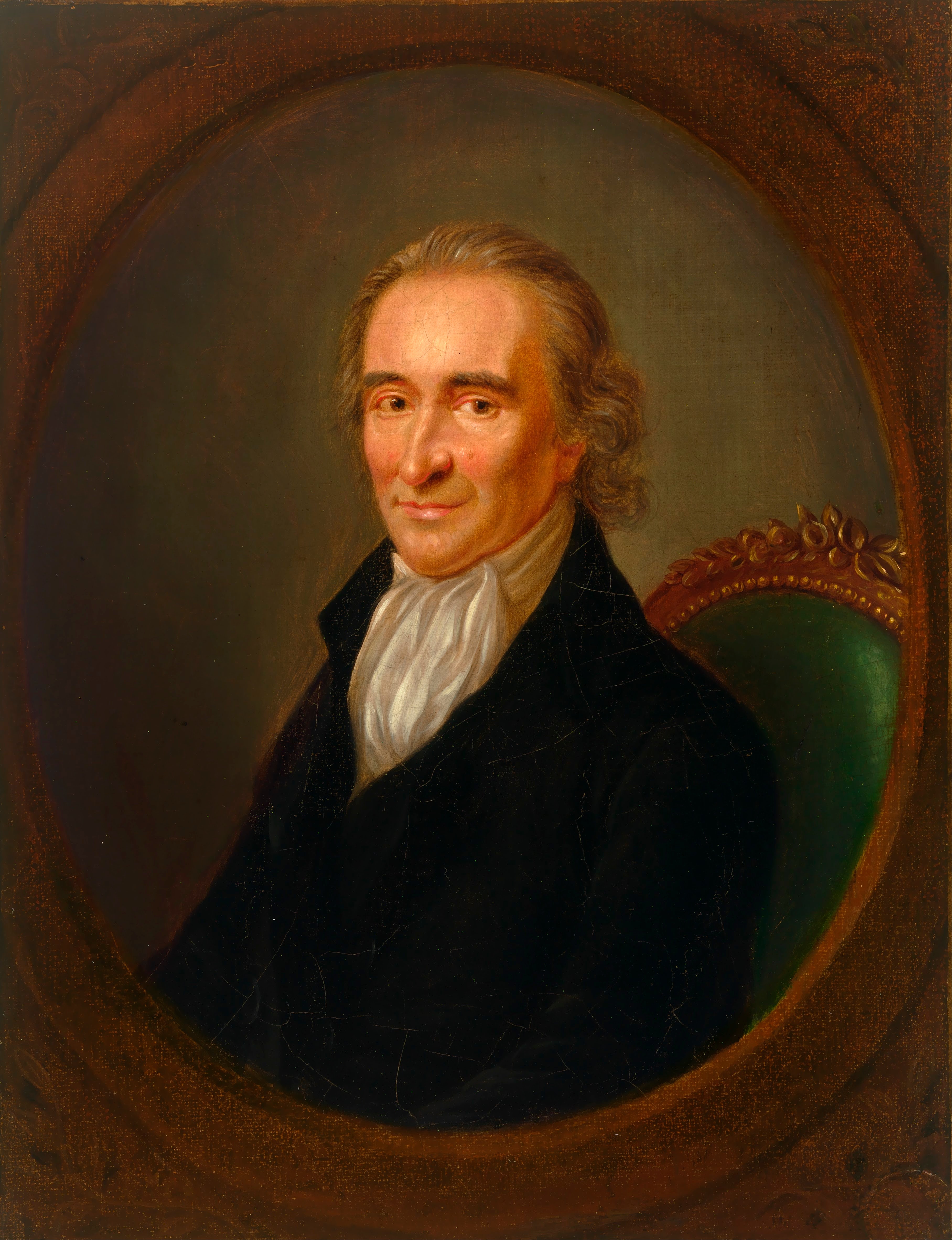
Behavioral Archetype
THE ACCELERANT — Subject does not start the fire and does not command it. Subject pours plain English on dry wood and walks away while it spreads. Each pamphlet is calibrated to a single target — the Crown, then the aristocracy, then the Church — and each is written so simply that the gatekeepers who normally control political discourse cannot contain it. The method never changes. The targets escalate until the last one is the audience itself, at which point the audience turns. The career is the cautionary tale embedded in its own success.
Essence Indicators
- Arrived in Philadelphia in November 1774 a near-total failure — corset-maker, excised tax officer, tobacco shop, two collapsed marriages — carrying a letter of introduction from Benjamin Franklin, and within fourteen months produced the most viral document in American history. Franklin’s letter to his son-in-law Richard Bache, 30 September 1774: “Thomas Paine, is very well recommended to me, as an ingenious, worthy young man … If you can put him in a way of obtaining employment as a clerk, or assistant tutor in a school, or assistant surveyor … you will do well” (Paine was thirty-seven) (Founders Online, National Archives)
- Common Sense (January 1776) sold on the order of half a million copies in a population of roughly 2.5 million; the ratio of copies to readers has never been matched by any American text
- Wrote in deliberately plain English aimed at farmers, tradesmen, and apprentices — a tactical choice that routed around the Latinate, legalistic discourse the political class used to keep the argument to themselves
- The American Crisis (December 1776) supplied the war its slogan — “These are the times that try men’s souls” — and Washington had it read aloud to the troops before the crossing of the Delaware. The opening runs on: “The summer soldier and the sunshine patriot will, in this crisis, shrink from the service of their country … Tyranny, like hell, is not easily conquered” (The American Crisis, Writings of Thomas Paine vol. 1, Project Gutenberg)
- Rights of Man (1791) answered Burke’s Reflections on the Revolution in France and reportedly outsold it roughly tenfold; the British government responded with a charge of seditious libel and Paine fled to France
- The Age of Reason (1794–1807) attacked organized religion and argued deism — the troll the public would not forgive; he died poor and ostracized, six mourners at the funeral, and his disinterred bones were later lost entirely
Social Persona / Impression Management
Immediate impression: The recently arrived English nobody. No university, no family standing, no record of success at anything he had tried. This was the disguise that wasn’t a disguise — Paine genuinely was a failed corset-maker, and the genuineness was the weapon. The argument came from outside the credentialed class, in the credentialed class’s own language stripped of its credentials.
Energy: Direct, declarative, escalating. Where Franklin operated through charm and indirection and never signed his most dangerous words, Paine put the plainest possible sentence on the page and let it detonate. “Of more worth is one honest man to society and in the sight of God, than all the crowned ruffians that ever lived.” That is not a policy position. It is an accusation phrased as common knowledge.
Impression management strategy: Plainness as a battering ram. Paine never positioned himself as a learned authority; he positioned the reader as already in agreement, then made the existing order sound absurd for disagreeing with something so obvious. The persona is the ordinary man stating the obvious — which is far harder to argue against than a philosopher stating a thesis, because there is no expertise to contest, only the appearance of plain sense.
Forensic Archetype Comparison
| Pattern | Match Level | Evidence |
|---|---|---|
| The Provocateur | EXTREME | Each pamphlet selected a larger target than the last — monarchy, then aristocracy, then the Church — and each was engineered to be uncontainable. The provocation was not a side effect; it was the design. |
| The Insider Turned Outsider | HIGH | Briefly an English excise officer and government man, Paine turned the establishment’s own plain administrative clarity against it. The Crown that once employed him later indicted him for seditious libel. |
| The Grievance Collector | MODERATE | Genuine, durable contempt for inherited privilege and hereditary power animates every work. The grievance is principled rather than personal, which is why it generalized so easily to other readers. |
| The Self-Immolator | HIGH | The defining feature of the career: the same method that beat the monarchy and the aristocracy was turned on the Church and consumed him. He could not stop escalating, and the last escalation cost him the audience that had carried the others. |
Psychometric Assessment
Big Five (OCEAN):
| Trait | Score | Evidence |
|---|---|---|
| Openness | 84/100 | Restless intellect across politics, religion, and engineering — Paine also designed an iron bridge and worked on a smokeless candle. Ideas were instruments, deployed wherever an institution looked vulnerable. |
| Conscientiousness | 48/100 | Mixed. The prose is meticulously constructed, but the life is a trail of abandoned trades, lost positions, and unmanaged money. Disciplined on the page, undisciplined off it. |
| Extraversion | 58/100 | Worked primarily through print rather than the salon. Capable in revolutionary company on two continents, but the lever was always the pamphlet, not the room. |
| Agreeableness | 28/100 | Called the Bible a collection of myths, called kings crowned ruffians, and answered the most respected conservative thinker of the age by telling him the dead have no authority over the living. Conciliation was not in the toolkit. |
| Neuroticism | 60/100 | Elevated. A combative, aggrieved temperament that could not leave a target unanswered, and a final decade of poverty, isolation, and bitterness in New York. |
Dark Triad:
| Trait | Score | Notes |
|---|---|---|
| Narcissism | 50/100 | Moderate. Believed himself right and history’s judge of kings, but signed his name to the indictable work and paid for it personally — not the behavior of pure self-promotion. |
| Machiavellianism | 70/100 | High in method, low in self-interest. The plain-language strategy was a calculated instrument for routing around the gatekeepers, but it was spent on causes rather than on Paine’s own advancement, which it actively destroyed. |
| Psychopathy | 25/100 | Low. The escalation was driven by conviction, not coldness; the man who wrote “the times that try men’s souls” for freezing soldiers was moved by their condition, not indifferent to it. |
MBTI: ENFP (“The Campaigner”) — Extraverted intuition fixed on the next institution to overturn, paired with a values-driven core that kept choosing the fight over self-preservation. The intuition found the pressure point in every order; the feeling function ensured he attacked it whatever the personal cost, which is exactly how the cost mounted.
Why This Profile Matters
The Fires of History places Paine at the hinge between trolling and revolution — the figure who proves the pamphlet can be a weapon of war. He is the chapter’s clearest case of the pipeline: the troll makes the status quo absurd, the establishment punishes the troll, the punishment proves the absurdity, and the revolution follows. He also supplies its darkest lesson. Of the chapter’s incendiaries, the survivors managed their exposure — Luther had a patron, Voltaire died rich with escape routes across borders, Franklin made himself indispensable and never signed the dangerous words. Paine managed nothing. He signed everything, escalated past what the public would tolerate, and the revolution he fed let him freeze. The career is the archetype of the troll used up by his own project.
Threat Assessment
| Category | Level | Notes |
|---|---|---|
| Physical threat | NONE | The weapon was a pamphlet. The danger ran entirely in one direction — toward Paine, who was indicted in Britain and imprisoned in revolutionary France. |
| Institutional threat | NATION-SHAKING | Common Sense made independence thinkable for the people who would have to fight for it; Rights of Man drew a British sedition charge; The Age of Reason attacked the Church itself. Three regimes treated his prose as a genuine threat. |
| Memetic threat | EXTREME | “These are the times that try men’s souls” and “the summer soldier and the sunshine patriot” remain in active circulation 250 years on, frequently by people who could not name their author. |
| Posthumous threat | RESOLVED, THEN ERASED | The nation he helped create endures; the man does not. He died in disgrace with six at the funeral, and the bones William Cobbett dug up in 1819 to honor in England were lost and never recovered. The most effective pamphleteer in the language has no grave. |
Flame Warrior Classification
Primary: Evil Clown / Philosopher — the plain-language detonator whose jokes about crowned ruffians were load-bearing arguments. Secondary: Crybaby (the aggrieved, combative register that could not let a target go unanswered). Notes: ATK 10 because Common Sense is, by penetration, the most viral document in American history and The American Crisis was read to troops as an instrument of war — the reach is the maximum the format allows. DEF 4 because Paine had almost no protection: he signed his most dangerous work, kept no patron, maintained no escape route he didn’t burn, and was indicted by one government and imprisoned by another. HP 4 because the same method that beat the Crown and the aristocracy was turned on the Church and destroyed him — poverty, ostracism, six mourners, and a body that vanished. He is the rare maximum-ATK subject with bottom-tier survival, and the gap between the two is the whole point of the file.
Sources: Britannica — Thomas Paine; Common Sense (Project Gutenberg); The Age of Reason — Writings of Thomas Paine, Vol. 4 (Project Gutenberg); The American Crisis — Writings of Thomas Paine, Vol. 1 (Project Gutenberg); Rights of Man — Writings of Thomas Paine, Vol. 2 (Project Gutenberg); Benjamin Franklin to Richard Bache, 30 September 1774 (Founders Online); Wikipedia — Thomas Paine.
Cross-Referenced Dossiers

Prefer RSS? Subscribe here.