Behavioral Archetype
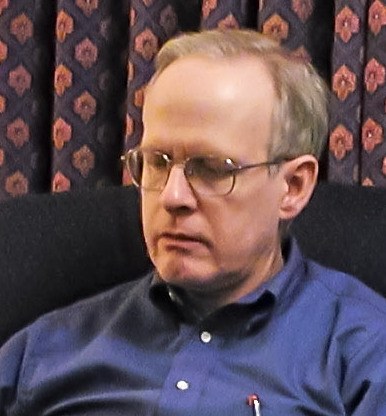
THE ANARCHIST WHO BUILT THE NETWORK AND GAVE IT AWAY — Subject is a builder, not a provocateur — but a builder of a particular kind, the kind who hands you working code with one hand and a political argument with the other and means both. Where Ward Christensen and Randy Suess built the first BBS — a single island a single caller dialed at a time — Tom Jennings built the thing that turned the islands into a continent. In late 1983 he wrote a BBS package called Fido. Then he wrote the part that mattered: a way for one Fido board to call another in the dead of night, swap messages, and hang up before the long-distance meter did real damage. That was FidoNet, live by mid-1984 — store-and-forward email and discussion for people who had no university account, no corporate line, no internet, and no money. It was the poor person’s internet before the internet, run by nobody and owned by no one, and it grew to roughly forty thousand volunteer nodes. He is, by his own cheerful description, “a fag anarcho nerd troublemaker,” and he built a global communications network as an explicitly anarchist act — proof that decentralization was a politics before it was a buzzword.
Essence Indicators
- Born Thomas Daniel Jennings, 1955, in Boston, Massachusetts; later based in San Francisco, then Los Angeles. A programmer and, increasingly over time, a visual artist
- Wrote the Fido BBS software in late 1983 and the FidoNet store-and-forward networking layer on top of it; the first interstate FidoNet message moved in 1984. The scheme: collect mail by day, dial a neighbor at 4 AM when rates were cheapest, exchange, hang up, repeat the next night down the chain (Tom Jennings, “FidoNet History and Operation,” 8 February 1985 (author’s own site))
- Designed FidoNet so anyone could join — no gatekeeper, no central authority, no fee. (Tom Jennings, “Fido and FidoNet” (sensitiveResearch.com, updated 28 February 2020)) The network’s governance was as decentralized as its routing, which produced both its resilience and its famously chaotic internal politics. The point was that nobody was in charge, and he meant it
- Wrote portable BIOS code that fed into Phoenix Technologies’ clean-room PC BIOS — quietly load-bearing work in the story of how the IBM PC clone became a commodity anyone could build
- Ran The Little Garden (later TLGnet), one of the Bay Area’s earliest flat-rate internet service providers — again the same instinct: open the pipe, charge little, let people connect (Tom Jennings, “The Little Garden, TLGnet, Inc.” (sensitiveResearch.com))
- Co-edited and published Homocore (1988–1991) with Deke Nihilson — one of the foundational queercore zines, an anarcho-punk publication that gave the early queercore movement a printed nervous system. (Tom Jennings, “HOMOCORE 1988-1991” (sensitiveResearch.com)) Same builder, different medium: a network for people the mainstream had no channel for
- Has run his own site since 1994 — first as World Power Systems at wps.com, later reorganized as sensitiveResearch.com — a sprawling personal archive of code, hardware teardowns, history, and art, maintained for decades for no reason but that it should exist (Tom Jennings, sensitiveResearch.com (home page))
- The Little Garden ran from 1992 until its 1996 sale to Best Internet Communications, growing from zero to over $125,000 a month in revenue, with Jennings as chief business and network architect throughout. (Tom Jennings, “The Little Garden, TLGnet, Inc.” (sensitiveResearch.com))
- He received the first Andrew Fluegelman Award from PC World in March 1987 and the Electronic Frontier Foundation’s Pioneer Award in March 1992, in the same class as Douglas Engelbart and Robert Kahn. (Tom Jennings, “Fido and FidoNet” (sensitiveResearch.com))
- He founded the network’s weekly newsletter FidoNews in 1984, under a stated publication policy of “we publish anything” from FidoNet members, and edited it in 1984-1985 and again in 1991-1993. (Tom Jennings, “Fido and FidoNet” (sensitiveResearch.com))
- By his own count the network grew from two computers in spring 1984 to 160 that fall and 32,000 by the early 1990s, and for a period was the sole email connection for an anti-apartheid university in South Africa. (Tom Jennings, “Fido and FidoNet” (sensitiveResearch.com, updated 28 February 2020))
Social Persona / Impression Management
Immediate impression: The hacker who is also an activist and sees no seam between the two. Not the reticent Midwestern engineer of the CBBS story — Jennings is voluble, opinionated, openly political, happy to tell you exactly why he made every choice and what it meant. Jason Scott, who interviewed him, described a man who “knew his stuff, was passionate about talking about it, and had strong feelings about why he made certain choices.” (Jason Scott, “ROFLCON: Fidonet and Tom Jennings,” ASCII (4 May 2010))
Energy: Generative restlessness. A person who builds a global network, then a zine, then an ISP, then a body of art, treating each as the same project in a different material: make a channel, open it, give it away. The anarchism is not a pose layered over the engineering; it is the engineering’s organizing principle.
Impression management strategy: Honesty as method, with no interest in being sanded smooth for posterity. Jennings has never hidden the politics behind FidoNet or pretended the network was neutral plumbing. He built a system with no owner on purpose and has said so for forty years. The self-description — “fag anarcho nerd troublemaker/activist” — is not damage control; it is the accurate spec sheet, offered without apology.
Forensic Archetype Comparison
| Pattern | Match Level | Evidence |
|---|---|---|
| The Quiet Builder | HIGH | Built FidoNet, an ISP, a zine, and a decades-long personal archive. The work is real, dated, and undisputed — though “quiet” undersells a man this happy to argue. |
| The Anti-Troll | HIGH | Built the network every later troll would shout across, and built it as a gift. The structural inverse of the predators in this catalogue. |
| The Genuine Engineer | MAXIMUM | Real BBS software, a real networking protocol that scaled to ~40,000 nodes, real BIOS code inside the PC clone era. None of it disputed. |
| The Principled Anarchist | MAXIMUM | Decentralization as stated politics, not accident — no owner, no gatekeeper, by design, for decades. The rare builder whose architecture and ideology are the same document. |
| The Self-Promoter | LOW | Opinionated and visible, but the work was given away; the network had no owner to enrich. Talks freely; profited little. |
Psychometric Assessment
Big Five (OCEAN):
| Trait | Score | Evidence |
|---|---|---|
| Openness | 95/100 | VERY HIGH. Programmer, network architect, BIOS hacker, ISP operator, zine publisher, and visual artist — a mind that treats every medium as the same impulse and keeps adding new ones. |
| Conscientiousness | 84/100 | HIGH. Rewrote the Fido software continuously through the 1980s; has maintained his own archive since 1994. The discipline of a person who finishes and then keeps tending. |
| Extraversion | 62/100 | MODERATE-HIGH. The voluble half of the builder lineage — passionate, argumentative, visibly political. More front-of-room than Christensen or Suess, by temperament and by design. |
| Agreeableness | 70/100 | HIGH on generosity, lower on deference. Gave the network away to everyone; also a self-declared troublemaker with no interest in being agreeable to authority. Warm to the commons, prickly to the gatekeepers. |
| Neuroticism | 32/100 | LOW. Steady enough to build for decades across four media and untroubled by who gets the credit or whether the politics make him unmarketable. |
Dark Triad:
| Trait | Score | Notes |
|---|---|---|
| Narcissism | 12/100 | LOW. Visible and opinionated, but built a network with no owner and gave the code away. The ego is in the ideas, not in the billing. |
| Machiavellianism | 8/100 | VERY LOW. A man whose entire design philosophy is “nobody is in charge” is the opposite of a manipulator accumulating leverage. |
| Psychopathy | 4/100 | VERY LOW. Earnest, generous, building channels for people the mainstream ignored. The far pole of this catalogue from the predators. |
MBTI: ENTP (“The Debater”) — the inventive, argumentative builder who generates systems faster than he can be talked out of them and enjoys defending every choice. Extraverted intuition pointed at modems, phone bills, BIOS chips, zines, and gallery walls until each became a channel that had not existed before. Where Christensen reads as the methodical ISTJ and Suess the hands-on ISTP, Jennings is the idea-restless networker who connects them — fittingly, the man who networked the boxes they built.
Why This Profile Matters (Lurk More)
Lurk More is a book about what online community was before it was a product, and FidoNet is the load-bearing example. Chapter 3 — “Before the Internet” — gives Jennings a full section, “FidoNet: The Poor Person’s Internet,” because his network is the cleanest proof of the book’s central correction: the social internet was not invented by companies and was never required to have owners. Christensen and Suess built the first room; Jennings wired the rooms together into a world, and did it with no corporation, no venture capital, and no central server — just modems, cheap late-night phone calls, and the volunteer labor of thousands of SysOps. By 1995 FidoNet carried roughly forty thousand nodes and two million people through echomail, and not one of them was the customer of anything. (Jason Scott, “ROFLCON: Fidonet and Tom Jennings,” ASCII (4 May 2010)) That is the antithesis of the attention economy that eventually swallowed the medium, and Jennings made it the explicit point: he built the network as an anarchist, because he believed a communications fabric should belong to no one. He sits in the catalogue alongside Christensen and Suess as the third figure in the BBS-builder lineage — the one who proved the boxes could talk to each other for free, forever, owned by nobody.
Threat Assessment
| Category | Level | Notes |
|---|---|---|
| Physical threat | NONE | A programmer and artist with a soldering iron and a printing habit. |
| Memetic threat | NONE (to truth) / HIGH (to the founder myth) | FidoNet, live in 1984 and forty thousand nodes strong by the mid-1990s, is a permanent rebuttal to every platform that claims it invented networked human conversation. The hazard runs entirely against the marketing departments — and against anyone insisting decentralization is a recent idea. |
| Civilizational threat | NONE | Another file whose hazard score is a tribute. The danger is zero; the debt — for the network that turned a thousand islands into a world, given away on purpose — is large. |
| Status | ACTIVE / HONORED | Living. Still building, still archiving at sensitiveResearch.com. The catalogue logs him not as a subject of concern but as the architect whose anarchist network the whole later medium was standing on. |
Flame Warrior Classification
Primary: Philosopher — genuine invention, given freely, with a stated philosophy behind it. Secondary: Eagle — the rare builder who carries both the technical and the moral argument and is unafraid to make it out loud. Notes: ATK 9, DEF 8, HP 6. ATK 9 is the invention itself: FidoNet, the first store-and-forward BBS network — the thing that connected the islands — plus the BIOS work and the ISP downstream of the same instinct. Level with Christensen’s 9 because networking the boards is an achievement of the same order as inventing the board and its protocol. DEF 8 because the record is impeccable and undisputed: the software is the software, the network ran, the node count is the node count. HP 6 — higher than the HP 1 of the deceased architects above him — because, simply, he is still here: still building, still arguing, still maintaining the archive. The network he made for nobody to own outlived its era; the builder is, gratifyingly, not yet downstream of it.
Sources: Wikipedia — Tom Jennings; sensitiveResearch.com — Tom Jennings (formerly World Power Systems, wps.com); ASCII by Jason Scott — “ROFLCON: Fidonet and Tom Jennings”; The Little Garden / TLGnet archive — sensitiveResearch.com.
Cross-Referenced Dossiers
Prefer RSS? Subscribe here.