Related research: The Hermetic Order of the Golden Dawn: Comprehensive Research.
Behavioral Archetype
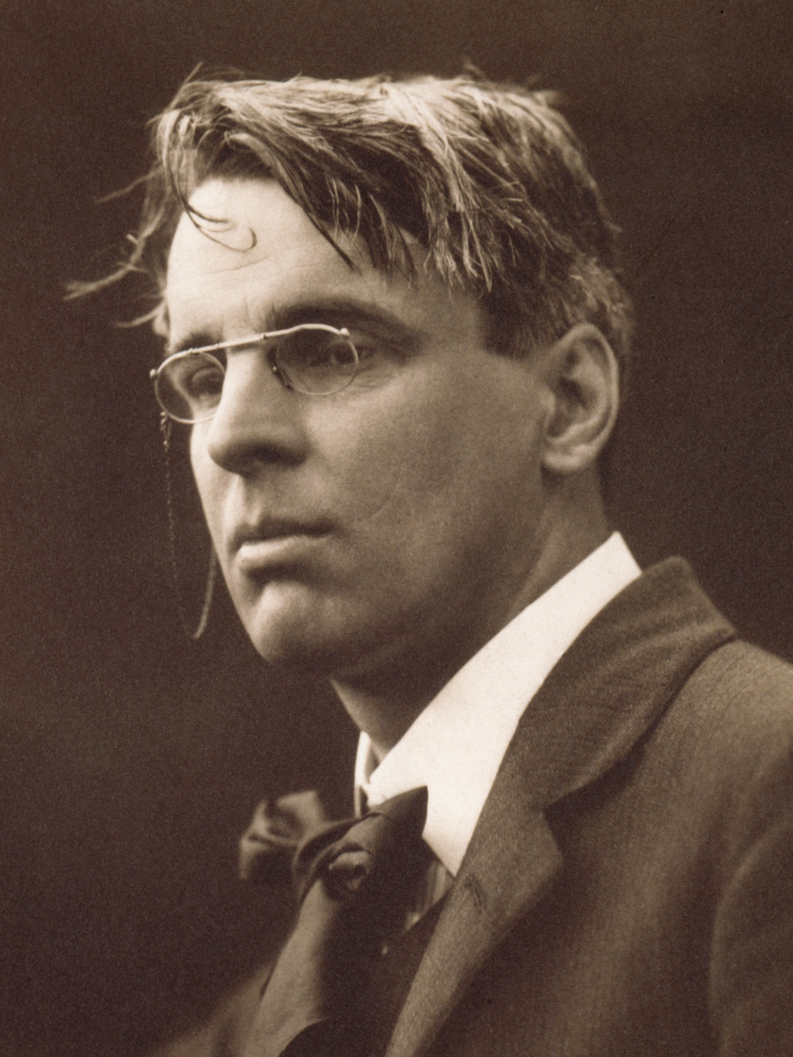
THE DOUBLE-LIFE ADEPT – Subject ran two careers at full intensity for over thirty years and refused to let either one apologize for the other. In public he was the most honored poet in the English-speaking world: Nobel laureate, Irish senator, architect of a national literary revival. In private – though he barely hid it – he was a practicing ceremonial magician who rose through the grades of the Hermetic Order of the Golden Dawn and its successor, painted angelic sigils on his ritual tools, and built an entire cosmology out of his wife’s automatic writing. The archetype is not the cult founder who hoards a system or the showman who scandalizes it. It is the man who holds two incompatible identities – the establishment’s laureate and the secret-society adept – simultaneously and without strain, and lets the dissonance do the provoking for him. He never explained. He never renounced. He simply lived both lives at once and waited for the literary establishment to become comfortable with it. A century later it still has not.
Essence Indicators
- Born 1865 in Sandymount, Dublin; co-founded the Irish Literary Revival and, in 1904, the Abbey Theatre with Lady Augusta Gregory (Edward Martyn had co-founded its forerunner, the Irish Literary Theatre, in 1899) – the institutional weapon of a cultural campaign against the premise of British colonial superiority (Poetry Foundation, “William Butler Yeats” (biography))
- Initiated into the Hermetic Order of the Golden Dawn on 7 March 1890 under the magical motto Demon Est Deus Inversus (“The Devil is God Inverted”) – of all the available Latin tags, he chose the one that asserts the identity of the sacred and the profane. The date comes from Yeats’s own hand: Virginia Moore “found a note in his handwriting to the effect that it was on Friday 7 March 1890 at 6.30 p.m. at Fitzroy Street,” Mina Mathers’s studio (Ellic Howe, The Magicians of the Golden Dawn)
- Rose to Adeptus Minor (5=6) in the Second Order (RR et AC), later to Adeptus Exemptus in the successor Stella Matutina, where he served as Imperator – an active, examined, ritual-keeping magician, not a tourist
- Took part in the 1900 revolt of the London adepts against the order’s co-founder MacGregor Mathers, and on 19 April 1900 physically blocked Mathers’ emissary Aleister Crowley – arriving in Highland regalia and a black mask – from seizing the temple at 36 Blythe Road. E. A. Hunter’s report of that morning: “At about 11.30 Aleister Crowley arrived in Highland dress, a black mask over his face, and a plaid thrown over his head and shoulders, an enormous gold or gilt cross on his breast, and a dagger at his side” (Howe, pp. 224-225; Golden Dawn research page)
- Built the cosmological system of A Vision (1925, revised 1937) out of some 3,600 pages of automatic writing produced by his wife Georgie Hyde-Lees, begun on their 1917 honeymoon – then spent the rest of his life writing poems that did not fully decode without it
- Won the Nobel Prize in Literature (1923) “for his always inspired poetry” and turned the acceptance into a statement about Irish sovereignty; served in the Irish Free State Senate (1922–1928), where he attacked the Catholic majority on divorce and censorship (NobelPrize.org, “William Butler Yeats – Facts” (1923); NobelPrize.org, “William Butler Yeats – Biographical” (from Nobel Lectures, Literature 1901-1967, Elsevier 1969)). On divorce, 11 June 1925: “We against whom you have done this thing, are no petty people. We are one of the great stocks of Europe. We are the people of Burke; we are the people of Grattan; we are the people of Swift, the people of Emmet, the people of Parnell” (Seanad Debates, 11 June 1925, Debate on Divorce Legislation Resumed)
- Escalated rather than mellowed with age: the sexually frank Crazy Jane poems (1932), the Steinach rejuvenation operation at sixty-eight (1934), and a tombstone epitaph – “Cast a cold eye / On life, on death. / Horseman, pass by!” – that refuses the reader consolation (the closing lines of “Under Ben Bulben,” Poetry Foundation)
- The automatic-writing experiment began four days after the wedding and ran to more than 400 sessions, producing nearly 4,000 pages of script that Yeats studied and organized. (Poetry Foundation, “William Butler Yeats” (biography))
- His Nobel lecture, delivered on 15 December 1923, was titled “The Irish Dramatic Movement” and opened: “I have chosen as my theme the Irish Dramatic Movement because when I remember the great honour that you have conferred upon me, I cannot forget many known and unknown persons.” (NobelPrize.org, “William Butler Yeats – Nobel Lecture: The Irish Dramatic Movement” (15 December 1923)) (Poetry Foundation, “William Butler Yeats” (biography))
Social Persona / Impression Management
Immediate impression: A grave, courtly, instantly recognizable public man – the laureate poet, the senator, the figurehead of a national culture – whose biography quietly contains a thirty-year second career in ceremonial magic that the public man never disowned. Where Mathers performed Highland nobility and Crowley advertised depravity, Yeats performed exactly the dignity the world expected of him, and let the occult life sit underneath it in plain sight, unexplained.
Energy: Dignified, deliberate, theatrically grave. Contemporaries describe a man of enormous presence who took himself with complete seriousness and used that seriousness as an instrument – it made the provocations land harder because they came from the era’s most respectable literary voice rather than from a known provocateur.
Impression management strategy: RESPECTABILITY AS COVER FOR THE STRANGE. Yeats’ signature move was to put genuinely transgressive content – occult cosmology, sexual frankness, a defense of the divine in the demonic – inside the most reassuring possible package: the Nobel poet, the senator, the national institution. The respectable frame did not soften the strangeness; it smuggled it. A reader who would dismiss an occultist read the magic anyway because it arrived signed by the most garlanded poet of the age. He never had to argue that the laureate and the magician were the same person. He simply was both, in public, and made the audience hold the contradiction.
Forensic Archetype Comparison
| Pattern | Match Level | Evidence |
|---|---|---|
| The Sincere Provocateur | EXTREME | Believed in magic, loved Maud Gonne, and cared about Irish independence with total sincerity – and provoked relentlessly out of exactly those commitments. The sincerity and the provocation are the same force, which is the defining pattern. |
| The Establishment Insider | HIGH | Nobel laureate, senator, founder of a national theatre and a national literary movement – and he used every one of those platforms to provoke the consensus that honored him. Worked the orthodoxy from inside it. |
| The Authority Seeker | LOW | Sought and held real institutional authority (Imperator, senator), but did not fabricate aristocracy, demand cosmic obedience, or route an order through an unfalsifiable personal channel. He revolted against the man who did. |
| The Pathological Liar | LOW | His metaphysics are unverifiable by nature, but there is no pattern of fabricated biography or invented credentials. He published his occult system openly under his own name in A Vision. The strangeness was disclosed, not hidden. |
Psychometric Assessment
Big Five (OCEAN):
| Trait | Score | Evidence |
|---|---|---|
| Openness | 96/100 | Kabbalah, Enochian, Theosophy, Irish folklore, Neoplatonism, tarot, astrology, and a homemade cosmology of gyres – fused with a poetic technique that reshaped the language. The synthesizing range is near the ceiling for the field. |
| Conscientiousness | 82/100 | Three decades of examined grade work and ritual diaries, a sustained body of major work across fifty years, and the administrative grind of running a theatre and serving in a senate. The discipline was real and lifelong. |
| Extraversion | 64/100 | A commanding public performer – stages, senate floors, mid-riot speeches – but the engine was a brooding, interior, vision-haunted private life. Performed extraversion over an introvert’s core. |
| Agreeableness | 38/100 | Capable of deep loyalty (Gregory, Gonne) but combative by temperament: he confronted rioters, despised rivals in print, and joined the revolt that expelled his order’s founder. The graciousness was selective. |
| Neuroticism | 60/100 | High. The thirty-year Maud Gonne torment, the despair over Irish public life, the dread of age that drove the Steinach operation – a genuinely anxious, mortality-haunted man under the marble public surface. |
Dark Triad:
| Trait | Score | Notes |
|---|---|---|
| Narcissism | 55/100 | Moderate-high. Total self-seriousness, a public persona built and maintained with care, and a habit of casting himself as the voice of civilization against the mob – but anchored to real, earned achievement rather than to fabrication or self-deification. |
| Machiavellianism | 45/100 | Moderate. The respectability-as-cover strategy and the cultural-warfare conception of the Literary Revival are genuinely shrewd; his personal conduct (the serial proposals, the doorstep brawl) was more compulsive than calculated. |
| Psychopathy | 18/100 | Low. No pattern of callous exploitation. The cruelty in the record is reactive and personal – a grudge in a poem – not the cold predation of the high scorer. The suffering he caused, he mostly caused himself. |
MBTI: INFJ (“The Advocate”) – Dominant introverted intuition, auxiliary extraverted feeling. Subject perceives a hidden order behind the visible world (the gyres, the symbols, the magical correspondences) and channels it through a values-driven public role. Where the ENTJ founders of the lineage (Mathers, Crowley) command systems from the front, the INFJ adept serves a vision – and arranges a national culture, a body of poetry, and a cosmology as its vehicles. The intuition supplies the strange interior world; the feeling function makes it land in public.
Why This Profile Matters
Yeats is the lineage’s proof that the occult was not a fringe hobby of cranks but a working engine of the highest art of the age. Mathers built the Golden Dawn system and guarded it; Crowley weaponized its notoriety; Dion Fortune explained it. Yeats did something none of them managed: he used it. He took the symbolism of an order founded on a forged manuscript and made it the substrate of poems that the twentieth century could not do without – “Sailing to Byzantium,” “The Second Coming,” “Among School Children.” The literary establishment wanted the poetry without the magic, and Yeats refused the trade. He is the standing rebuttal to anyone who treats the esoteric tradition as merely silly: the silliness and the genius ran through the same man, on the same fuel, for fifty years.
He also demonstrates the limit of the provocateur. The Blueshirt flirtation of 1933–34 – when Yeats briefly wrote marching songs for an Irish quasi-fascist movement out of his own aristocratic contempt for mass politics – is the moment the man who saw through every orthodoxy was briefly captured by one that flattered his vanity. He withdrew quickly, and on the wrong grounds (he found the Blueshirts too vulgar, not too authoritarian). It is the necessary asterisk on the whole profile: the troll who sees through all performances can still be taken in by the one performance that tells him he was right to feel superior.
Threat Assessment
| Category | Level | Notes |
|---|---|---|
| Physical threat | NONE | A poet and a senator. The most violent act on record is blocking a costumed Crowley from a doorway in 1900; the popular “kicked him down the stairs” version is apocryphal. |
| Institutional threat | HIGH | Built two durable institutions (the Abbey Theatre, the Literary Revival) as instruments of cultural warfare against the Empire, then used the Senate to fight the new Irish state’s Catholic-nationalist consensus from within. Both the building and the provoking were institutional acts of the first order. |
| Memetic threat | EXTREME | His poems are load-bearing fixtures of the language – “the centre cannot hold,” “a terrible beauty is born,” “the artifice of eternity” are quoted by people who have never read the originals. The occult layer rode into the canon undetected inside the most-taught poetry of the century. |
| Posthumous threat | ONGOING | The work is more central now than at his death; the occult dimension that scholarship long suppressed is finally being read straight. The double life he never explained keeps generating discomfort, which is exactly the effect it was always going to have. |
Deception Analysis
Primary deception modality: DISCLOSED CONTRADICTION. Yeats’ signature is not concealment – it is open, unexplained contradiction held in public. He did not hide the magic; he published A Vision under his own name. He did not hide the second career; the doorstep fight with Crowley was witnessed and reported. The “deception,” such as it is, lies in refusing to reconcile the laureate with the magician, the senator with the adept, the refined Celtic-twilight lyricist with the old man writing that “Love has pitched his mansion in the place of excrement.” He let the audience assume the respectable surface was the whole man, and let the contradiction sit there, undefended, doing its work. The one genuinely unfalsifiable element – whether the spirits and gyres were real – is a property of the field, not a fabrication by the author.
Authenticity assessment: HIGH, and that is the finding. Unlike the fabricated Highland comte beside him in this lineage, Yeats invented no credentials and forged no genealogy. The credentials are real, the magical practice was sustained and documented, and the persona is not a costume worn over something else – it is one true face of a man who had two. The most authentic thing about Yeats is that he meant all of it at once: the poetry, the magic, the love, the politics, the provocation. He did not choose between sincerity and provocation because, in his case, they were the same thing seen from two sides – which is, in the end, what his motto says. The Devil is God inverted.
Flame Warrior Classification
Primary: Philosopher Secondary: Big Cat (the genuine institutional reach – a national theatre, a national literary movement, a Senate seat) Notes: ATK 9 – the poems reshaped the language itself and remain inescapable a century on, and the occult cargo they carried into the canon undetected makes the impact both enormous and uniquely sly; this is maximum reach. DEF 7 – the respectability armor genuinely worked, where Crowley invited attack and Mathers shattered under it: the laureate frame deflected the “dangerous occultist” charge for decades and let the magic ride in unchallenged. The one crack is the Blueshirt episode, where the armor briefly turned out to be the vanity it was protecting. HP 8 – fifty years of sustained major output, two surviving institutions, a Nobel, and a body of work that grew more central after his death; he died at 73 having escalated to the end rather than declined. He is the lineage’s rare subject whose impact, defenses, and legacy all point the same direction – the adept who used the system and outlived everyone who fought over it.
Cross-References
Yeats stands inside the same Golden Dawn lineage as MacGregor Mathers – but on the opposite side of its defining fracture. Mathers built the order and ruled it by decree as the sole conduit to the Secret Chiefs; Yeats was among the senior London adepts who revolted against exactly that authoritarianism in 1900 and helped vote Mathers’ protege out, experiencing from the governing side the same feud-prone failure mode that would later expel Dion Fortune from a successor order. When Mathers sent Aleister Crowley to London to seize the temple by force, it was Yeats who physically blocked the door at Blythe Road – the future Nobel laureate and the future “Wickedest Man in the World” grappling over access to a secret magical lodge while the landlord called a constable. Set against the rest of the lineage, the typology is clean: Mathers founded the system and could not share it, Crowley scandalized it, Fortune translated it – and Yeats, the one who fought both founder and rival, quietly did the thing none of them could, which was turn the whole apparatus into permanent art.
Sources: William Butler Yeats — The Poetry Foundation · William Butler Yeats — Britannica · W. B. Yeats — Biographical, NobelPrize.org (1923) · W.B. Yeats, Magus — Lapham’s Quarterly (Jamie James) · Ellic Howe, The Magicians of the Golden Dawn (1972; 1985 ed.), Internet Archive · “Under Ben Bulben” — Poetry Foundation
Cross-Referenced Dossiers
Prefer RSS? Subscribe here.