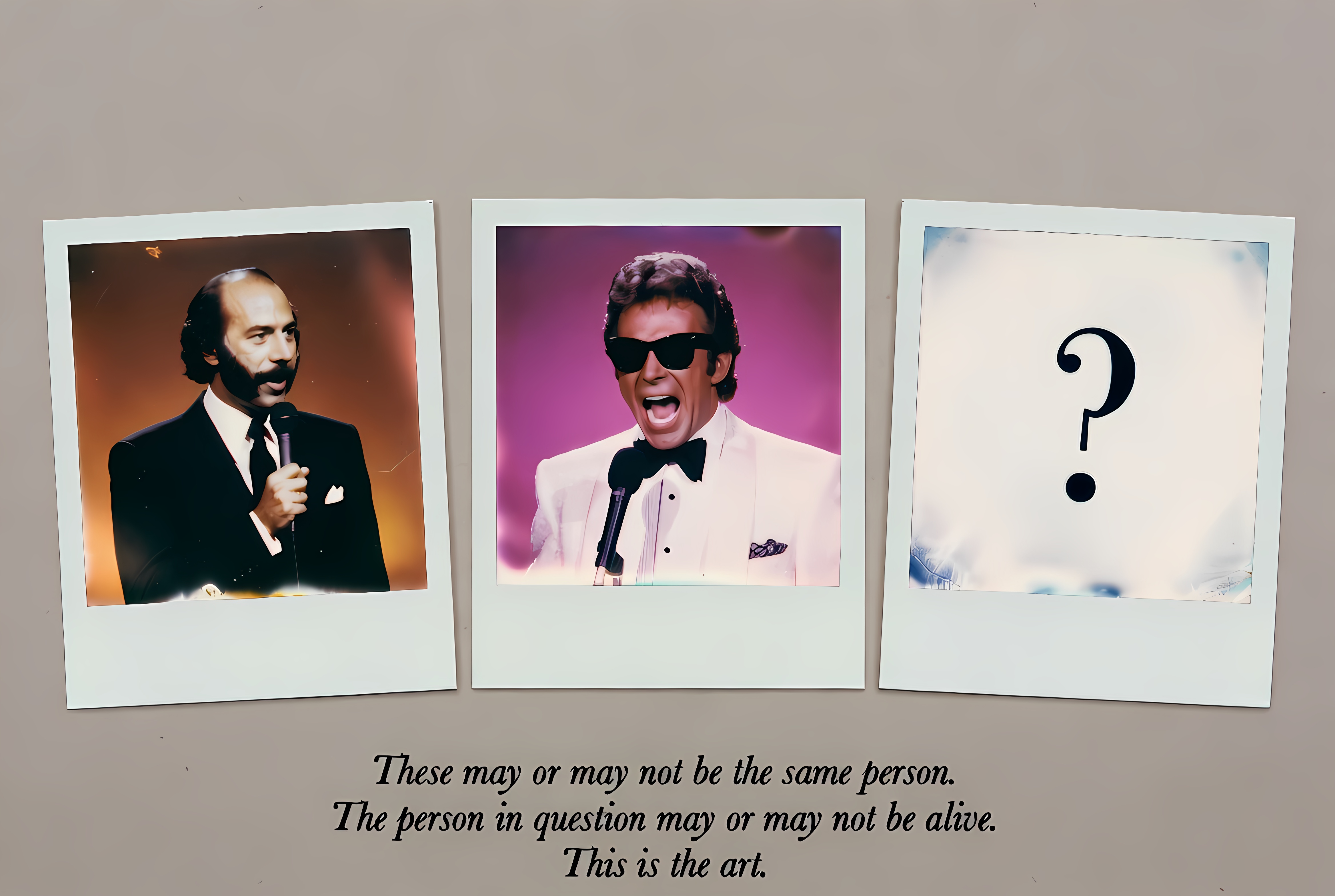
Related research: Andy Kaufman (1949-1984): Commitment Trolling as Art Form.
Behavioral Archetype
THE PERMANENT PERFORMER — Subject eliminated the boundary between performance and reality so completely that no one — including close friends, family members, and collaborators — could determine where Andy Kaufman ended and the characters began. The performance was not an act he did; it was a state he inhabited. The “real” Andy Kaufman may not have existed in any accessible form.
Essence Indicators
- Projects radical uncertainty — every interaction with subject requires the observer to determine whether they are seeing a person or a performance, and the determination is never reliable
- Demonstrates unprecedented commitment to bit: maintained Tony Clifton persona across years, wrestling career across four years, death hoax across forty-two years (and counting)
- Shows systematic hostility to audience expectations — every time the audience thinks they understand what’s happening, subject changes the terms
- Weaponizes audience discomfort as the primary artistic medium
- Operates on a timeline longer than his own life — the death question is the ultimate long-form bit
Social Persona / Impression Management
Immediate impression: Depends entirely on which Kaufman is present. The childlike Foreign Man. The aggressive Tony Clifton. The sincere TM practitioner. The hostile Inter-Gender Wrestling Champion. Each persona is complete and fully inhabited. Transitions between them occur without warning and without explanation.
Energy: Unstable by design. Subject radiates the specific energy of someone who might do anything, at any moment, for reasons you will never understand. The unpredictability is not chaotic — it is the product of absolute discipline applied to the art of being unpredictable.
Impression management strategy: IMPRESSION DESTRUCTION. Where Franklin creates strategic impressions, Kaufman destroys them. Every time the audience forms an impression, Kaufman invalidates it. The strategy is to make impression-formation itself impossible, forcing the audience into a permanent state of uncertainty. This is the Cynic mode taken to its logical extreme: not just rejecting convention, but rejecting the concept of a stable self.
Forensic Archetype Comparison
| Pattern | Match Level | Evidence |
|---|---|---|
| The Chameleon | EXTREME | Multiple fully-realized identities maintained simultaneously. Tony Clifton was played by both Kaufman and Bob Zmuda, making the identity literally distributed across multiple bodies. |
| The Pathological Liar | HIGH — BUT MISLEADING | Subject “lied” constantly (every persona is technically a lie). However, the lies were transparent to those paying attention. The audience knew Tony Clifton was Kaufman. The wrestling was staged. The “lying” was the art form. Pathological implies compulsive; Kaufman’s deception was deliberate, crafted, and purposeful. |
| The Narcissistic Operator | MODERATE | Subject demanded attention on his own terms. However, the attention was often negative (booing, walkouts, hatred from wrestling fans). A narcissist wants admiration; Kaufman wanted a reaction. Any reaction. |
| The Calculated Predator | LOW | Subject did not exploit targets for personal gain. The “targets” (wrestling opponents, audiences) were participants in the performance, not victims of it — though the distinction was not always clear to them. |
Psychometric Assessment
Big Five (OCEAN):
| Trait | Score | Evidence |
|---|---|---|
| Openness | 98/100 | Subject explored every conceivable form of performance including anti-performance (reading The Great Gatsby to a comedy audience). No format was too strange, no commitment too extreme. |
| Conscientiousness | 91/100 | Extremely high. The Tony Clifton persona was maintained with method-actor discipline. The wrestling career required physical training and sustained commitment over four years. The appearance of chaos required extraordinary planning. |
| Extraversion | 85/100 | Operated exclusively through live performance with audiences. Required witnesses. However, the “real” Kaufman was reportedly quiet, gentle, and introverted — making the extraversion itself a performance. |
| Agreeableness | 12/100 | Read The Great Gatsby to a booing comedy audience. Offered to play a record of himself reading it instead. Wrestled women on national television for four years. When the audience wanted comedy, gave them discomfort. When they wanted sincerity, gave them a character. |
| Neuroticism | 35/100 | Relatively low. Subject appeared genuinely comfortable in situations that would be psychologically intolerable for most people (sustained booing, audience hostility, public hatred). Either genuinely unbothered or performing unbotheredness so convincingly that the distinction is meaningless. |
Dark Triad:
| Trait | Score | Notes |
|---|---|---|
| Narcissism | 60/100 | Moderate-high. Subject needed an audience — but needed the audience to be confused, not admiring. This is an unusual narcissistic profile: the subject wants to be the center of attention but does not want the attention to be positive. |
| Machiavellianism | 75/100 | High. Every performance was meticulously planned and strategically deployed. The apparent spontaneity was rehearsed. The “chaos” was choreographed. |
| Psychopathy | 28/100 | Low-moderate. Subject reportedly felt genuine distress when performances caused real harm (some wrestling opponents were genuinely upset). The guilt coexisted with the compulsion to continue. |
MBTI: INFP (“The Mediator”) — This is the surprise. Underneath the performances, collaborators describe a gentle, spiritual, earnest person who practiced Transcendental Meditation daily and seemed genuinely uncertain about the boundary between self and character. The introverted feeling manifests as the conviction that the performance matters, that it means something, even when (especially when) nobody else can see what. The extraverted intuition serves the creativity; the introverted feeling is the engine.
Threat Assessment
| Category | Level | Notes |
|---|---|---|
| Physical threat | LOW | Wrestling was staged (mostly). |
| Institutional threat | MODERATE | Dismantled the conventions of comedy performance. After Kaufman, “comedian” no longer means what it meant before. |
| Memetic threat | HIGH | The question “Is he dead?” has been running for 42 years. The death-as-performance meme has outlasted most of his actual performances. |
| Posthumous threat | UNKNOWN | If Kaufman is alive (he is not), this is the most successful long-form performance in history. If he is dead (he is), the fact that the question persists means the performance is still running without a performer. The bit has achieved autonomy. It no longer needs Andy Kaufman to continue. |
Deception Analysis
Primary deception modality: REALITY DISSOLUTION. Subject does not deceive about specific facts (unlike Franklin’s personas or Swift’s irony). Subject dissolves the framework within which “deception” and “sincerity” are distinguishable. After enough Kaufman exposure, the audience loses confidence in its ability to determine what is real. This is not a lie. It is an attack on the concept of lying.
Authenticity assessment: IMPOSSIBLE TO DETERMINE. This is the assessment. The file remains open.
Flame Warrior Classification
Primary: Evil Clown / Impostor Secondary: Enfant Provocateur (the wrestling career) Notes: HP: ? — The question mark IS the stat. It has been the stat since 1984. No other Flame Warrior in this file requires a question mark for any value. Kaufman is the only subject who weaponized his own mortality stats. ATK 9, DEF 2, HP 10. The ATK is the commitment — every performance landed because it was total. DEF is low because Kaufman never defended; he just did the next bit. HP is maximum because the bit is still running forty years after his death. You cannot kill what might not be dead.
Sources: Britannica; Andy Kaufman — Wikipedia; Tony Clifton — Wikipedia; WWE.
Cross-Referenced Dossiers

Prefer RSS? Subscribe here.