Behavioral Archetype
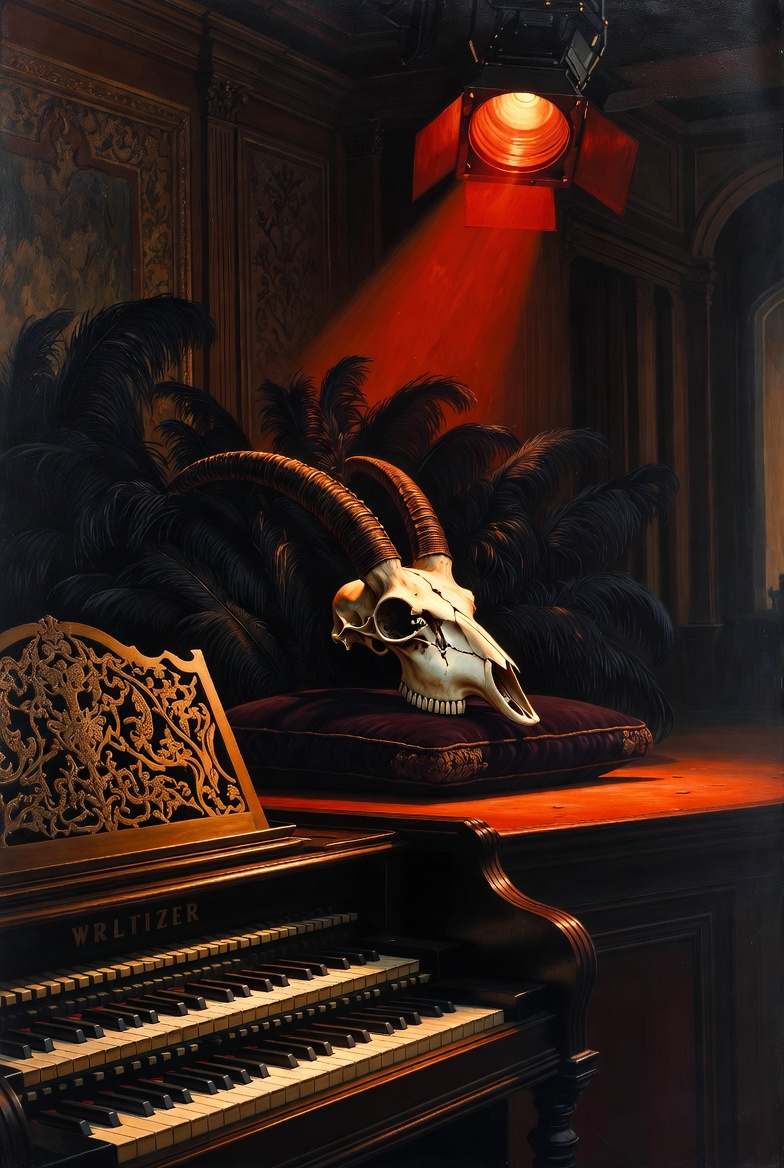
THE SHOWMAN IN THE BLACK HOUSE – Subject founded the Church of Satan (1966, San Francisco) and authored The Satanic Bible (1969), which has sold over a million copies and remains the most commercially successful grimoire in publishing history. LaVey’s genius was recognizing that Satan – the adversary, the questioner, the figure who said “no” to God – was the perfect brand for a philosophy of individualism, carnality, and theatrical self-assertion. The theology was Ayn Rand in a black cape. The aesthetics were Universal Studios horror. The combination was irresistible to anyone who had ever felt that church was boring and Nietzsche was hard to read. LaVey gave them Satan with a lounge-act soundtrack, and a million copies moved.
Essence Indicators
- Projects diabolical menace while operating what is essentially a libertarian philosophy club with excellent production values
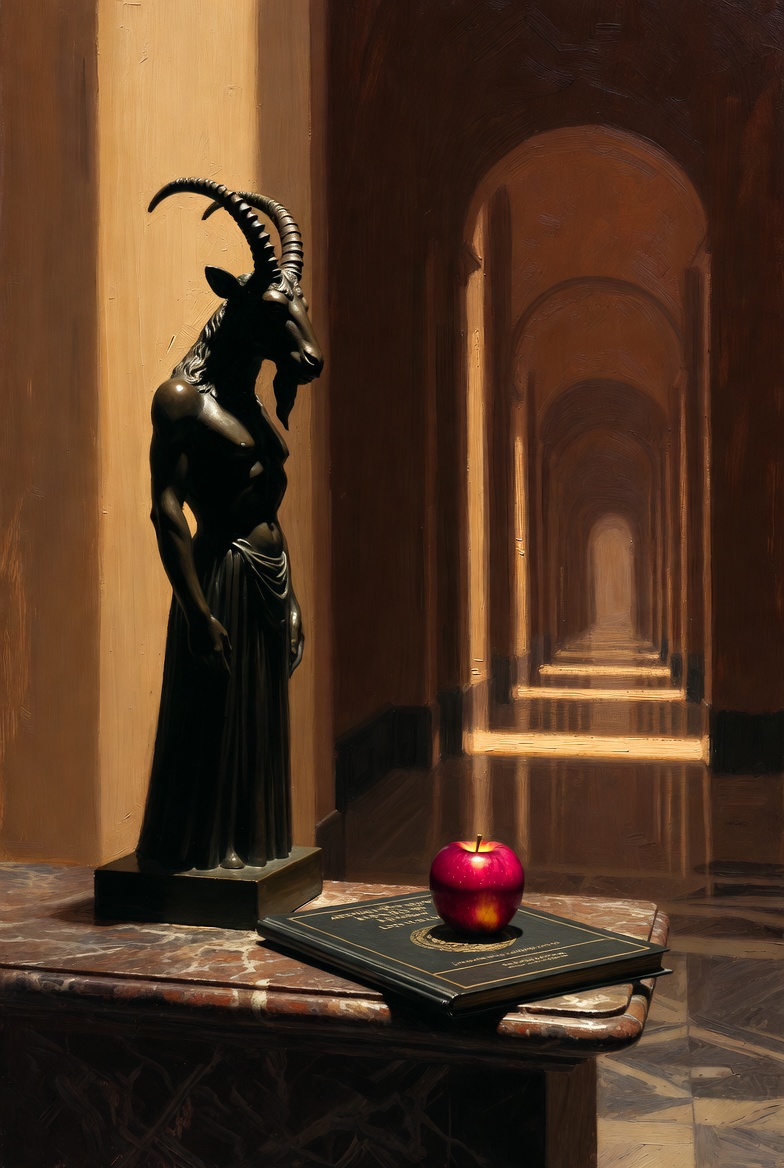
- Demonstrates extraordinary brand instinct – the shaved head, the black house at 6114 California Street, the nude altar, the Baphomet sigil, the ceremonial trappings created a visual identity that mainstream religion could not ignore and counterculture could not resist
- Born Howard Stanton Levey; reinvented himself as “Anton Szandor LaVey” with a fabricated backstory involving the circus, Marilyn Monroe, and a career as a crime scene photographer
- Maintains absolute consistency in the persona – LaVey never broke character, never conceded the fabrications, never acknowledged the gap between the mythology and the man
- Converts Christian panic into free advertising with the efficiency of a Fortune 500 marketing department
Social Persona / Impression Management
Immediate impression: The Devil as nightclub host. LaVey in his prime was a striking figure – shaved head, Mephistophelean goatee, black clothing, penetrating stare. He looked like what Central Casting would send if you asked for Satan. This was not accidental. LaVey understood that religious authority is 90% costume and 10% content, and he dressed accordingly.
Energy: Controlled, performative, seductive. Not the volcanic intensity of Crowley or the manic evangelism of Stang. LaVey operated with the energy of a Las Vegas headliner – polished, rehearsed, and aware at every moment of the audience’s position. The rituals were theater. The interviews were performances. The Black House was a stage set. Everything was deliberate.
Impression management strategy: TOTAL BRAND CONTROL. LaVey constructed every element of his public identity – name, biography, environment, costume, theology – as a unified aesthetic package. The Black House was not just a home but a prop. The nude altar was not just ritual but publicity. The Satanic Bible was not just theology but product. LaVey understood, decades before “personal branding” entered the lexicon, that identity is a design problem.
Forensic Archetype Comparison
| Pattern | Match Level | Evidence |
|---|---|---|
| The Brand Architect | EXTREME | Built the most recognizable occult brand of the twentieth century from nothing but theatrical instinct and Ayn Rand paperbacks. The Church of Satan’s visual identity – Baphomet sigil, black mass aesthetic, LaVey’s personal look – is more consistent than most Fortune 500 companies. |
| The Mythomaniac | HIGH | LaVey’s biography is substantially fabricated. The circus career, the affair with Marilyn Monroe, the crime photography – most of it is invented or dramatically embellished. The fabrications are not incidental; they ARE the product. |
| The Cult Leader | HIGH | Charismatic authority figure with a personal religion, devoted followers, and a compound (the Black House). However, the Church of Satan’s doctrine of individualism and self-interest makes it a paradoxical cult – the dogma is “don’t follow dogma.” |
| The Carnival Barker | HIGH | LaVey’s operational mode is fundamentally that of a showman. Step right up. See the nude altar. Read the forbidden bible. The Satanic rituals are sideshow attractions with philosophical pretensions. |
Psychometric Assessment
Big Five (OCEAN):
| Trait | Score | Evidence |
|---|---|---|
| Openness | 80/100 | Founded a new religion, synthesized multiple philosophical traditions, lived an aesthetically driven life. However, the openness is curated – LaVey explored what served the brand and ignored what didn’t. |
| Conscientiousness | 70/100 | Maintained the Church, the Black House, the persona, and a steady publication schedule for three decades. The discipline is in the performance. The chaos is in the personal life (multiple partners, financial instability, organizational schisms). |
| Extraversion | 78/100 | Performer, media figure, host of the Black House salon. But also genuinely reclusive in later years, preferring the company of his pets and synthesizers to human interaction. |
| Agreeableness | 15/100 | The Satanic Bible explicitly rejects altruism, compassion for the undeserving, and turning the other cheek. “Satan represents kindness to those who deserve it, instead of love wasted on ingrates.” |
| Neuroticism | 50/100 | Moderate. The controlled persona suggests low neuroticism, but the late-life isolation, organizational conflicts, and financial difficulties suggest more turbulence beneath the surface than the Brand permitted. |
Dark Triad:
| Trait | Score | Notes |
|---|---|---|
| Narcissism | 85/100 | Very high. Founded a religion with himself as High Priest. Fabricated an entire biography to enhance his mystique. Maintained a compound decorated as a monument to his own aesthetic. The narcissism is the fuel for the brand engine. |
| Machiavellianism | 75/100 | High. The Church of Satan’s organizational structure concentrated power in LaVey. The theological framework (“might is right,” stratified membership, anti-egalitarianism) is explicitly Machiavellian. The nude altar is Machiavelli as set design. |
| Psychopathy | 45/100 | Moderate. LaVey was capable of callousness (the organizational purges, the interpersonal betrayals) but also maintained genuine long-term relationships and showed real affection for animals. The psychopathic presentation is largely performative. |
MBTI: ENTJ (“The Commander”) – Dominant extraverted thinking, auxiliary introverted intuition. Subject builds an organization, designs a brand, commands followers, and structures a philosophical system. The Ni provides the aesthetic vision; the Te executes it with corporate efficiency. LaVey ran the Church of Satan like a CEO runs a company, because that is essentially what it was.
Threat Assessment
| Category | Level | Notes |
|---|---|---|
| Physical threat | LOW | The rituals were theater. The threats were rhetorical. The most dangerous thing in the Black House was the furniture. |
| Institutional threat | HIGH | The Satanic Bible provided a coherent, accessible alternative to Christianity that required no belief in the supernatural. The Satanic Panic of the 1980s was, in part, institutional Christianity’s immune response to LaVey’s brand success. |
| Memetic threat | EXTREME | The aesthetic package – Baphomet sigil, black mass, Satanic Bible, LaVey’s image – is permanently embedded in Western popular culture. Every metal band, horror film, and Hot Topic store is downstream of LaVey’s brand design. He made Satan cool. That is not a small accomplishment. |
| Posthumous threat | STRUCTURAL | The Church of Satan continues. The Satanic Bible is still in print. The aesthetic LaVey designed is still the default visual language for “Satanism” in popular culture. The brand outlived the showman, which is the definition of successful branding. |
Deception Analysis
Primary deception modality: MYTHOLOGICAL SELF-CONSTRUCTION. LaVey’s fabricated biography is not incidental to the project – it IS the project. The real Howard Levey was a competent organist and amateur occultist from a middle-class background. “Anton Szandor LaVey” – circus performer, crime photographer, Marilyn Monroe’s lover, Black Pope – is a fictional character that the real man inhabited so completely that the distinction became irrelevant. The deception is not a bug in the system. It is the operating system.
Authenticity assessment: DELIBERATELY INAUTHENTIC. LaVey is the most honest liar in this file. The entire project announces itself as theater – the costumes, the rituals, the Black House. The audience knows it is a performance. LaVey knows they know. The fabricated biography is the only element where the deception is unacknowledged, and even there, the exaggerations are so baroque that they function as signals: “I am telling you a story. The story is the point.”
Flame Warrior Classification
Primary: Evil Clown / Blowhard Secondary: Impersonator (the fabricated biography as sustained performance art) Notes: ATK 7 – The Satanic Bible is a direct hit on Christian cultural hegemony that has been landing for over fifty years. DEF 6 – the theatrical framing provides decent protection (“it’s just a philosophy”), but the fabricated biography is a persistent vulnerability that critics exploit. HP 0 – subject is deceased, but the brand he built is still operational, which means the DEF score applies posthumously.
Sources: Britannica: Anton LaVey; Britannica: Church of Satan; Wikipedia: Anton LaVey; Wikipedia: The Satanic Bible.
Cross-Referenced Dossiers

Prefer RSS? Subscribe here.