Behavioral Archetype
“I know what we did for our art is controversial and it upsets me if this has hurt the feelings of hibakusha. Our aim, though, was to capture the attention of young people, who haven’t experienced war” (Ryuta Ushiro, the group’s leader, Chugoku Shimbun, October 2008)
THE GUERRILLA ARTISTS WHO APOLOGISED FOR THE METHOD, NOT THE WORK — Subject is Chim↑Pom, a Tokyo collective of young artists who, preparing a show at a Hiroshima museum, chartered a skywriting plane and wrote the word pika, the flash, in the sky over the city where the first atomic bomb fell. They gave no notice. The survivors’ organisations called it self-serving; the city demanded an apology; the museum apologised for its own curator; the group apologised and pulled the show. It is on this file because the provocation was planned to be unannounced, and because its makers held their line on the work while conceding the method.
Essence Indicators
- The plan. “I was told that it would be better to adopt a “guerilla” tactic in carrying this out, implementing the plan without prior notice.”; “I imagined this as a possibility.”; “However, for this project, I didn’t do any special research related to Hiroshima.”; “Yes, but I have a strong belief in freedom of expression.” (Ushiro, Chugoku Shimbun)
- The act. “The group chartered a plane which flew over Hiroshima starting at 7 a.m. For the next five hours it continued intermittent flights above the city to create the word five times.” (Chugoku Shimbun)
- The other side. Sunao Tsuboi, chairman of the Hiroshima prefectural confederation of A-bomb survivors’ organisations: “Their way of expression is self-serving. It’s hardly an appeal for peace,”; the city: “Such works must not be tolerated and must be apologized for sincerely.”; the museum’s director: “The museum would like to apologize on behalf of a staff member who failed to stop the artists from an act that went too far while she was involved in observing it,”; an art historian: “This sort of act will just provoke fear in people.”; “It’s no wonder, then, why some people think the artists were merely being provocative.” (Chugoku Shimbun)
- The defence. The museum’s chief curator: “I believe the group did this purely to create a work of art; it wasn’t some kind of amusement.” (Chugoku Shimbun)
- The apology, in their words. “We apologized for not making more effort to appreciate the feelings of the hibakusha and other residents before we implemented our plan.” (Chugoku Shimbun); the group’s notice: “深くお詫び致します。”; “事前に皆様とお話する機会にこだわるべきであったと思っています。”; “なお、今回開催予定の展覧会は、美術館とも相談し、自粛することに決めました。” (Get Hiroshima; our gloss: We apologise deeply. / We think we should have insisted on a chance to talk with everyone beforehand. / The exhibition planned for this time has, after consulting the museum, been called off.)
- What they kept. “What they did apologize for was going about their work in a way that caused offense to those old enough to remember the atomic bombing of the city.”; “They insisted all along, though, that they would eventually exhibit the completed piece in the form of a video documentary.”; and at that later show, “Sunao Tsuboi, head of an association of atomic-bomb victims’ groups in Hiroshima, will give a talk.” (The Japan Times, March 2009)
Social Persona / Impression Management
Immediate impression: Young Tokyo artists with a plane and a word.
Energy: Brash, sincere about the art, contrite about the manners.
Impression management strategy: THE ART DEFENCE. Apologise for the hurt, never for the work.
Forensic Archetype Comparison
| Pattern | Match Level | Evidence |
|---|---|---|
| The Enfant Provocateur | HIGH | “without prior notice” (Chugoku Shimbun). |
| The Public-Space Intervention | HIGH | Five words in the sky over a city (Chugoku Shimbun). |
| The Partial Retreat | HIGH | Apologised for the method, kept the work (The Japan Times). |
Psychometric Assessment
Scores assess the documented persona of the group.
Big Five (OCEAN):
| Trait | Score | Evidence |
|---|---|---|
| Openness | 90/100 | |
| Conscientiousness | 40/100 | “I didn’t do any special research” |
| Extraversion | 75/100 | |
| Agreeableness | 40/100 | |
| Neuroticism | 45/100 |
Dark Triad:
| Trait | Score | Notes |
|---|---|---|
| Narcissism | 55/100 | |
| Machiavellianism | 40/100 | |
| Psychopathy | 15/100 |
MBTI: ESFP (“The Entertainer”) — the stunt first, the research never.
Why This Profile Matters
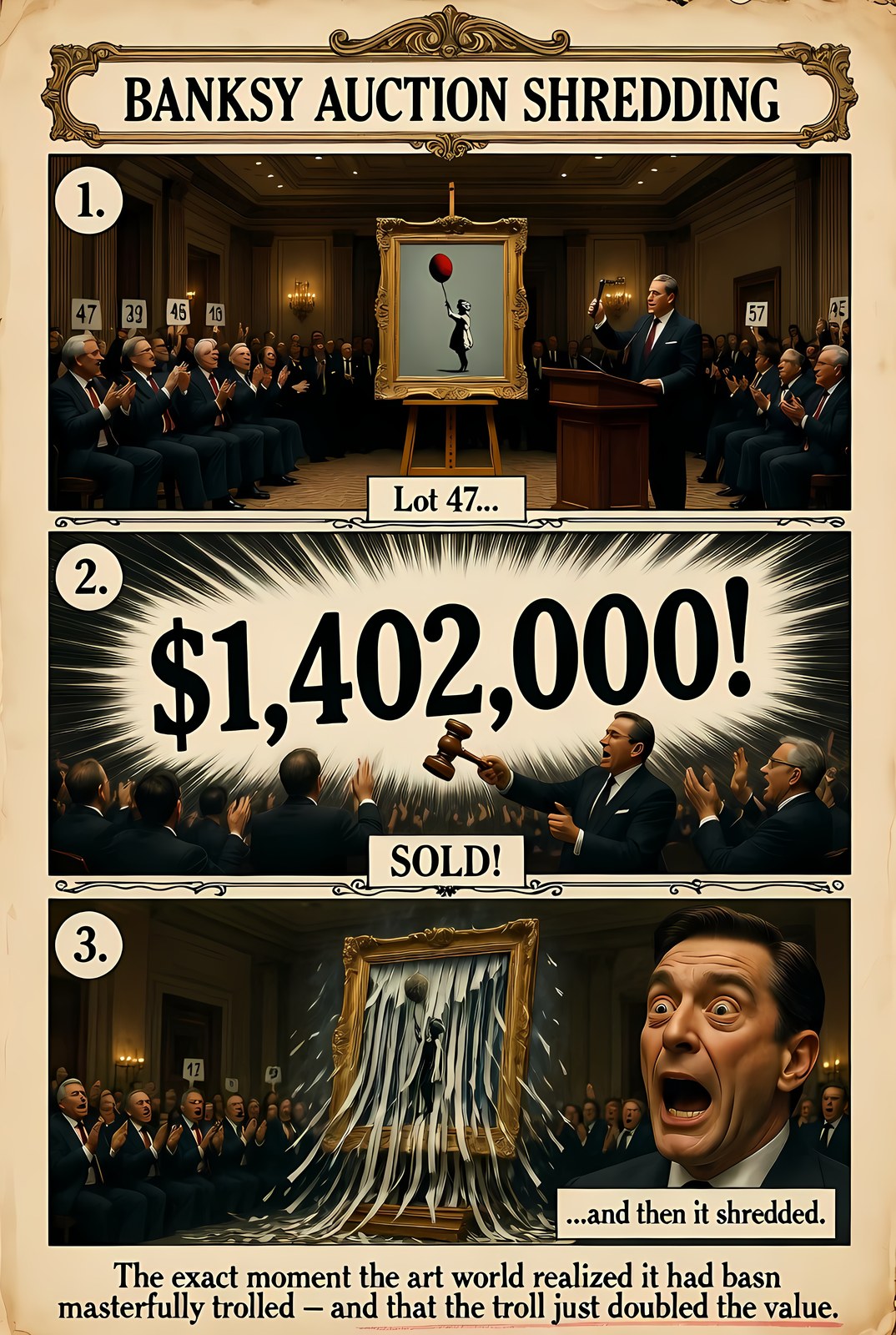
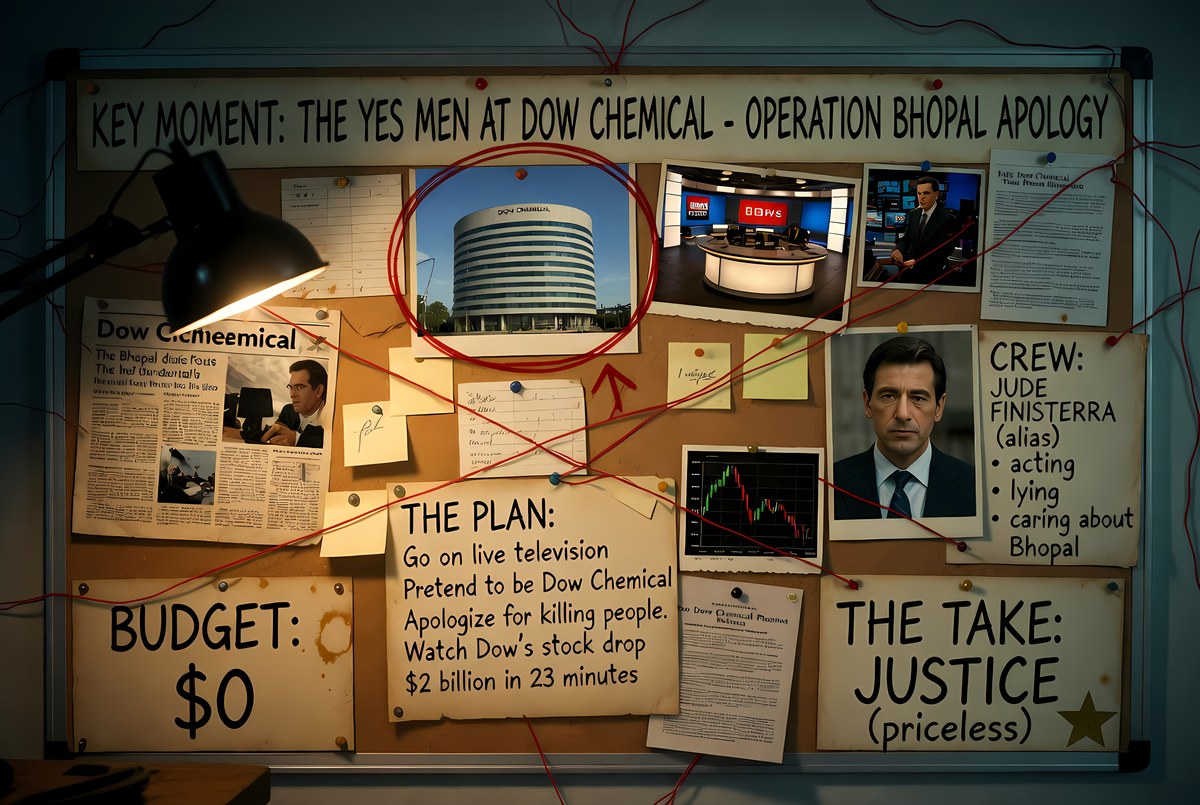
Chim↑Pom is the art-world provocation done without the prank’s alibi of a reveal: the word was the work, and it was meant to be seen. It sits beside Banksy’s unauthorised public art, The Chaser’s APEC stunt and The Yes Men, and it tests the line Joey Skaggs and Kristoffer Clausen also walked: who gets to joke about whose trauma.
Threat Assessment
| Category | Level | Notes |
|---|---|---|
| Physical threat | NONE | |
| Memetic threat | MODERATE | “pika” written five times over the city. |
| Institutional threat | LOW | A cancelled museum show; no sanction at law found. |
| Civilizational threat | NONE |
Flame Warrior Classification
Primary: not yet typed. The evidence on file leans Enfant Provocateur (partial: young and deliberate, but the declared motive is a peace appeal). Secondary: none yet.
Notes: An Enfant Provocateur over Hiroshima. After skywriting pika, the flash, over the city, the group said “I know what we did for our art is controversial and it upsets me if this has hurt the feelings of hibakusha. Our aim, though, was to capture the attention of young people, who haven’t experienced war,” and the survivors’ confederation chairman called it self-serving (Hiroshima Peace Media Center). They apologised and withdrew the museum exhibition (Get Hiroshima), and showed the video later anyway (Japan Times).
Sources: Chugoku Shimbun, October 2008 (Hiroshima Peace Media Center); Get Hiroshima; The Japan Times, 20 March 2009
Cross-Referenced Dossiers
The scores on this file are computed by a published rule from sourced records, the same rule for every troll. Nobody types a number: a score moves only when a record does. How the scoring works
Prefer RSS? Subscribe here.