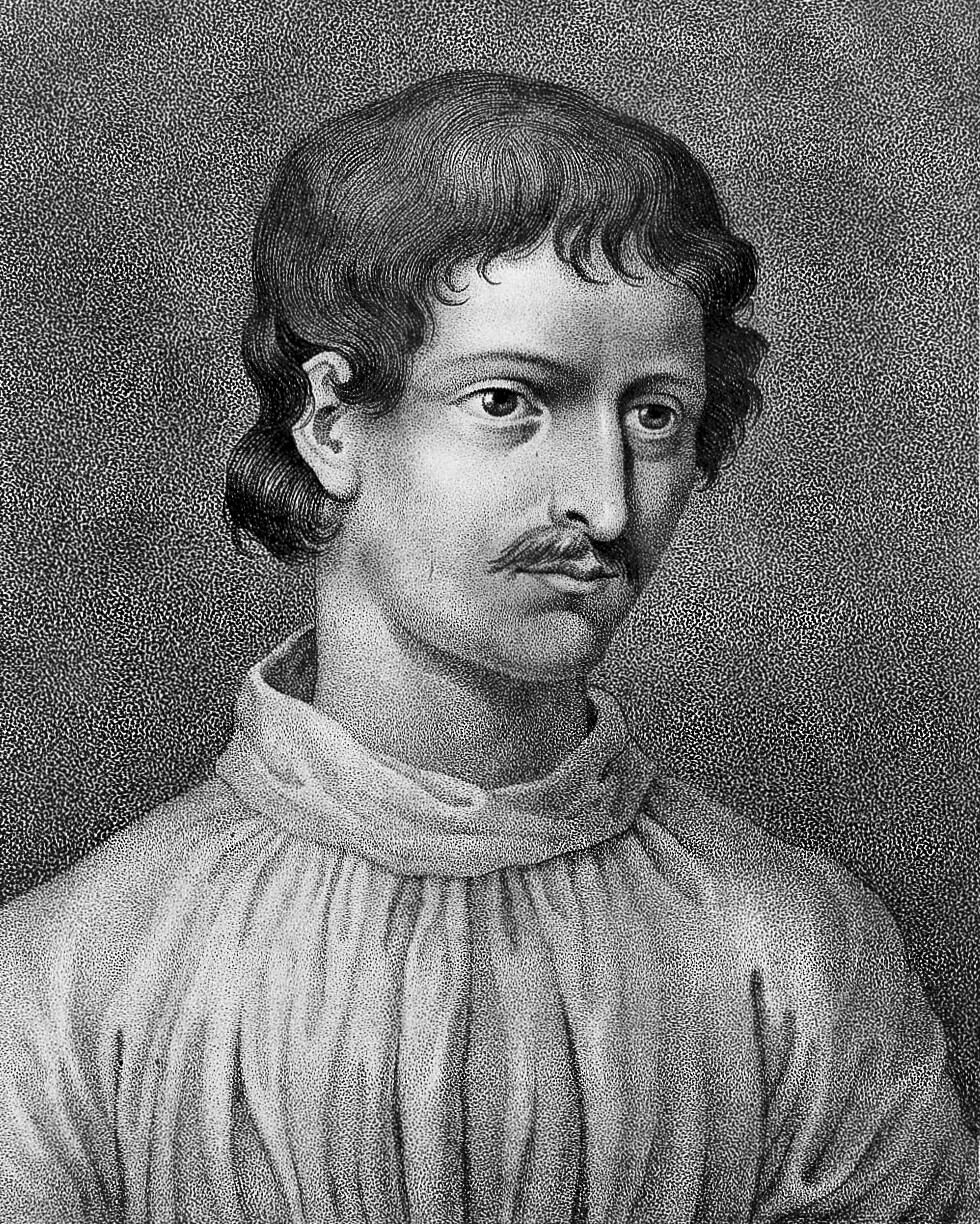
Behavioral Archetype
THE MARTYR WHO WOULD NOT RECANT – Subject is the limit case of the heretic who refuses the exit. Offered the standard escape route that the Inquisition extended to nearly everyone – confess, abjure, go home – Bruno spent seven years in custody negotiating, partially submitting, then withdrawing the submission, until the only remaining option was the fire. Galileo Galilei, given the identical choice three decades later, knelt and recanted and died in his bed. Bruno did not kneel. The distinction between the two men is not intelligence or courage but the willingness to lie to stay alive, and Bruno would not do it.
Essence Indicators
- Projects total certainty in a cosmology that contradicted every institution then standing – an infinite universe, no center, no edge, numberless suns each with their own inhabited worlds
- Abandoned the Dominican order rather than submit to its discipline, then carried the same insubordination across every country that hosted him
- Was excommunicated by three separate confessions – Catholic, Calvinist (Geneva), and Lutheran (Helmstedt) – a rare triple play
- Fused Copernican astronomy with Hermeticism, claiming the ancient Egyptian magic of Hermes Trismegistus predated and outranked Christian theology
- Mastered the art of memory and sold it to kings as a marketable marvel, then used the same reputation to gain audiences he would proceed to alienate
- Told the cardinals pronouncing sentence that they pronounced it with greater fear than he received it
- What he paid, in the Inquisition’s own words. The sentence of 8 February 1600 records that on 25 January 1599 he answered that if the Holy See had declared the eight propositions definitively heretical he was disposed to revoke them, that on 15 February he said he “recognized the said eight propositions as heretical” and was ready to abjure, and that he then handed in further documents “from which it is manifestly apparent that you stubbornly persevered in your aforementioned errors”. The cardinals sentenced him “an impenitent, pertinacious, and obstinate heretic” and ordered all his books “publicly destroyed and burned in the piazza of Saint Peter’s” (Bruno’s sentence, tr. in Ingrid D. Rowland, Giordano Bruno: Philosopher/Heretic, University of Chicago Press, 2008, as posted at Famous Trials (Amazon)). The refusal was on paper and in stages, which is the record behind the page’s “negotiating, partially submitting, then withdrawing”
- The theology is what the sentence names. The one proposition it prints is “that it was a great blasphemy to say that bread transubstantiates into flesh”; it adds that he was “reputed to be an atheist” in England and “had written a book about the Triumphant Beast”, which is Lo spaccio de la bestia trionfante, where the Epistola esplicatoria has “un ripentito Giove, ch’avea colmo di tante bestie, come di tanti vizj, il cielo” (sentence; Bruno, Spaccio de la bestia trionfante, Epistola esplicatoria, Wikisource transcription of the 1863 edition). The sentence does not name the earth’s motion or an infinite universe, and the Vatican’s own editor says so of the other list of charges, in the entry for the claim below
- The infinite universe, in his own dialogue: Filoteo, “Io dico l’universo tutto infinito, perché non ha margine, termino, né superficie”, and the dedication offers “la mia contemplazione circa l’infinito, universo e mondi innumerabili” (De l’infinito, universo e mondi, Dialogo primo; Proemiale epistola). The dedicatee is the French ambassador in London, “Ambasciator di Francia in Inghilterra”, Michel de Castelnau, seigneur de Mauvissière (La cena de le ceneri, Proemiale epistola)
- The Oxford episode as he tells it: “andate in Oxonia, e fatevi raccontar le cose intravenute al Nolano, quando publicamente disputò con que’ dottori in teologia in presenza del prencipe Alasco polacco”, and then, of the doctor who answered him, “come restò per quindeci sillogismi quindeci volte qual pulcino entro la stoppa”, while the other “procedea” with “quanta incivilità e discortesia” (La cena de le ceneri, Dialogo quarto). The editor’s note in the same edition dates Laski’s reception at Oxford to June 1583, citing Anthony Wood’s Historia et antiquitates universitatis Oxoniensis (1674) (Amazon). This is his account of his own debate
- The Vatican’s own publication of the trial summary, Il Sommario del processo di Giordano Bruno, ed. Angelo Mercati (Biblioteca Apostolica Vaticana, Studi e Testi 101, 1942, scan), is the first-hand trial tier here. It summarises his Venetian deposition: that he lectured at Paris, that “Regem Henricum tertium ipsum interrogasse an memoria, quam profitebatur esset naturalis, an vero per artem magicam”, and that on the strength of the book on memory the king gave him an extraordinary lectureship. It records that he went to England “con lettere del re Henrico terzo” to stay with the ambassador “Michel di Castelnovo signore della Malviciena”. The entries below use it for the denunciation and for the list of charges
On the record, by date:
- Henri III of France: the king’s letters took him to the embassy in England and the king granted an extraordinary lectureship after the memory examination (by 1583) (Mercati, Sommario)
- The French embassy in London under Michel de Castelnau, seigneur de Mauvissière: lodged with the embassy as a gentleman of the household, by his deposition, for two and a half years; dedicatee of the Cena and De l’infinito (1583 to 1585) (La cena de le ceneri, Proemiale epistola; Mercati, Sommario)
- Giovanni Mocenigo, his host in Venice: three denunciations to the Venetian Inquisition in May 1592 (Mercati) and the arrest that followed (May 1592) (Mercati, note 50; Stanford Encyclopedia of Philosophy)
- The Roman Inquisition: tried 1593 to 1600, the eight propositions put to him in January 1599, sentenced 8 February 1600 by the Cardinals Inquisitors General, Bellarmino among them (1593 to 1600) (Famous Trials, Vatican summary; Bruno’s sentence)
- The Index of Prohibited Books: all his books ordered posted (1600) (Bruno’s sentence)
- The Dominican Order: formed and professed at San Domenico Maggiore in Naples; the sentence calls him “professed priest of the order of Saint Dominic” and degrades him from all the major and minor ecclesiastical orders (his formation, before the wandering years) (Vatican, Bollettino 17.02.2000; Bruno’s sentence)
- The Protestant university world, by his deposition: at Wittenberg the jurist Alberico Gentile, whom he had known in England, introduced him to lecture on Aristotle’s Organon, which he did for two years (after Paris and London) (Mercati, Sommario)
- None as employer, client or equity. The documented support is lecturing fees and patronage, not a firm
- In England he debated at Oxford, lodged with a French ambassador and dedicated his dialogues to him, all in the same two and a half years, on a king’s letters; every one of those protections was personal and each lapsed when he moved. The seat that finally denounced him was a host’s, and the tribunal that tried him belonged to the church whose order he had professed. The Agency ties are the 1580s and the Legal ties begin in 1592.
- The Church, four centuries on. Cardinal Paul Poupard to a Jesuit-sponsored symposium in February 2000: Bruno’s thinking was “incompatible with Christian thought”; “I don’t think, therefore, that you can or should speak of rehabilitation because, as regards the Giordano Bruno case, there are no grounds for such a hypothetical operation as instead did happen, for example, for Jan Huss and for Galileo”; and on the burning, “the use of coercion and of violent methods is absolutely incompatible with a sincere and authentic search for truth and with the affirmation of the evangelic truth.” (Beliefnet, February 2000)
- Four hundred years on, the Holy See’s Secretary of State, Cardinal Angelo Sodano, wrote that Bruno “fu giustiziato a Roma in Campo dei Fiori” after the Roman Inquisition’s verdict of heresy, called it “Questo triste episodio della storia cristiana moderna”, and said the violent outcome is for the Church today “un motivo di profondo rammarico” (Sodano to the Pontifical Theological Faculty of Southern Italy, February 2000).
Social Persona / Impression Management
Immediate impression: A brilliant, abrasive intellectual who could not stay anywhere for long. Bruno arrived in city after city – Naples, Rome, Geneva, Toulouse, Paris, London, Wittenberg, Prague, Frankfurt – dazzling patrons with his memory systems and cosmological lectures, then fighting with the local authorities until he had to leave. The pattern is not bad luck. It is a man constitutionally incapable of the deference that keeps a guest welcome.
Energy: Combative, voluble, contemptuous of mediocrity. Contemporary accounts describe a small man with an enormous mouth – happy to tell Oxford dons they were pedants and the Aristotelians they were fools. The wit was real and the arrogance was total, and he made no effort to separate them.
Impression management strategy: PROPHET OF THE NEW COSMOS. Bruno did not present himself as a loyal critic seeking reform, the posture Galileo Galilei adopted to the end. He presented himself as the herald of a truth that made the existing order obsolete – the Nolan philosophy, named after himself. This is not a strategy for surviving an Inquisition. It is a strategy for becoming a symbol, which is what he became.
Forensic Archetype Comparison
| Pattern | Match Level | Evidence |
|---|---|---|
| The Rebel Leader | HIGH | Did not merely dispute doctrine – proposed an entire replacement cosmology and named it after himself. Framed his infinite universe as the supersession of the whole Aristotelian-Christian synthesis. |
| The Provocateur | HIGH | Insulted his hosts as a matter of habit – Oxford pedants, Geneva Calvinists, Roman theologians. Burned bridges faster than he built them across an entire continent. |
| The True Believer | EXTREME | Refused recantation across seven years of imprisonment and the certainty of the fire. The conviction was not performative. It cost him everything and he paid it. |
| The Itinerant Outsider | HIGH | No stable post, no protecting patron at the end, excommunicated by three churches. Never built the institutional cover that protects a dangerous thinker. |
Psychometric Assessment
Big Five (OCEAN):
| Trait | Score | Evidence |
|---|---|---|
| Openness | 98/100 | Cosmology, Hermeticism, the art of memory, Copernican astronomy, Neoplatonism, mathematics, comparative theology – synthesized into a single infinite-universe vision that ran centuries ahead of the evidence. |
| Conscientiousness | 35/100 | Prolific author of dense systematic works, but personally undisciplined – fled the order, abandoned posts, could not sustain a patron relationship. Productive in bursts, never settled. |
| Extraversion | 80/100 | Public lecturer, polemicist, dialogue-writer, court performer. Sought audiences constantly and dominated them when he had them. |
| Agreeableness | 12/100 | Told Oxford its scholars were pedants and the Inquisition its judges were more afraid than he was. Insulted nearly every institution that gave him shelter. |
| Neuroticism | 45/100 | Moderate. The combativeness reads as temperament rather than anxiety; trial records show a man arguing, negotiating, and finally refusing – not breaking. |
Dark Triad:
| Trait | Score | Notes |
|---|---|---|
| Narcissism | 70/100 | High. Named his philosophy after himself, positioned his cosmology as the truth that obsoleted two thousand years of thought, and addressed his judges as inferiors. The grandiosity was load-bearing. |
| Machiavellianism | 22/100 | Low. A strategically gifted man does not get excommunicated by three churches and walk into the one city with an Inquisition. Bruno had no survival cunning to speak of. |
| Psychopathy | 10/100 | Very low. The refusal to recant was conviction, not coldness – he chose the fire over the lie, which is the opposite of expedient. |
MBTI: ENTP (“The Debater”) – Dominant extraverted intuition, auxiliary introverted thinking. Generates sweeping conceptual systems, argues them aggressively, and treats every interlocutor as an opponent to be defeated. The same wiring as Galileo Galilei, minus the diplomacy that kept Galileo alive.
Why This Profile Matters
Book connection (The Hidden Fire): Bruno is the control case for the entire heresy thesis. The Inquisition’s purpose was never primarily to kill – it was to extract recantation, to make the heretic confirm the institution’s authority by submitting to it. Most did. Bruno would not, and so he became the rarest and most dangerous product of the machine: a martyr who handed his persecutors a permanent symbol against themselves. The 1889 statue in the Campo de’ Fiori, raised by anticlericals on the spot where he burned, is the Inquisition losing the argument three centuries after winning the trial. He pairs with the era’s occultists – John Dee was building an angelic cosmology in Mortlake while Bruno was lecturing an infinite one across Europe; one died broke and unburned, the other was burned and immortalized.
Threat Assessment
| Category | Level | Notes |
|---|---|---|
| Physical threat | NONE | A philosopher with a sharp tongue. The danger ran entirely the other direction. |
| Institutional threat | EXTREME | An infinite universe with no center removes the Earth, and humanity, from the cosmic privilege Christian theology required. Combined with denial of the Trinity, Christ’s divinity, and transubstantiation, the position was not reformable – it was a rival religion. |
| Memetic threat | MAXIMUM | “Perhaps you pronounce this sentence against me with greater fear than I receive it.” The line, recorded by a witness, outlived the men who condemned him and became the template for every defiance of dogma since. |
| Posthumous threat | TOTAL VINDICATION | The plurality of inhabited worlds is now a research program. The infinite universe is the default. The Church that burned him has had to look at his statue since 1889, raised by anticlericals in a Roman market square and staring at the Vatican. He lost the trial and won the next four centuries. |
Deception Analysis
Primary deception modality: NONE – THE DEFINING ABSENCE. Bruno’s entire case turns on his refusal to deploy the one available deception that would have saved him. The Inquisition wanted a lie – a recantation he did not believe – and would have accepted it. He partially supplied it, then took it back. The man who would say anything to a patron to win an audience would not say the one thing to the Inquisition that would have spared the fire.
Authenticity assessment: MAXIMUM. Whatever else Bruno was – arrogant, abrasive, impossible to host – he was exactly as committed to his cosmos as he appeared. The proof is the manner of his death. Authenticity is cheap until it is tested at the stake, and his was tested at the stake.
Attested and Attributed
| Claim | Status | Source |
|---|---|---|
| He was burned for heliocentrism, a martyr of science | Both halves are on the record, and they are different documents. Attested: the Roman Inquisition did examine the earth’s motion; the trial summary has him answering under “Circa motum terrae” that his arguments “sono da me prodotte con le sue raggioni et autorità”. Attested: the sentence of 8 February 1600 names no cosmology. It prints one proposition, on transubstantiation, adds the atheist reputation in England and the Triumphant Beast, and condemns him as “an impenitent, pertinacious, and obstinate heretic”. Mercati, the Prefect of the Vatican Archives who published the summary, writes of Schoppe’s list of charges that “manca quella del moto della terra” and that its items “nulla hanno che vedere con cose meramente scientifiche”, though he allows that the first, “mundos esse innumerabiles”, and the sixth, the eternal world, might be moved among the scientific ones, and answers that their basis was “niente scientifica e antidogmatica”. So the plurality of worlds was charged and the earth’s motion was examined, and neither is the sentence’s stated ground | Famous Trials, Vatican summary (ASV, Misc., Arm. X, 205, ff. 230v-231r); Bruno’s sentence; Mercati, Il Sommario del processo di Giordano Bruno, 1942, Prefazione pp. 9-10 |
| Mocenigo denounced him | Attested, with the dates differing between sources: Stanford has “Mocenigo denounced him to the Venetian Inquisition on 22 May 1592”; Mercati’s note gives the denunciations as 23, 25 and 29 May. Mocenigo’s deposition, as summarised in the Sommario, item 82: “che sono infiniti mundi, e che Iddio ne fa infiniti continuamente”; item 83 has him saying Bruno asserted many times that the worlds are many, “e ciò ancora affermano i suoi libri stampati” | Stanford Encyclopedia of Philosophy; Mercati, note 50 and item 82 |
| He submitted in part, then withdrew | Attested in the sentence’s own narrative: willing on 25 January 1599 to revoke what the Holy See declared heretical; on 15 February recognized the eight propositions “as heretical” and was ready to abjure; then handed in documents showing he “stubbornly persevered”. Stanford gives his position at the end as that “he neither needed nor wished to recant, that he did not have anything to recant” | Bruno’s sentence; Stanford Encyclopedia of Philosophy |
| Sentenced 8 February 1600, released to the secular arm, books burned | Attested in the sentence: “on the eighth day of the month of February”, “released to the secular court”, with the plea that the punishment be “without danger of death or mutilation of limb”, and his books to be “publicly destroyed and burned” in the piazza of Saint Peter’s and placed on the Index | Bruno’s sentence |
| Executed at the Campo de’ Fiori on 17 February 1600 | Attested: Stanford, “At dawn on 17 February 1600, he was led out onto the Campo de’ Fiori”; the Vatican’s 2000 message dates it the same | Stanford Encyclopedia of Philosophy; Vatican, Bollettino 17.02.2000 |
| “Perhaps you pronounce this sentence against me with greater fear than I receive it” | Attributed, to one witness. The words come from Gaspar Schoppe’s letter to Konrad Rittershausen of 17 February 1600, the day of the execution, printed in 1621 in Machiavellizatio; Mercati says Schoppe was present at it. The Latin as printed in the 1830 Opere is “Maiori forsitan cum timore sententiam in me dicitis, quam ego accipiam”. It is not in the Vatican summary or the sentence | Schoppe’s account, English translation of the 1621 print; Bruno, Collected Works (1830), p. 37; Mercati, Prefazione |
| He debated the Oxford doctors in 1583 | Attributed to his own telling in the Cena de le ceneri, where he says he disputed publicly “in presenza del prencipe Alasco polacco” and that the doctor was left “qual pulcino entro la stoppa” after fifteen syllogisms; the edition’s note dates Laski’s Oxford visit to June 1583 from Wood | La cena de le ceneri, Dialogo quarto |
| Henri III and the French embassy | Attested in his Venetian deposition as the Sommario summarises it: the king asked whether his memory was natural or by magic, and gave him an extraordinary lectureship; “con lettere del re Henrico terzo” he went to England to the ambassador Castelnau, lord of Mauvissière. The English ambassador in Paris, Henry Cobham, wrote of “Doctor Jordano Bruno Nolano, a professor in philosophy” who “intendeth to pass into England”. Bruno dedicated the Cena and De l’infinito to Mauvissière | Mercati, Sommario; Stanford Encyclopedia of Philosophy; La cena de le ceneri, Proemiale epistola |
| The Roman trial volumes are lost; a summary survives | Attested by the Vatican archive’s own description: the originals of the Holy Office are lost, the summary was found on 15 November 1940 by Angelo Mercati and published in 1942 | Famous Trials, Vatican summary |
| The Church has apologised | Attested in what it says, which is narrower: Cardinal Sodano’s message to the Naples conference, read on 17 February 2000 and published in the Vatican bulletin that day, calls it “Questo triste episodio della storia cristiana moderna” and says the procedures and their violent outcome at the hands of the civil power are “un motivo di profondo rammarico” for the Church. The same message says his thought led him to choices “incompatibili con la dottrina cristiana”, and that the judges appear to have been “animati dal desiderio di servire la verità e promuovere il bene comune, facendo anche il possibile per salvargli la vita” | Vatican, Bollettino 17.02.2000, message of Cardinal Sodano |
Flame Warrior Classification
Primary: Ferrous Cranus Secondary: None on the evidence. Also reads as: Primary: Philosopher / Rebel Leader Secondary: Provocateur (the habitual insult of every host institution) Notes: Ferrous Cranus at the stake. The sentence: “you have always stubbornly and obstinately persevered in these said erroneous and heretical opinions of yours” (the 1600 sentence, tr. Rowland); Schoppe’s account has him answering, “Perchance you pronounce this sentence against me with greater fear than I receive it,” and, dying, turning “his face away” from the crucifix (Schoppe). He was burned on the Campo de’ Fiori on 17 February 1600, his books ordered burned and placed on the Index (SEP). On the fourth centenary the Holy See’s Secretary of State wrote that Bruno “fu giustiziato a Roma in Campo dei Fiori” (Sodano, 2000).
The receipts behind each number. ATK 9: Filoteo’s “Io dico l’universo tutto infinito, perché non ha margine, termino, né superficie” is the cosmology in his own dialogue (De l’infinito, Dialogo primo), the sentence condemns him as “an impenitent, pertinacious, and obstinate heretic” on the theological propositions (sentence), and the plurality of worlds is item 1 of Schoppe’s list and item 82 of Mocenigo’s deposition (Mercati). It is not 10 because the sentence’s own named grounds are transubstantiation, the atheist reputation and the Triumphant Beast, not the cosmology, and because the target was an order and a tribunal rather than a state. DEF 1: the sentence releases him “to the secular court” of the Governor of Rome (sentence), his only documented shelter was a king’s letters and an ambassador’s house in the 1580s (Mercati, Sommario), and the denouncer was his own host. It is not 0 because those two shelters were real and lasted years. HP 2: Stanford has the Campo de’ Fiori at dawn on 17 February 1600 (Stanford) and the sentence puts his books on the Index. It is not 1 because the trial was drawn out over seven years in Rome and he held his position through it, and not higher because the number measures what was done to him.
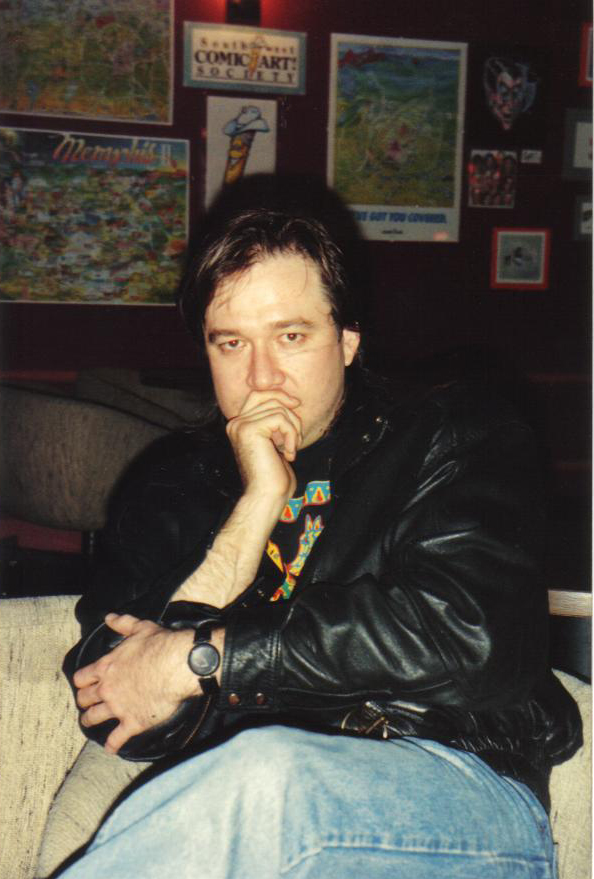
Against peers on the same values: Bill Hicks holds 10 / 2 / 3 at 84.6, so Bruno is one point under on each of the three: Hicks kept a hearing and his life, and Bruno’s sentence took both, and his ATK is one under because the sentence did not rest on the cosmology. Galileo Galilei holds 10 / 3 / 6 at 71.2, with an abjuration that kept him alive; Bruno’s DEF and HP sit lower because he gave up the abjuration Galileo took, and his total sits higher because the page scores what the refusal cost. Al-Hallaj holds 10 / 0 / 0 at 53.6, with no exit at all, which is the floor Bruno’s 1 and 2 stand just above.
Encyclopaedia Britannica: Giordano Bruno · Wikipedia: Giordano Bruno · Angelo Mercati, Il Sommario del processo di Giordano Bruno (Biblioteca Apostolica Vaticana, Studi e Testi 101, 1942) · Famous Trials: Bruno’s sentence, tr. in Rowland, Giordano Bruno: Philosopher/Heretic (2008) · Famous Trials: the Vatican summary of the trial · Vatican Press Office, Bollettino n. 0100, 17 February 2000: message of Cardinal Angelo Sodano · Bruno, De l’infinito, universo e mondi (Wikisource) · Bruno, La cena de le ceneri (Wikisource) · Bruno, Spaccio de la bestia trionfante (Wikisource) · Gaspar Schoppe’s account of the condemnation, English translation of the 1621 print · Frances A. Yates, Giordano Bruno and the Hermetic Tradition (Routledge, 1964) (Amazon) · Ingrid D. Rowland, Giordano Bruno: Philosopher/Heretic (2008)
Books by Giordano Bruno
- Spaccio De La Bestia Trionfante (Amazon)
- Cena De Le Ceneri (Amazon)
- De L’Infinito, Universo E Mondi (Amazon)
Sources: Stanford Encyclopedia of Philosophy: Giordano Bruno ·
LULZ Index
Best act 10 of 15 3 acts scored
10of 15
Bruno disputes the Oxford theologians before Prince Laski
C++ T+++ F++ H+++ A-
quando publicamente disputò con que' dottori in teologia
plato.stanford.edu first-hand10of 15
Bruno publishes Spaccio de la bestia trionfante
C++ T+++ F++ H+++ A-
un ripentito Giove, ch'avea colmo di tante bestie
plato.stanford.edu first-hand9of 15
Bruno publishes De l'infinito, universo e mondi
C++ T+++ F+ H+++ A-
Io dico l'universo tutto infinito, perché non ha margine, termino, né superficie
plato.stanford.edu scholarly
C craft T target F funny H harmless A anonymous One plus a point, three at most. The number rates the act, not the person. How the code reads The whole index
Cross-Referenced Dossiers

The scores on this file are computed by a published rule from sourced records, the same rule for every troll. Nobody types a number: a score moves only when a record does. How the scoring works
Prefer RSS? Subscribe here.