Behavioral Archetype
“I had enticed the cuckoo to sing its song, and the melody lingers on.” (Gore Vidal in Esquire, as Time quoted him in 1969)
THE MANDARIN WHO FEUDED FOR SEVEN DECADES — Subject is Gore Vidal (1925-2012), who “authored 25 novels, six plays, 200 essays, and several screenplays” (Christian Science Monitor), from The City and the Pillar (1948), “an explicitly gay novel that challenged the homophobia he believed was ingrained in American culture”, through Myra Breckinridge and the American history novels (Irish Times). He ran for office and lost: “in 1960 Vidal ran for Congress as a Democrat in New York’s traditionally Republican 29th District”, and in 1982 for the Senate in California (ibid.). His real stage was television, where he became the talk-show era’s master of the public feud. Paired by ABC News with William F. Buckley Jr. to argue through the 1968 conventions, he came with insults written out in advance, called Buckley a “crypto-Nazi”, and wrote afterwards that he had meant the eruption that followed (the full story is an episode). Three years later he compared Norman Mailer to Charles Manson and was head-butted for it in a green room. He is on this file as the provocateur who made the televised insult an art, and who, by PBS’s account, made political punditry into combat.
Essence Indicators
- On air. Vidal: “As far as I’m concerned, the only pro- or crypto-Nazi I can think of is yourself.”; Buckley: “Now listen you queer, quit calling me a crypto-Nazi or I’ll sock you in the goddamn face, and you’ll stay plastered.” (PBS NewsHour); NPR transcribes Vidal as “As far as I am concerned, the only sort of pro- or crypto-Nazi I can think of is yourself.” (NPR via WFAE)
- The prepared insults. The documentary’s makers, “going through Gore’s papers at Harvard”, found “the papers he had on his lap with him during the debates, which included pages of scripted insults” (PBS NewsHour)
- The bait, claimed. “Vidal claimed that he had deliberately enticed Buckley into the TV eruption as a public service.”; Vidal on Buckley: “Looking and sounding not unlike Hitler, but without the charm,”; “he began to shriek insults in order to head me off, and succeeded, for by then my mission was accomplished: Buckley had revealed himself.” (Time, 1969)
- Round two, in print. “They both wrote essays revisiting the televised moment in Esquire.” (PBS NewsHour); Buckley: “My pulse was racing and my ringers trembled as wave after wave of indignation swept over me.”; Vidal: “I do not prefer homosexuality to heterosexuality,” (Time, 1969)
- Round three, in court. “The blowup led Buckley to sue Vidal for $500,000 in libel damages and Vidal to countersue for $4,500,000.”; “Esquire, entirely aware of the entertainment value of the squabble, then allowed the contestants to fight on in its pages.”; “Buckley last week widened his sights and filed a new $1,000,000 libel suit, this one against Esquire.” (Time, 1969); “And then they sued each other over those pieces for three years.” (PBS NewsHour)
- How the Buckley suits ended. Of Buckley’s 1969 Esquire essay: “Vidal sued over the piece but, according to the notice that both Esquire and National Review are publishing, his case was” thrown out of court; “Buckley sued the magazine over the Vidal piece, claiming libel; he eventually settled for an apology from Esquire and court costs.” (Village Voice, 2004). To the judge, Vidal: “It was a modest slip of the tongue, I was searching for the word ‘fascist.’” (Christian Science Monitor)
- Mailer, 1971. “In a 1971 Vidal compared the writer Norman Mailer to Charles Manson”; on the Dick Cavett Show, Mailer asked if he was ready to apologise. Vidal: “I will apologize if it hurts your feelings, of course I will.” Mailer: “No, it hurts my sense of intellectual pollution.” Vidal: “Well, as an expert, you should know about that.” (The Daily Beast); “Right before going on the set, rival novelist Norman Mailer head-butted Vidal in the green room.” (NBC News)
- The grudges kept. Long after, of Mailer: “He lived for his little swig of PR.”; of Capote: “Capote I truly loathed,” (The Week). The politics he campaigned on: “There is only one party in the United States, the Property party” (Irish Times)
- The verdicts. Time: “Not since George Sanders divorced Zsa Zsa Gabor has so much talent been wasted on such a nasty spat.” (Time, 1969); one documentarian: “I think Buckley was the one who couldn’t let it go.” (PBS NewsHour); Garry Wills: “Buckley did not make history. He made good copy.”; “He hated him for ridiculing his supreme values” (The New York Review of Books)
- How the lawsuits ended, as reported in 2004. “Esquire has settled a libel suit over the publication of a Vidal essay for the second time — once when the article was first published in 1969 and again when it was republished in an anthology in 2003”; and “Vidal also attempted to sue Buckley for libel in the late 1960s, and that suit was thrown out.” (The Volokh Conspiracy, 14 December 2004, relaying the notice in Esquire and National Review)
Social Persona / Impression Management
Immediate impression: A patrician novelist in a good suit, insults on his lap.
Energy: Icy, amused, prepared.
Impression management strategy: THE SALON DUEL. Wit as a rapier, with the thrust written out in advance.
Forensic Archetype Comparison
| Pattern | Match Level | Evidence |
|---|---|---|
| The Duelists | MAXIMUM | Television, then Esquire, then court (Time). |
| The Scripted Insult | HIGH | “pages of scripted insults” (PBS NewsHour). |
| The Godwin Moment | HIGH | “crypto-Nazi” (PBS NewsHour). |
Psychometric Assessment
Scores assess the documented persona of Gore Vidal.
Big Five (OCEAN):
| Trait | Score | Evidence |
|---|---|---|
| Openness | 85/100 | |
| Conscientiousness | 70/100 | Prepared insults. |
| Extraversion | 75/100 | |
| Agreeableness | 10/100 | |
| Neuroticism | 35/100 | The calm one on air, by his own account. |
Dark Triad:
| Trait | Score | Notes |
|---|---|---|
| Narcissism | 85/100 | |
| Machiavellianism | 70/100 | “my mission was accomplished” |
| Psychopathy | 20/100 |
MBTI: ENTJ (“The Commander”) — the debater who scripted his opponent’s loss of control.
Why This Profile Matters
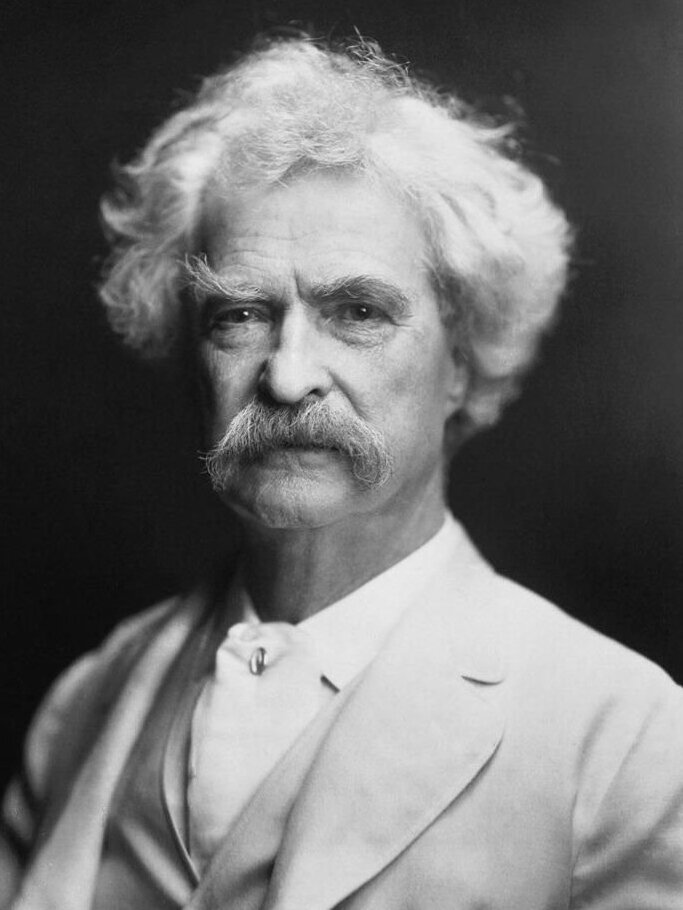
Every cable shouting-match descends from these ten nights, and the Nazi comparison that broke them is the one Mike Godwin later wrote a law about. Like the Tanenbaum–Torvalds debate, it is a feud between two experts conducted on the record for an audience; Robert Anton Wilson wrote about Buckley from the other flank. His lineage is the satirist’s: Voltaire, Jonathan Swift, Oscar Wilde and Mark Twain aimed the same wit at the same targets, church, state and the respectable; Lenny Bruce and George Carlin took it to the stage while Vidal took it to the talk show. The other half of the duel is William F. Buckley Jr.
Threat Assessment
| Category | Level | Notes |
|---|---|---|
| Physical threat | NONE | The threat on air was Buckley’s. |
| Memetic threat | EXTREME | The template for televised political combat. |
| Institutional threat | MODERATE | Three years of libel suits. |
| Civilizational threat | MODERATE | Punditry as blood sport. |
Flame Warrior Classification
Primary: Duelists Secondary: None on the evidence. Notes: A Duelist on live television. In 1968, to William F. Buckley: “As far as I’m concerned, the only pro- or crypto-Nazi I can think of is yourself” (PBS NewsHour), with the scripted insults on his lap (PBS NewsHour). Afterwards, of Buckley’s reply: “I had enticed the cuckoo to sing its song, and the melody lingers on,” and the feud went to libel suits and countersuits (TIME).
Sources: PBS NewsHour, on the birth of political punditry; PBS NewsHour, on the debates; NPR via WFAE, August 2015; Time, 1969; Garry Wills, The New York Review of Books, August 2015; Irish Times obituary, 4 August 2012; Christian Science Monitor, 1 August 2012; Village Voice, 2004; The Daily Beast; NBC News; The Week
Cross-Referenced Dossiers

The scores on this file are computed by a published rule from sourced records, the same rule for every troll. Nobody types a number: a score moves only when a record does. How the scoring works
Prefer RSS? Subscribe here.