Behavioral Archetype
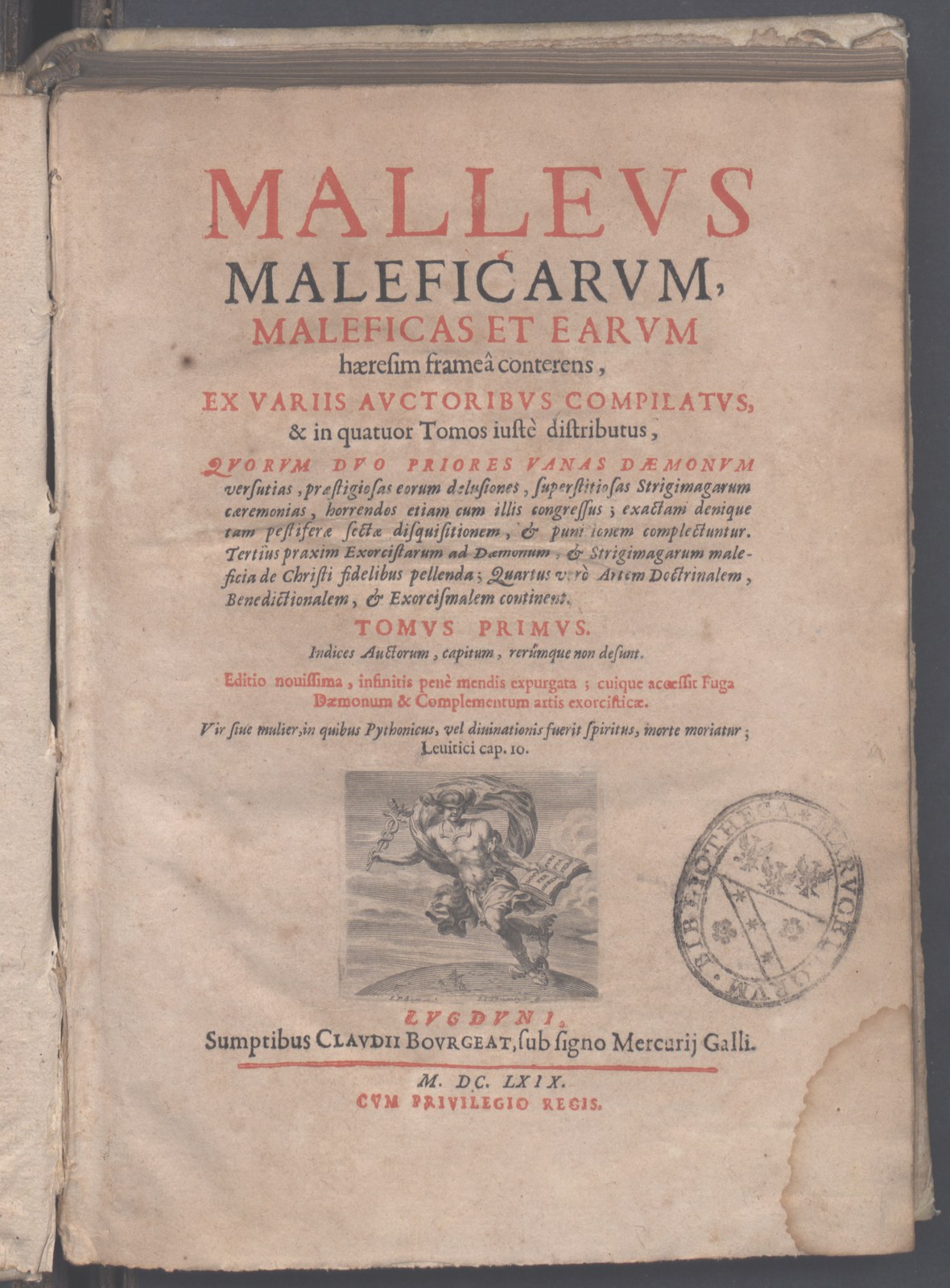
THE EXPELLED INQUISITOR WHO WROTE THE MANUAL – Subject is the operator who took a personal humiliation and converted it into a civilizational procedure. A Dominican friar and papal inquisitor, Kramer (Latinized Henricus Institoris) ran a witch trial at Innsbruck in 1485, fixated so obsessively on the sexual conduct of the accused – chiefly a woman named Helena Scheuberin – that the presiding bishop, Georg Golser, ruled he had “presumed much that had not been proved” and ordered him out of the diocese. The defendants walked. Most operators absorb a defeat like that and recede. Kramer went home and wrote a book explaining, at length, why every judge and bishop who had doubted him was a heretic – and then dressed that grievance in borrowed authority until it read like the settled mind of the Church. The Malleus Maleficarum (1487) is, structurally, a terminated employee’s manifesto that two centuries of courts mistook for law.
Essence Indicators
- Converts a private grievance into a general procedure – the book’s Part III is a working how-to for arrest, torture, and execution, generalized from one trial he lost
- Manufactures authority he was not granted: bound the papal bull Summis desiderantes affectibus (1484) into the front matter so the book read as papally endorsed, when the bull merely appointed him inquisitor and predated the text by two-plus years
- Annexed a second author, Jacob Sprenger, onto the title page for credibility; modern scholarship holds Sprenger’s actual involvement was minimal to nonexistent
- Built the central thesis to be unfalsifiable: to doubt the reality of witches is itself declared heresy, so skepticism becomes evidence of the crime
- Supplied false etymology as proof – derived femina from fe (faith)
- minus (less), “she who has less faith” – and it became one of the most-quoted lines in the persecution’s history
- Rode the new printing press the way a later fabricator would ride the pamphlet: at least 28 editions between 1487 and 1600, one of the early print era’s bestsellers
Social Persona / Impression Management
Immediate impression: The credentialed enforcer. Kramer presented as exactly what he was on paper – an ordained Dominican, a papal inquisitor with a genuine commission – and used that real standing to smuggle in the parts that were not real. The costume was authentic; the warrant it implied was not.
Energy: Obsessive, aggrieved, tireless. Contemporary record is a man who could not let a defeat lie – the Innsbruck bishop’s word for him was, reportedly, that he had gone senile or insane. The Malleus carries that energy intact: it is a prosecution brief that already knows the verdict and assembles two hundred pages toward it.
Impression management strategy: BORROWED AUTHORITY. Where Alexander Hislop wore scholarship as a costume – footnotes performing the function the evidence could not – Kramer wore the institution as a costume. He did not forge learning; he forged endorsement. The papal bull at the front, the co-author on the cover, and the claimed approval of a university theology faculty together performed the one thing the text could not earn on its merits: the appearance that the Church had already agreed.
Forensic Archetype Comparison
| Pattern | Match Level | Evidence |
|---|---|---|
| The Manufactured-Demonology Operator | MAXIMUM | Took a real anxiety (folk magic, heresy) and built a unified, systematized satanic conspiracy of “witches,” then supplied the procedure to hunt them. The same engine Alexander Hislop ran on Catholicism, run instead on women. |
| The Fabricator of Authority | HIGH | The book’s standing rested on a retrofitted papal bull, an annexed co-author, and a contested university approbation – borrowed or misrepresented credentials, not earned consensus. |
| The Aggrieved Insider | HIGH | Wrote the manual as revenge for the Innsbruck expulsion. The persecution machine’s founding document is a grudge with a legal apparatus bolted on. |
| The Scholar | NONE | The femina etymology alone disqualifies it; the work is polemic and procedure, not inquiry. |
| The Whistleblower | NONE | Exposed nothing real – manufactured the conspiracy he claimed to be combating. |
Psychometric Assessment
Big Five (OCEAN):
| Trait | Score | Evidence |
|---|---|---|
| Openness | 40/100 | LOW-MODERATE. Wide theological reading, but bent rigidly to a single predetermined conclusion; no curiosity survives contact with the thesis. |
| Conscientiousness | 80/100 | HIGH. The Malleus is exhaustively systematic – three parts, cross-referenced, procedurally complete. The diligence is real; the foundation is not. |
| Extraversion | 50/100 | MODERATE. A preacher and prosecutor who sought the courtroom and the pulpit, but whose record is more grinding than charismatic. |
| Agreeableness | 10/100 | VERY LOW. The life’s work is a procedure for torturing and burning people, aimed disproportionately at women. |
| Neuroticism | 65/100 | HIGH. The animating force is grievance and sexual fixation; the Innsbruck record reads as a man unable to govern an obsession. |
Dark Triad:
| Trait | Score | Notes |
|---|---|---|
| Narcissism | 60/100 | HIGH. Answered an entire diocese’s rejection by declaring everyone who doubted him a heretic and writing the book that would outlive them all. |
| Machiavellianism | 78/100 | HIGH. The retrofitted bull, the borrowed co-author, the contested approbation – a deliberate, layered manufacture of false consensus. The method is instrumentally precise. |
| Psychopathy | 55/100 | MODERATE-HIGH. Part III codifies torture as routine procedure with no apparent troubling by the suffering it organizes. |
MBTI: ESTJ (“The Executive”) – the procedural enforcer who imposes order through rules, hierarchy, and the machinery of an institution. Where Giordano Bruno was the ENTP who attacked the institution from outside and burned for it, Kramer was the ESTJ who weaponized the institution from inside and died writing in his bed.
Why This Profile Matters
Book connection (The Hidden Fire): Kramer is the manufactured- demonology engine in its purest, most consequential form – the case where the fabrication did not merely propagate as belief but executed as policy. The Malleus is the template for the entire witch-hunt: invent a unified satanic conspiracy, declare doubt of it heretical, and supply the torture-and-confession procedure that makes the conspiracy self-proving (the tortured name accomplices, the accomplices are arrested and tortured, the chain extends without limit). He pairs naturally with Alexander Hislop – both took a real subject, rebuilt it as a unified satanic system, and welded it to a present-day enemy – and he is the institutional inversion of Giordano Bruno: the man who ran the Inquisition’s machinery against the era’s accused, where Bruno was the machinery’s most famous victim. The forged-authority move is the durable lesson. The text could not earn the Church’s endorsement, so it manufactured the appearance of it – and the appearance was enough to power two centuries of courts.
Threat Assessment
| Category | Level | Notes |
|---|---|---|
| Physical threat | HISTORICAL – EXTREME | Unlike most profiles in the file, the danger here ran outward and was lethal. The procedures the Malleus codified fed a persecution that killed an estimated 40,000-60,000 people across early modern Europe. |
| Institutional threat | HIGH | Manufactured the appearance of Church and academic consensus to license persecution – a counterfeit of legitimate authority that the real authorities then struggled to disown. |
| Memetic threat | EXTREME | The femina etymology, the “doubt is heresy” trap, and the confession-under-torture mechanism propagated across Europe for two centuries on the back of the printing press. |
| Civilizational threat | HIGH | The hazard is the template: a reusable engine for converting a manufactured conspiracy into legal procedure by borrowing the authority it cannot earn. The engine outlived the man. |
Deception Analysis
Primary deception modality: FABRICATED AUTHORITY. Kramer’s characteristic move was not inventing evidence but counterfeiting endorsement. The papal bull Summis desiderantes affectibus was real, but it appointed him inquisitor in 1484 – it was not, and could not have been, an approval of a book that did not yet exist; binding it into the front matter let the Malleus borrow the prestige of papal sanction it was never granted. The co-authorship of Jacob Sprenger appears to have been largely or wholly annexed for credibility.
The contested point – stated as the scholarly debate it is: The Malleus also carries an approbation attributed to the University of Cologne’s theology faculty. The 19th-century historian Joseph Hansen argued this approbation was partly forged, and that the faculty had in fact condemned the book for unethical procedure and for contradicting Catholic teaching on demons. This remains the widely repeated position – but it is genuinely disputed. Christopher Mackay, the Malleus’s modern translator, rejects the full-forgery thesis as resting on tenuous and in his view invalid argument. The defensible synthesis, and the one this file adopts, is the point on which scholars largely agree: whether or not the approbation was forged outright, Kramer at minimum misrepresented the extent and unanimity of the endorsement to manufacture an appearance of consensus the text had not earned.
Authenticity assessment: The belief was, by all evidence, sincere – which is what makes the manufactured authority worse, not better. A cynic fabricates and knows it; Kramer appears to have fabricated the endorsement and believed the thesis, the combination that builds an enduring machine rather than a passing fraud.
Flame Warrior Classification
Primary: Profundus Maximus – the fake authority; institutional standing deployed exactly where the institution had not actually agreed. Secondary: Grenade – name the Malleus in any discussion of the witch trials and the room detonates. Notes: ATK 8 – the book supplied the procedure that powered two centuries of lethal persecution; the attack landed on tens of thousands of real people. DEF 2 – he held a genuine inquisitorial commission and died of old age in his bed, but the Innsbruck expulsion and the Cologne faculty’s own complaint are permanent holes in the record. HP 6 – he survived his own humiliation and outlived his critics, but the man is now remembered as the byword for exactly the persecution he built.
Sources: Encyclopaedia Britannica: Malleus maleficarum · Christopher S. Mackay, The Hammer of Witches: A Complete Translation of the Malleus Maleficarum (Cambridge University Press, 2009) · Hans Peter Broedel, The Malleus Maleficarum and the Construction of Witchcraft (Manchester University Press, 2003) · Wikipedia: Heinrich Kramer · Wikipedia: Malleus Maleficarum
Cross-Referenced Dossiers
Prefer RSS? Subscribe here.