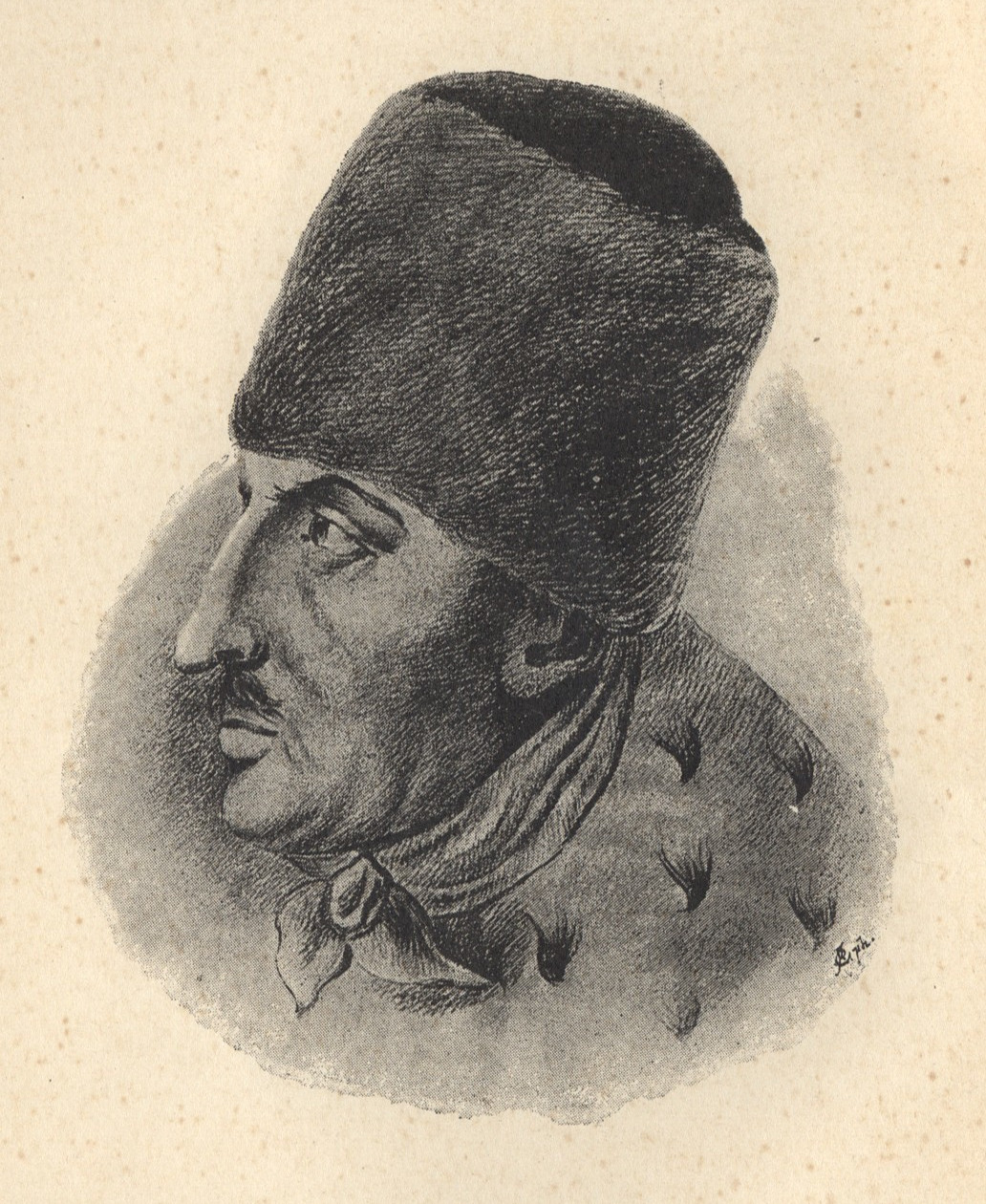
Behavioral Archetype
THE PROPHET OF THE ABYSS – A Podolian Jew who, after returning to Podolia in 1755 (Jewish Encyclopedia, 1906: “In 1755 he appeared in Podolia”), declared himself the heir of Sabbatai Zevi and took the Sabbatean doctrine of the saving descent into evil to a place its author never intended. Where Nathan of Gaza had argued that the Messiah must descend into the realm of the klipot to gather the last sparks, Frank generalized the principle into a program: everyone must descend. His doctrine of “redemption through sin” demanded that followers break religious law deliberately, as a sacrament. Not some laws. Every law. He led mass conversions to Catholicism in 1759 while preserving a secret inner doctrine that had nothing to do with Christianity, then ran his sect as a messianic autocrat until he died styling himself a baron in Offenbach. He is the case in this file where antinomianism stops being a paradox absorbed after the fact and becomes an explicit operating manual. That move – the systematized transgression, performed inside two religions at once – is the template this profile exists to document.
Essence Indicators
- Born Jacob (Ya’akov) ben Yehudah Leib in 1726 in Podolia (Korolówka or Berezanka, in present-day Ukraine) (Gershom Scholem, “Frank, Jacob, and the Frankists”, Encyclopaedia Judaica (via Encyclopedia.com), 2007); the surname “Frank” reflects time spent in the Ottoman Balkans, where Sephardim called Ashkenazi outsiders frenk (Herman Rosenthal and S. M. Dubnow, “Frank, Jacob, and the Frankists”, Jewish Encyclopedia, 1906)
- Claimed to continue the messianic line of Sabbatai Zevi; Britannica frames this as a claim to be his reincarnation, while the Jewish Virtual Library records Frank styling himself a “direct successor” of Sabbatai Zevi and the Donme leader Osman Baba – the profile flags the distinction rather than resolving it
- Preached “redemption through sin” / purification through transgression: the deliberate violation of moral and religious law as the engine of salvation, reported by hostile and scholarly sources alike to have extended to ritualized sexual transgression
- Baptized at Lwów (Lviv) on 17 September 1759 and again at Warsaw, with King Augustus III of Poland standing as his godfather; several hundred followers converted with him (Gershom Scholem, “Frank, Jacob, and the Frankists”, Encyclopaedia Judaica (via Encyclopedia.com), 2007; Herman Rosenthal and S. M. Dubnow, “Frank, Jacob, and the Frankists”, Jewish Encyclopedia, 1906) – a public triumph for the Church that concealed a sect using Catholic sacraments as a vehicle for a secret doctrine
- Imprisoned by the Catholic authorities at Częstochowa for thirteen years once the inner doctrine was suspected; freed by the Russian general Bibikov, who took Częstochowa in August 1772 (Herman Rosenthal and S. M. Dubnow, “Frank, Jacob, and the Frankists”, Jewish Encyclopedia, 1906), he relocated to Brünn (Brno) and finally to Offenbach am Main, where he assumed the title “Baron of Offenbach” and ran a quasi-court (Herman Rosenthal and S. M. Dubnow, “Frank, Jacob, and the Frankists”, Jewish Encyclopedia, 1906)
- Died in Offenbach in 1791; succeeded by his daughter Eva (Ewa) Frank, who presided over the dwindling movement until it collapsed into debt (Gershom Scholem, “Frank, Jacob, and the Frankists”, Encyclopaedia Judaica (via Encyclopedia.com), 2007; Herman Rosenthal and S. M. Dubnow, “Frank, Jacob, and the Frankists”, Jewish Encyclopedia, 1906)
- The authoritative scholarly verdict is contested by design: Gershom Scholem read Frank as a nihilist and very possibly a charlatan (Daniel Weidner, “Gershom Scholem”, Stanford Encyclopedia of Philosophy, 2026); Pawel Maciejko’s The Mixed Multitude (2011) treats the movement as a coherent and consequential religious phenomenon rather than mere pathology (University of Pennsylvania Press, doi:10.9783/9780812204582)
- Early in 1757, while living in Ottoman territory at Giurgiu on the Danube, Frank formally converted to Islam and was honoured for it by the Turkish authorities, making the 1759 Catholic baptism his second recorded conversion of convenience. (Gershom Scholem, “Frank, Jacob, and the Frankists”, Encyclopaedia Judaica (via Encyclopedia.com), 2007)
- At the Kamieniec disputation of 20-28 June 1757, staged under Bishop Dembowski, Frank’s “contra-talmudists” were declared the victors, and on 17 October 1757 Dembowski ordered the Talmud condemned and burned in the city square; cartloads were burned at Kamieniec, Lwów, Brody and Żółkiew in November 1757. (Gershom Scholem, “Frank, Jacob, and the Frankists”, Encyclopaedia Judaica (via Encyclopedia.com), 2007)
- The seventh thesis the Frankists put to the Lwów disputation (17 July to 10 September 1759) asserted that “the Talmud teaches that the Jews need Christian blood”; Frank attended only the final session, on 10 September, at which that blood-libel thesis was debated and Rabbi Hayyim Kohen Rapoport attacked it. (Gershom Scholem, “Frank, Jacob, and the Frankists”, Encyclopaedia Judaica (via Encyclopedia.com), 2007)
- Frank was arrested in Warsaw on 6 February 1760 after six of his “brethren” in Lwów confessed to the priest Gaudenty Pikulski that the real object of their devotion was Frank as the living incarnation of God; the ecclesiastical court sentenced him to indefinite confinement at Częstochowa. (Gershom Scholem, “Frank, Jacob, and the Frankists”, Encyclopaedia Judaica (via Encyclopedia.com), 2007)
Social Persona / Impression Management
Immediate impression: Not a scholar. Where Sabbatai Zevi was a trained kabbalist and al-Hallaj a wandering mystic, Frank cultivated the persona of an unlettered, blunt, charismatic strongman (Gershom Scholem, “Frank, Jacob, and the Frankists”, Encyclopaedia Judaica (via Encyclopedia.com), 2007; Herman Rosenthal and S. M. Dubnow, “Frank, Jacob, and the Frankists”, Jewish Encyclopedia, 1906) – a leader who ruled by presence and command rather than by learning. He surrounded himself with the trappings of nobility, kept an armed retinue at Offenbach (Gershom Scholem, “Frank, Jacob, and the Frankists”, Encyclopaedia Judaica (via Encyclopedia.com), 2007), and presented himself as an autocrat to whom obedience was itself the spiritual discipline.
Energy: Domineering, theatrical, deliberately coarse. Frank’s recorded sayings (collected by followers as the Words of the Lord) (Harris Lenowitz (trans.), from Jacob Frank’s The Words of the Lord, posted by Jerome Rothenberg, Jacket2 (University of Pennsylvania), 2014) are gnomic, violent, and calculated to unsettle. (Gershom Scholem, “Frank, Jacob, and the Frankists”, Encyclopaedia Judaica (via Encyclopedia.com), 2007) The voice is not the ecstatic’s; it is the commander’s. The 1906 Jewish Encyclopedia preserves one of his characteristic utterances: “I came to free the world from the laws and the regulations which have hitherto existed.” (Herman Rosenthal and S. M. Dubnow, “Frank, Jacob, and the Frankists”, Jewish Encyclopedia, 1906)
Impression management strategy: WEAPONIZED BAD FAITH. Frank occupied a position inside and outside two religions simultaneously – a Jew who converted out, a Christian who converted in as a subversion – such that the concept of sincerity ceased to apply to anything he did. The conversion was the disguise and the doctrine was the payload. Where Sabbatai’s signature was unfalsifiability (no outcome can refute the frame), Frank’s is operationalized inversion: the sacred is found by performing the profane, on purpose, as policy. The surface is not merely a mask to be interpreted around; the surface is a weapon aimed at whichever establishment is currently watching.
Forensic Archetype Comparison
| Pattern | Match Level | Evidence |
|---|---|---|
| The Antinomian | DEFINING | “Redemption through sin” is the most explicit, programmatic antinomianism in the esoteric record. He did not have transgression theologized for him after the fact; he prescribed it as doctrine. This is the load-bearing fact. |
| The Messianic Claimant | HIGH | He claimed the Sabbatean messianic mantle and was believed by a real movement. But the claim is derivative – it inherits its authority from Sabbatai Zevi – and Frank’s innovation is operational, not visionary. |
| The Cult Leader | DEFINING | An autocrat with a secret doctrine, a court, an armed retinue, a dynasty (his daughter Eva succeeded him), and a demand for total obedience. The structural markers of the closed authoritarian sect are all present and documented. |
| The Apostate | HIGH | He converted out of Judaism and into Catholicism, but unlike Sabbatai the apostasy was instrumental from the start – a deliberate subversion rather than a capitulation later salvaged. The bad faith was the plan. |
Psychometric Assessment
Scoring caveat: Frank is filtered through deeply hostile sources (rabbinic polemic, the records of his Catholic interrogators) and through the adoring, gnomic Words of the Lord compiled by his own circle. Scholem read him as a nihilist or fraud; Maciejko reads him as a serious religious operator. Scores below are graded on the documented public conduct, with the interpretive dispute flagged where it bites.
Big Five (OCEAN):
| Trait | Score | Evidence |
|---|---|---|
| Openness | 70/100 | Built a working theology out of Sabbatean materials and synthesized Jewish, Christian, and Donme elements into the “religion of Edom.” (Gershom Scholem, “Frank, Jacob, and the Frankists”, Encyclopaedia Judaica (via Encyclopedia.com), 2007) Inventive – but the invention is in the application, not in original cosmology, most of which he inherited. |
| Conscientiousness | 55/100 | Higher than the volatile Sabbatai. Frank sustained a movement, an apparatus, and a thirteen-year imprisonment without collapse, and engineered a dynastic succession. The discipline was real; it was simply pointed at transgression. |
| Extraversion | 80/100 | Ruled by personal presence – a court, a retinue, mass public baptisms staged as theater. The authority was charismatic and performed, not textual or retiring. |
| Agreeableness | 10/100 | Demanded his followers violate every norm, declared his purpose was to cast them “down to the bottom of the abyss,” and trolled three establishments at once. The disagreeableness was doctrinal and total. |
| Neuroticism | 35/100 | Markedly more stable than Sabbatai’s documented oscillation. Frank held a domineering, consistent persona through prison and exile. Whatever else he was, he was not visibly fragile under pressure. |
Dark Triad:
| Trait | Score | Notes |
|---|---|---|
| Narcissism | 85/100 | Claimed the messianic mantle, ran a court, took a baronial title, and positioned himself as the one figure to whom obedience was salvation. The grandiosity is sustained and structural, not episodic. |
| Machiavellianism | 85/100 | The signature trait, and where he decisively outscores Sabbatai. The instrumental conversion, the concealed inner doctrine, the use of Catholic sacraments as cover, the management of a sect through manufactured bad faith – this is strategy, not symptom. |
| Psychopathy | 55/100 | Contested and elevated. The reported coercion of followers into transgression, the autocratic control, and Scholem’s reading of cold nihilism push it up; the absence of clean, verifiable evidence about the worst alleged conduct keeps it short of the top. The honest position notes the sources are hostile and resists certainty. |
MBTI: ENTJ (“The Commander”) – dominant extraverted thinking organizing people and doctrine into a command structure, auxiliary introverted intuition supplying the unifying esoteric vision. The type produces the authoritarian movement-builder who imposes a system by force of will. Offered for the public operator; the hostile sourcing complicates any clean typing.
Why This Profile Matters
Jacob Frank is the point where the closed interpretive loop becomes an explicit weapon. Sabbatai Zevi supplied the principle – through Nathan of Gaza’s doctrine, the deepest descent into evil is the highest redemptive act, and so the worst possible outcome is reframed as the plan all along. Frank took that principle and detonated it. If the sacred can be found in the profane, if the sparks are trapped in the shells, if redemption requires descent into the darkest places, then there is no floor – no act so transgressive that it cannot be reframed as holy. The theology of repair, pushed past its breaking point, becomes a theology of destruction. Frank said so explicitly: “I did not come into this world to lift you up, but rather to cast you down to the bottom of the abyss” (attributed to Frank; quoted in Maciejko, The Mixed Multitude). The parallel to Tantric antinomianism – the Pancha Makara, the ritual consumption of forbidden substances as a technology for meeting the divine in the impure – is real and independent: two traditions, continents apart, both discovered that deliberate transgression could be framed as spiritual technology, and both left the same unresolved problem, because the framing is equally available for genuine illumination and for catastrophic abuse. Compare al-Hallaj, whose transgression was a single transparent sentence he died defending, and Simon Magus, whose heresy the establishment built into a genealogy after the fact. Frank is the operator who built the genealogy himself, in advance, and ran it as a going concern across two religions until he died a self-made baron. The Hidden Fire carries him as the extreme terminus of the antinomian line.
Threat Assessment
| Category | Level | Notes |
|---|---|---|
| Physical threat | LOW-MODERATE | Unlike the purely mystical figures in this file, Frank ran an armed retinue and an autocratic court, and the coercion within the sect was real. The threat was inward, directed at his own followers. |
| Institutional threat | HIGH | The mass 1759 conversions humiliated rabbinic authority and embarrassed the Catholic Church that had welcomed them, and the disputations Frank staged were used as ammunition against the Talmud. (Gershom Scholem, “Frank, Jacob, and the Frankists”, Encyclopaedia Judaica (via Encyclopedia.com), 2007) Both establishments were played against each other. |
| Memetic threat | EXTREME | “Redemption through sin” is the doctrine that proves antinomianism has no floor. It became the permanent worked example of how a theology of repair inverts into a theology of destruction, and it is studied as the terminus of the Sabbatean line. |
| Posthumous threat | PERMANENT | Frank generated a scholarly war that has not ended: Scholem’s nihilist-charlatan and Maciejko’s serious religious operator are still contested readings. The movement’s afterlife – crypto-Frankist families absorbed into Catholic Poland – also became a magnet for antisemitic conspiracy fabrication, which scholarship has repeatedly had to clean up. The structural lesson outlives every legend. |
Deception Analysis
Primary deception modality: WEAPONIZED BAD FAITH. Frank’s signature is not the unfalsifiable frame (that is Sabbatai’s) but the deliberate, sustained occupation of an impossible position – inside and outside two religions at once, such that nothing he professed could be taken at face value because the entire system was built on the premise that face value is the one thing the act never means. The 1759 baptism was sincere enough to be accepted by a king and hollow enough to be a Trojan horse, simultaneously and on purpose. That is the deception: not a lie about a fact, but the engineering of a stance in which sincerity itself no longer applies.
Authenticity assessment: CONTESTED – and the contest is the point. If Frank was the nihilist Scholem suspected, the religion was a vehicle for power and the “doctrine” was a pretext, making him one of the most cynical operators in this file. If he was the serious religious figure Maciejko reconstructs, the transgression was a genuine, if monstrous, soteriology. The record sustains both readings, and the profile declines to resolve a dispute that Jewish scholarship itself has not closed. What is not contested is the conduct: the doctrine of redemption through sin, the instrumental conversion, the secret inner teaching, and the autocratic sect are documented regardless of which reading of the man one adopts.
Flame Warrior Classification
Primary: Provocateur / Cult Leader Secondary: Grenade (raise “Jacob Frank” in any discussion of antinomianism, Sabbateanism, or the limits of esoteric reinterpretation and the whole problem of redemption-through-transgression detonates) Notes: ATK 9 – the doctrine of redemption through sin is still the load-bearing worked example of antinomianism taken past its floor, and the dual conversion humiliated two establishments at once; the reach is enormous and, unlike Sabbatai’s, the operational design is his own. DEF 6 – markedly higher than Sabbatai’s 4: Frank survived a thirteen-year Catholic imprisonment without recanting the inner doctrine, rebuilt as a baron in exile, and engineered a dynastic succession; the defense was the man’s own nerve and apparatus, not just a framework’s capacity to absorb failure. HP 6 – he outlasted prison, exile, and the collapse of his patrons, dying in command of his court at sixty-five, and the movement persisted (in attenuated, crypto form) after him. Compare Sabbatai Zevi, who supplied the principle and folded before the Sultan, and al-Hallaj, whose DEF 0 / HP 0 is the deliberate opposite – one transparent sentence, no defense, total destruction. Frank is the inverse of al-Hallaj on every axis: maximal concealment, maximal defense, and a death in his own bed with the title he invented for himself.
Sources:
- Jacob Frank — Encyclopaedia Britannica — scholarly overview: birth in Podolia (1726), the self-proclamation, the doctrine that certain elect are exempt from moral law, the 1759 baptism at Lwów and Warsaw with Augustus III as godfather, and death at Offenbach (1791).
- Frankism — YIVO Encyclopedia of Jews in Eastern Europe (Pawel Maciejko, 2010) — the movement centered on Ya’akov ben Yehudah Leib Frank (1726?–1791), the origin of the term “Frankism,” and the doctrine of transgression as redemption.
- Jacob Frank — Jewish Virtual Library — biography: born Jacob Leibowitz in Korolówka, Podolia; styled himself a direct successor of Sabbatai Zevi and Osman Baba; the September 1759 Lwów baptism; the “religion of Edom”; the baronial court at Offenbach.
- Pawel Maciejko, The Mixed Multitude: Jacob Frank and the Frankist Movement, 1755–1816 — University of Pennsylvania Press — the authoritative modern scholarly treatment of the movement, against which Gershom Scholem’s earlier nihilist reading is measured.
Cross-Referenced Dossiers
Prefer RSS? Subscribe here.