Behavioral Archetype
“In December 1994, I got the bright idea of staging the disappearance of Harry Kipper during a trip to Italy, spreading rumours and gradually approaching ‘Chi l’ ha visto?’.” (Luther Blissett, the project’s own account, lutherblissett.net)
THE COLLECTIVE PRANK THAT PUBLISHED ITS OWN WRITE-UP — Subject is “Luther Blissett”, a name anyone could use, adopted in the 1990s by Italian activists, artists and pranksters. Its users invented a British conceptual artist who had vanished while cycling across Europe, faxed the story to a national news agency, watched the regional papers repeat it word for word, and drew the national TV programme about missing persons into searching for him. Then they explained the joke. It is on this file as the collective hoax: no author, an open alias, and a stated political point. Handles only.
Essence Indicators
- The method. “We fabricated a likely story and put some probable truth in it, then we gave it out to the ANSA, a national press-agency” (lutherblissett.net)
- The name. “Luther Blissett is MANY cultural terrorists.”; “Anyone who makes use of the name may invent a different origin of the project.” (lutherblissett.net) — the group’s own self-label, not a description of violence.
- The target. “the prank was an assault on ‘Chi l’ha visto?’ and an opportunity to test the networking of the people using the multiple name.”; “We did not want only to throw discredit on the show, but also put their inquiring eyes off the track and make them waste their time following an unexisting person, so that the real runaways might stay and last anonymous and uncontrolled” (lutherblissett.net)
- The result, as they tell it. “we managed to disguise ourselves as ‘artists’.”; the show “replaced the preannounced reportage just in time.”; then headlines such as “‘Cyber-prank on ‘Chi l’ha visto?’’” (lutherblissett.net)
- The other side, as they print it. A regional paper: “Thus we are all victims of Luther Blissett, but we are accessories too, and no one in particular is responsible.”; “It is impossible to find a single author in this prank” (lutherblissett.net); and their own limit: “Up to and including today, nobody can tell what is true from what is false.” (lutherblissett.net)
- A real artist inside the fake. The group’s account of the Kipper hoax: “The projects by Piermario Ciani were real and true” (lutherblissett.net)
- The wider record, 1994-1999. The London Review of Books, quoting the group’s own history: the Luther Blissett Project “waged a guerrilla warfare on the cultural industry, ran unorthodox solidarity campaigns for victims of censorship and repression and – above all – played elaborate media pranks as a form of art”; “In May 1995, around seventy Luther Blissetts assembled in front of the register office in Rome in the early hours of the morning to protest against the ‘fetish of identity’”; the later invented artist: “‘Darko Maver’, a Serbian sculptor and conceptual artist who made models of bloody corpses, was said to have died in a Nato bombing raid in 1999”; and the end: “The Luther Blissett Project disbanded in December 1999, saying that its Five Year Plan had come to an end”, a few months after the novel Q “had appeared, published under the name Luther Blissett and written by four Bologna-based members of the LBP” (London Review of Books, 2013)
Social Persona / Impression Management
Immediate impression: A worried circle of friends looking for a lost English artist.
Energy: Playful, ideological.
Impression management strategy: NOBODY AND EVERYBODY. No author to blame, and an account published by the hoaxers themselves.
Forensic Archetype Comparison
| Pattern | Match Level | Evidence |
|---|---|---|
| The Media Hoax | MAXIMUM | A wire-agency story, repeated verbatim (lutherblissett.net). |
| The Collective Alias | MAXIMUM | “Luther Blissett is MANY” (same). |
| The Invented Person | HIGH | “Harry Kipper” (same). |
Psychometric Assessment
Scores assess the documented collective persona.
Big Five (OCEAN):
| Trait | Score | Evidence |
|---|---|---|
| Openness | 95/100 | An artist who never existed. |
| Conscientiousness | 70/100 | Faxes, an agency, a TV crew. |
| Extraversion | 60/100 | Published the account. |
| Agreeableness | 30/100 | “an assault on” the show. |
| Neuroticism | 15/100 |
Dark Triad:
| Trait | Score | Notes |
|---|---|---|
| Narcissism | 40/100 | A name for anyone. |
| Machiavellianism | 75/100 | The wire service as relay. |
| Psychopathy | 10/100 |
MBTI: ENTP (“The Debater”) — the prank as argument.
Why This Profile Matters
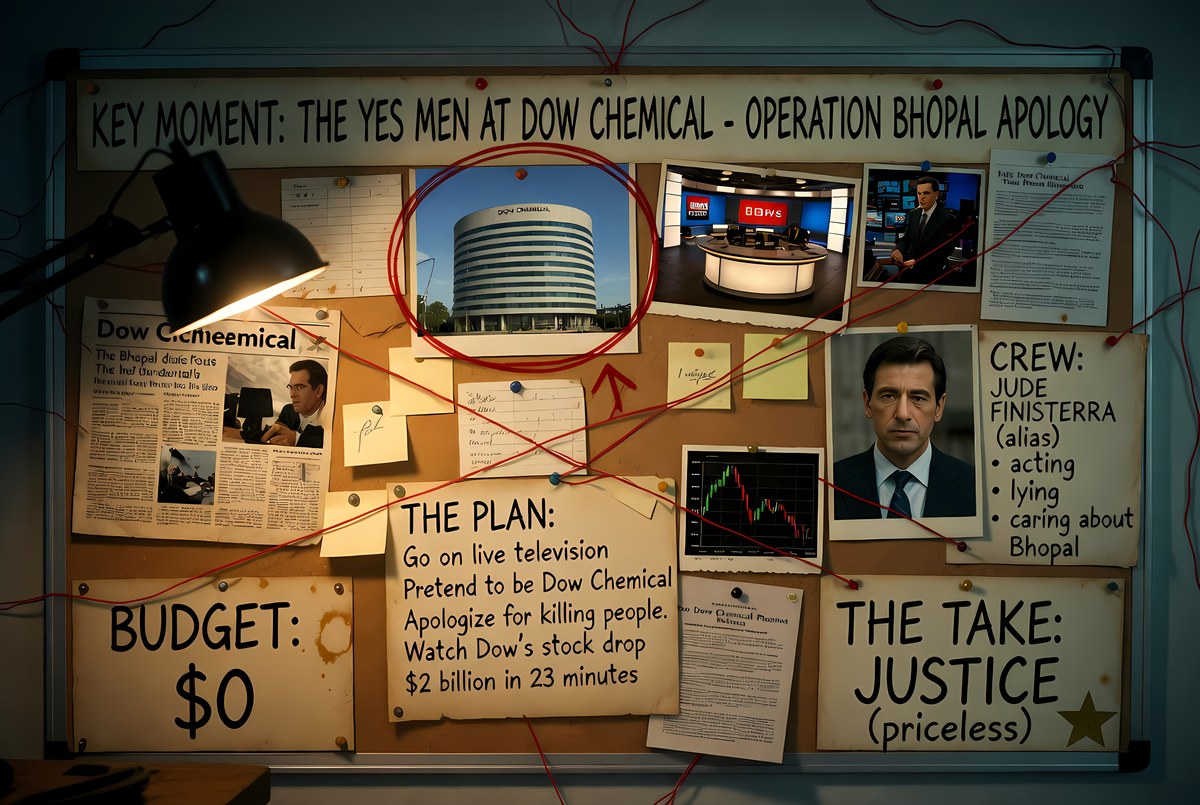
Luther Blissett is the media hoax as theory: the wire service, the copy-paste newsroom and the human-interest programme exposed in one invented disappearance, by a name with no owner. It is the European cousin of Joey Skaggs and Alan Abel, a forerunner of The Yes Men, and a relative of the invented poet Ern Malley.
Threat Assessment
| Category | Level | Notes |
|---|---|---|
| Physical threat | NONE | |
| Memetic threat | HIGH | The multiple name spread. |
| Institutional threat | MODERATE | Exposed the agency-to-paper chain. |
| Civilizational threat | LOW |
Flame Warrior Classification
Primary: not yet typed. The evidence on file leans Impostor (partial: an invented person, a fabricated disappearance). Secondary: none yet.
Notes: ATK 5: one prank, a national programme and the regional papers. DEF 6: an open, anonymous alias. HP 6: the report was pulled.
Sources: London Review of Books, 2013; Luther Blissett, “Harry Kipper” (lutherblissett.net); Luther Blissett, the same account (tvcops copy)
Cross-Referenced Dossiers
The scores on this file are computed by a published rule from sourced records, the same rule for every troll. Nobody types a number: a score moves only when a record does. How the scoring works
Prefer RSS? Subscribe here.