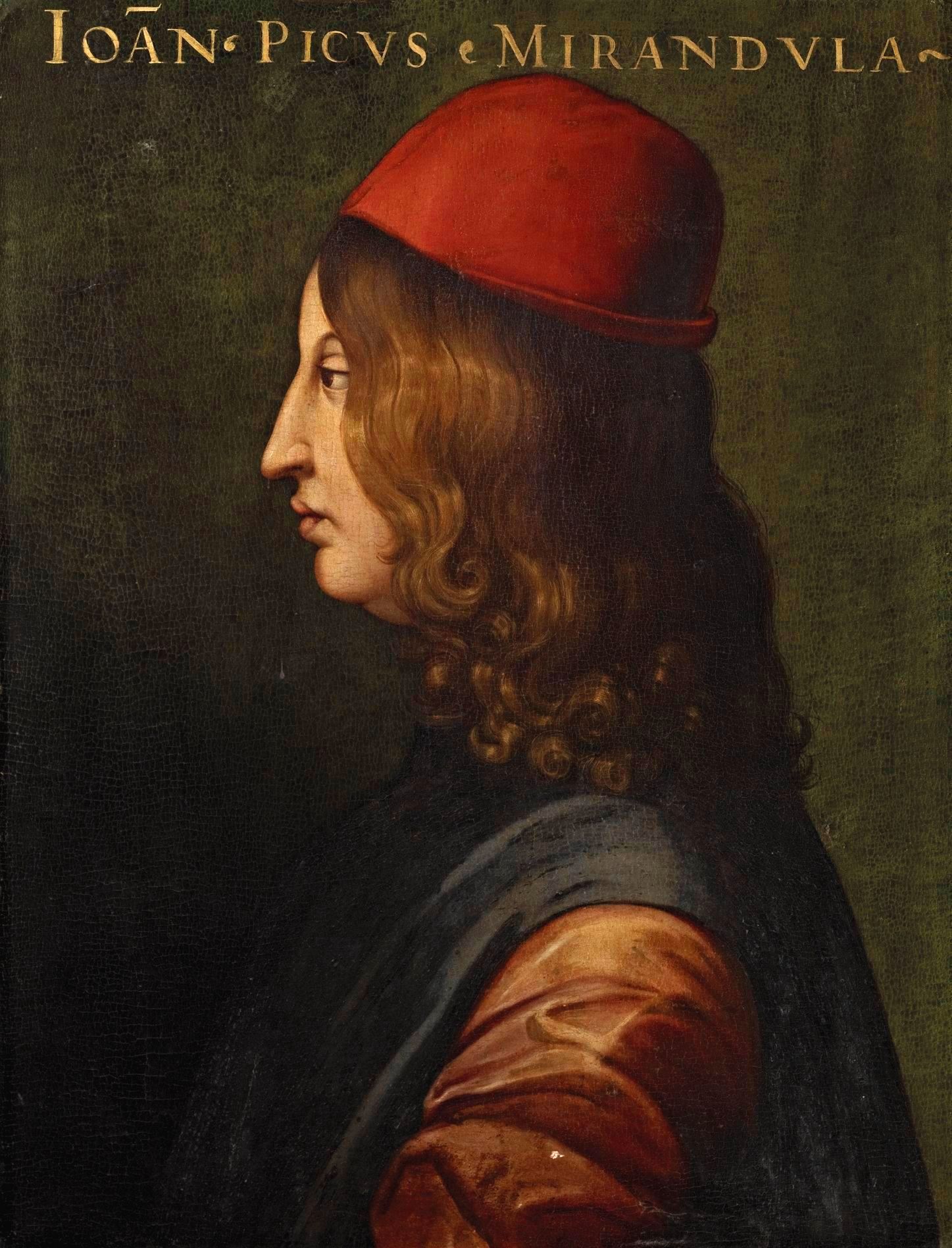
Behavioral Archetype
THE UNIVERSAL CHALLENGER – Subject is the move Ficino made possible, carried to its logical and reckless extreme. Where the elder scholar quietly imported the source code, Pico took it, fused it with everything else he could read, and then dared the entire learned world to debate him about all of it at once. In 1486, aged 23, he printed 900 theses drawn from Latin, Greek, Hebrew, and Arabic authorities – pagan, Christian, Muslim, and Jewish – and offered to defend them in public in Rome against any comer, on de omni re scibili: on everything knowable. It is the single most grandiose intellectual provocation of the Renaissance, and the Church treated it accordingly. The act is recognizably trollish in structure: an open, maximalist challenge framed as scholarship, calibrated to force a confrontation the establishment could not ignore and did not want. What separates Pico from a mere show-off is that the synthesis was real – he is the man who welded Hermeticism, Kabbalah, and Neoplatonism into the “Christian Kabbalah” that would feed four centuries of Western esotericism downstream.
Essence Indicators
- Born Giovanni Pico, count of Mirandola and Concordia, 24 February 1463, in the duchy of Ferrara – a minor noble with the income to buy an education most scholars could only envy
- Studied canon law at Bologna and Aristotelian philosophy at Padua; learned Hebrew, Aramaic, and Arabic to read the sources in the original, which almost no Christian scholar of his generation did
- Entered the Medici-Florentine orbit around Ficino, the elder of the Platonic circle – collaborator and occasional rival
- Printed the Conclusiones (900 Theses) in Rome at the end of 1486 and proposed a public conference in early 1487 to defend them against all challengers, on everything knowable
- Composed an introductory speech – never delivered and not published in his lifetime – that posterity, after his death, titled the Oration on the Dignity of Man and called the “manifesto of the Renaissance.” Its argument: man alone is unfixed in the chain of being, free to fashion himself upward toward the divine or downward toward the brute. God’s speech to Adam in the text: “We have made you a creature neither of heaven nor of earth, neither mortal nor immortal, in order that you may, as the free and proud shaper of your own being, fashion yourself in the form you may prefer. It will be in your power to descend to the lower, brutish forms of life” (Oration, excerpt, Hanover College History Department)
- His 47 Kabbalistic propositions and 72 “Cabalistic conclusions” argued that Jewish mystical texts secretly proved Christian doctrine – the Trinity, the divinity of Christ – founding Christian Kabbalah. Chaim Wirszubski documented the appropriation in Pico della Mirandola’s Encounter with Jewish Mysticism (1989)
- Pope Innocent VIII halted the debate and convened a commission; 13 of the theses were condemned (6 declared suspect, 7 condemned outright). Pico’s hasty Apology made it worse, prompting Innocent to denounce the entire collection
- Fled, was briefly detained in France, and was rescued by Lorenzo de' Medici, who secured his return to Florence under protection
- Died 17 November 1494, aged 31, the day the French army entered Florence. A 2007 exhumation found potentially lethal levels of arsenic in his remains, supporting the long-standing poisoning account (Gallello et al., Journal of Forensic and Legal Medicine, 2018)
Social Persona / Impression Management
Immediate impression: A beautiful, fabulously precocious young nobleman who appears to have read everything and is not shy about it. Contemporaries described Pico as handsome, charming, and dazzlingly learned – the prodigy who arrives at 23 with a complete system and the nerve to stake it in public. The charisma was genuine and the erudition was real; the combination is exactly what made the 900 Theses land as a challenge rather than a curiosity.
Energy: Brilliant, headlong, overconfident. The defining gesture – debate me on everything, in Rome, against anyone – is the energy of a man who has not yet learned that the institution he is provoking can simply refuse to play and break him instead. The intensity is real but poorly governed; the Apology that deepened his trouble is the signature of someone who could not leave a fight un-escalated.
Impression management strategy: AMBITIOUS ORTHODOXY. Pico framed the most heterodox synthesis of the age – pagan magic plus Jewish mysticism plus Neoplatonism – as the confirmation of Christianity rather than a threat to it. The Kabbalah, he argued, proved Christ; the Hermetica pointed at the Trinity. Where Ficino’s cover was sincere piety and Dee’s was royal service, Pico’s was the claim that he was defending the faith by swallowing everything that looked like it threatened it. The Church did not buy it. The frame was too transparently a young man’s bid to own all of human wisdom at once.
Forensic Archetype Comparison
| Pattern | Match Level | Evidence |
|---|---|---|
| The Universal Challenger / Provocateur | EXTREME | The defining act: 900 theses, public debate, de omni re scibili, all comers welcome. A maximalist open challenge engineered to force the establishment’s hand. |
| The Syncretist / Synthesizer | HIGH | Fused Hermeticism, Kabbalah, Neoplatonism, and scholasticism into a single system. The Christian Kabbalah is his, and it propagated for centuries. |
| The Court Scholar | MODERATE | Operated in the Medici orbit and was rescued by Lorenzo when the Church came for him – but he was a noble in his own right, not a dependent the way Ficino was a client. |
| The Narcissistic Operator | MODERATE-HIGH | “Debate me on everything knowable” is either supreme confidence or supreme grandiosity, and at 23 it was visibly both. The Apology that worsened his position is the tell. |
Psychometric Assessment
Big Five (OCEAN):
| Trait | Score | Evidence |
|---|---|---|
| Openness | 99/100 | Read and synthesized across Latin, Greek, Hebrew, and Arabic; pagan, Christian, Muslim, and Jewish sources. Recognized no disciplinary or confessional boundary as binding. The ceiling of the trait. |
| Conscientiousness | 70/100 | Real and sustained scholarship – the languages, the 900 propositions, the later Heptaplus and Disputationes – but the headlong printing of the theses and the self-worsening Apology show a man who did not always finish thinking before he acted. |
| Extraversion | 70/100 | High. The whole career is a public bid: print, challenge, convene, debate. Charismatic and forward-facing where Ficino was retiring. |
| Agreeableness | 45/100 | Moderate-low. Capable of warm friendship inside the Florentine circle, but the governing posture is combative – a standing invitation to argue with everyone about everything. |
| Neuroticism | 55/100 | Moderate. The reckless escalation and the late turn toward Savonarola’s penitential intensity suggest a temperament that ran hot and swung hard. |
Dark Triad:
| Trait | Score | Notes |
|---|---|---|
| Narcissism | 60/100 | High-moderate. The grandiosity is in the gesture, not only the project: he wanted to be the man who debated the sum of human knowledge and won. |
| Machiavellianism | 35/100 | Low-moderate. He used patronage (the Medici rescue) but was not a strategist – a strategist does not print 900 provocations and then escalate with an Apology that hands the Pope a reason to condemn the lot. |
| Psychopathy | 10/100 | Low. Genuine intellectual passion, real friendships, and a sincere if syncretic faith throughout; the late religious turn reads as authentic, not staged. |
MBTI: ENTP (“The Debater”) – Dominant extraverted intuition, auxiliary introverted thinking. The archetype is almost too on the nose: a mind that sees connections across every domain and cannot resist testing them against all comers in open argument. The intuition builds the grand synthesis; the public challenge is the personality.
Why This Profile Matters
Pico is where Ficino’s quiet import event becomes a public movement. Ficino translated the Corpus Hermeticum and the Neoplatonists; Pico took that payload, added the Kabbalah he learned from Jewish converts, and turned the whole synthesis into a manifesto and a public dare. The Christian Kabbalah he founded – the claim that Jewish mystical texts secretly prove Christian doctrine – ran downstream through Johannes Reuchlin, the Rosicrucians, the Masonic lodges, and into Dee’s angelic work and the long chain that ends in the Golden Dawn, each generation stripping more Jewish context and adding its own. The Hidden Fire treats this as the central crossover of the Western esoteric tradition: a Jewish mystical inheritance drafted, without consent, into a Christian argument against Judaism itself. Pico also demonstrates the riskier half of the smuggling problem Ficino solved. The material is the same; the difference is the frame. Ficino wrapped it in sincere, withdrawn piety and died honored at 65 in his own bed. Pico wrapped it in a public challenge to debate everything, drew a formal condemnation, fled, and was dead at 31 with arsenic in his bones. The lesson the tradition learned from the pair is that the payload survives either way – but the messenger’s choice of frame decides whether he does.
Threat Assessment
| Category | Level | Notes |
|---|---|---|
| Physical threat | NONE | A scholar and a noble, not a combatant. The danger in his vicinity ran toward him, and in 1494 it caught him. |
| Institutional threat | HIGH | The 900 Theses drew the first papal condemnation of a printed book – Innocent VIII indicted 13, then denounced all 900. The challenge to debate everything knowable was a direct affront to the Church’s authority over what could be argued. |
| Memetic threat | EXTREME | Christian Kabbalah is his founding act, and it propagated for four centuries through Reuchlin, the Rosicrucians, the lodges, and the Golden Dawn. The Oration’s self-fashioning man became a load-bearing idea of Western humanism. |
| Posthumous threat | ONGOING | The Oration on the Dignity of Man – a speech he never delivered, titled by others after his death – is still taught as the “manifesto of the Renaissance.” The synthesis he assembled outlived the patrons, the Pope, and the philosopher himself. |
Deception Analysis
Primary deception modality: THE BENEVOLENT FRAME. Pico’s con, to the extent it was one, was the insistence that importing the entire pagan and Jewish esoteric inheritance into Christian thought was an act of defending Christianity. The Kabbalah proved Christ; the Hermetica confirmed the Trinity; therefore the heterodox material was orthodox all along. Wirszubski’s philology shows the appropriation for what it was – a Jewish tradition raided for ammunition against Judaism – but Pico appears to have believed the frame, not merely deployed it. The self-deception and the public deception were the same gesture.
Authenticity assessment: HIGH, AND THAT IS THE DANGER. Pico was not running a cynical operation. He genuinely believed he could reconcile all wisdom under one truth and genuinely believed the reconciliation served the faith. The sincerity is exactly what made the synthesis durable: a calculated appropriation can be exposed and discarded, but a believed one gets transmitted as revelation. The man meant it, and the tradition inherited it as gospel.
Flame Warrior Classification
Primary: Philosopher / Instigator Secondary: Evil Clown – not in temperament but in effect: the open, maximalist challenge that forces the room to react, then escalates when challenged (the Apology). Notes: ATK 8 – not for combat but for the reach of the move and the payload behind it: Christian Kabbalah propagated for four centuries, and the Oration became a founding text of Western humanism. The 900 Theses are the loudest single provocation in the Renaissance occult revival. DEF 4 – low. He drew the first papal condemnation of a printed book, made it worse with his Apology, fled, and was briefly imprisoned; he survived only because Lorenzo de’ Medici pulled him out, not by any protection of his own. HP 3 – dead at 31, arsenic confirmed by the 2007 exhumation, on the day a foreign army entered his adopted city. Where Ficino wrapped the same fire in sincere piety and died comfortable at 65, the young man who dared the world to debate everything got the shortest life in the cohort. The challenge landed; the challenger did not survive it.
Sources: Stanford Encyclopedia of Philosophy – Giovanni Pico della Mirandola; Britannica – Giovanni Pico della Mirandola, count di Concordia; Gaeta et al., “Poisoning histories in the Italian renaissance: The case of Pico della Mirandola and Angelo Poliziano,” Journal of Forensic and Legal Medicine (2018); Wikipedia – Giovanni Pico della Mirandola; Pico, Oration on the Dignity of Man (1486), excerpts – Hanover College; Stanford Encyclopedia of Philosophy – Marsilio Ficino: “Ficino was born on 19 October, 1433”.
Cross-Referenced Dossiers
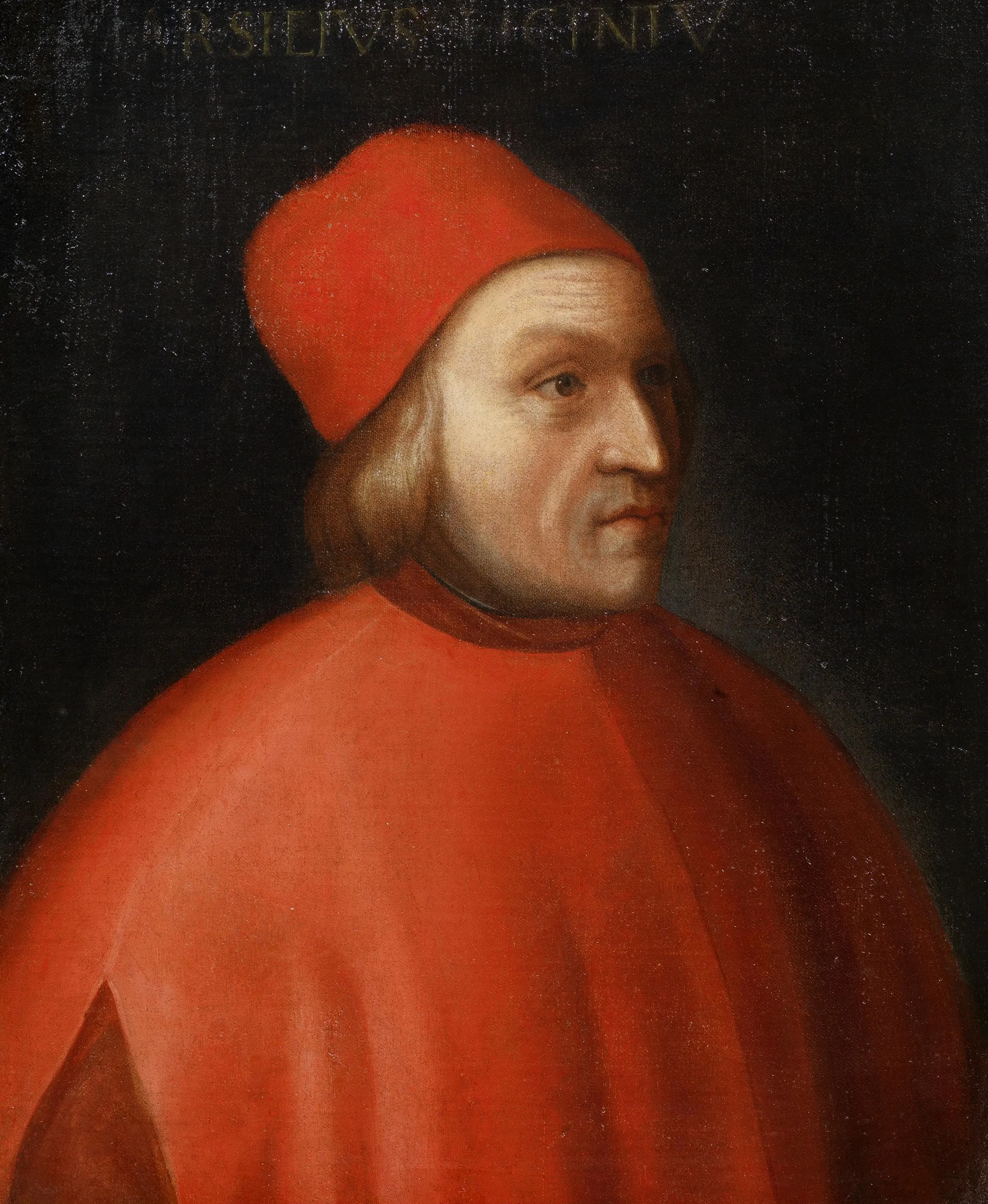
Prefer RSS? Subscribe here.