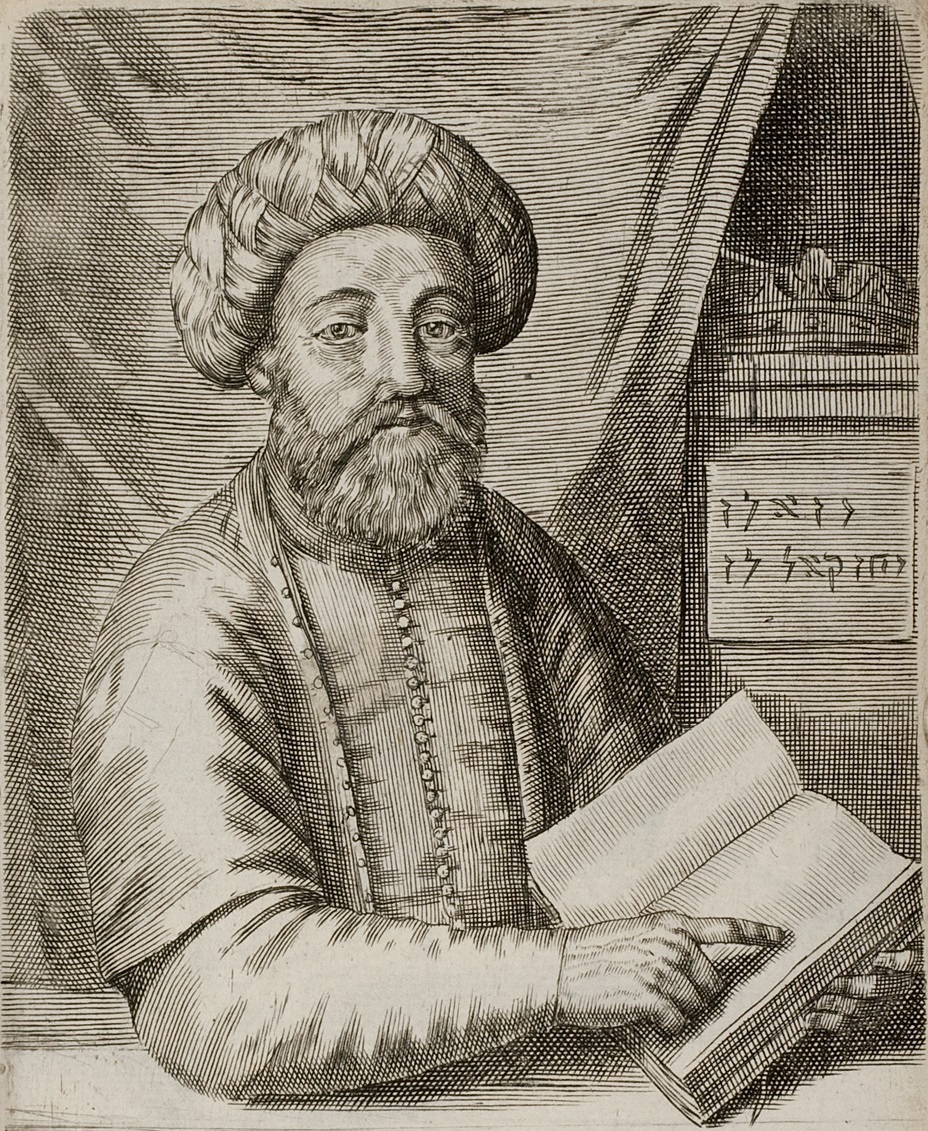
Behavioral Archetype
THE APOSTATE MESSIAH – A Smyrna-born rabbi and kabbalist who, in 1665, proclaimed himself the Jewish Messiah and ignited the largest messianic movement in Jewish history since the destruction of the Second Temple. The diaspora convulsed – communities from Amsterdam to Yemen sold their goods and waited for the redemption. Then, in 1666, hauled before the Ottoman Sultan and offered death or Islam, he put on a turban. The conversion should have ended everything. Instead his prophet, Nathan of Gaza, supplied the doctrine that the Messiah must descend into the realm of evil to liberate the last trapped sparks – so the apostasy was not failure but the deepest stage of the mission. That move – the framework that absorbs its own refutation – is the template this profile exists to document.
Essence Indicators
- Born in Smyrna (modern Izmir) on 23 July 1626; documented periods of ecstatic illumination alternating with devastating depression, which modern clinicians read as bipolar disorder (Kaufmann Kohler and Henry Malter, “Shabbethai Zebi b. Mordecai”, The Jewish Encyclopedia (1906) (birth date clause); Gershom Scholem, “Shabbetai Zevi”, Encyclopaedia Judaica (2nd ed., via Encyclopedia.com) (illumination/depression clause))
- Performed deliberate violations of Jewish law during his manic phases – pronouncing the forbidden Tetragrammaton aloud, staging a wedding to the Torah scroll, celebrating all three pilgrimage festivals in a single week – “strange acts” later retroactively theologized as intentional antinomianism (Gershom Scholem, “Shabbetai Zevi”, Encyclopaedia Judaica (via Encyclopedia.com))
- Declared himself Messiah in 1665 with Nathan of Gaza (1643/44–1680) serving as prophet and chief theologian; the movement spread across the entire diaspora (Gershom Scholem, “Nathan of Gaza”, Encyclopaedia Judaica (via Encyclopedia.com))
- Brought before Sultan Mehmed IV in Adrianople in September 1666 and, given the choice of death or conversion, chose Islam – taking the name Aziz Mehmed Effendi and the court title “Keeper of the Palace Gates”
- The conversion did not dissolve the movement: Nathan’s doctrine of the necessary descent into the klipot (the “shells” of Lurianic Kabbalah) reframed apostasy as the messianic act, and Sabbateanism persisted underground for centuries
- The crypto-believers who followed him into Islam became the Donme, outwardly Muslim and inwardly Sabbatean, a community that endured into the modern Turkish republic
- The conversion is dated 15 September 1666 and came with a royal pension of 150 piasters a day; several of the believers who had accompanied him apostatized with him, as did his wife Sarah when she was brought from Gallipoli (Gershom Scholem, “Shabbetai Zevi”, Encyclopaedia Judaica (via Encyclopedia.com))
- His father, Mordecai Zevi, had come to Smyrna from the Peloponnesus and rose from poultry merchant to commercial agent for Dutch and English traders, which placed the household inside the Levant trade that carried news of the movement to Europe (Gershom Scholem, “Shabbetai Zevi”, Encyclopaedia Judaica (via Encyclopedia.com)) (Gershom Scholem, “Shabbetai Zevi”, Encyclopaedia Judaica (via Encyclopedia.com))
Social Persona / Impression Management
Immediate impression: A charismatic, magnetic, unstable holy man. The Jewish Virtual Library records a figure whose “alternately ascetic and self-indulgent behavior” attracted and repelled rabbis and crowds in equal measure; he was expelled from Salonica for the Torah-wedding stunt. (Kohler and Malter, “Shabbethai Zebi b. Mordecai”, The Jewish Encyclopedia (1906)) Not a marginal crank – a trained kabbalist who could hold a room and, for eighteen months, held the diaspora.
Energy: Manic-depressive in the clinical sense, theatrical in the public one. During the illuminations he rode through the streets in majestic state, appointed followers as “kings” of the restored tribes of Israel, and acted the Messiah with total conviction. During the depressions he vanished into the darkness he called the domain of the klipot. The performance and the pathology were not separable.
Impression management strategy: SACRED INVERSION. Where al-Hallaj stated his claim with total transparency and let the establishment kill him for it, Sabbatai’s defining move is the reversal: when the claim collapses, the collapse becomes the proof. The turban that should have ended the messianic career was reframed as its consummation. The strategy is not concealment but unfalsifiability – a system engineered so that no possible outcome, including total public failure, can count against it.
Forensic Archetype Comparison
| Pattern | Match Level | Evidence |
|---|---|---|
| The Messianic Claimant | DEFINING | He proclaimed himself Messiah outright (May 1665) and was believed by a mass diaspora movement. (Gershom Scholem, “Shabbetai Zevi”, Encyclopaedia Judaica (via Encyclopedia.com)) This is the load-bearing fact; everything else is consequence. |
| The Antinomian | HIGH | The deliberate law-breaking was real and public before it was theology. Whether it was illness, provocation, or doctrine is the question his followers answered retroactively in his favor. |
| The Cult Leader | MODERATE-HIGH | A genuine mass following, an apparatus of prophets and “apostles,” and a community that outlived him by centuries. But the movement’s coherence owed at least as much to Nathan of Gaza’s theology as to Sabbatai himself. |
| The Apostate | DEFINING | The conversion is the hinge of the whole story. Most apostasies end a movement; this one was metabolized into its core doctrine – the rarest and most consequential variant of the pattern. |
Psychometric Assessment
Scoring caveat: the inner man is hard to reach. Much of what looks like calculated provocation may be untreated bipolar illness; much of what looks like doctrine was supplied after the fact by Nathan of Gaza. Scores below are graded on the documented public behavior, with the ambiguity flagged where it bites.
Big Five (OCEAN):
| Trait | Score | Evidence |
|---|---|---|
| Openness | 90/100 | A kabbalist steeped in Lurianic cosmology who built (or inspired) a theology in which apostasy redeems. Whatever else it was, it was not conventional. |
| Conscientiousness | 30/100 | No sustained discipline. The career is a sequence of ecstatic escalations and collapses; the one decisive act under pressure was capitulation to the Sultan. |
| Extraversion | 85/100 | Rode through the streets in state, appointed apostles, held the diaspora’s attention for eighteen months. The messianic claim is an inherently public act and he performed it maximally. |
| Agreeableness | 30/100 | Declared himself Messiah, broke the law in public, married the Torah, and split the rabbinic world. The disagreeableness was theological and structural, not merely social. |
| Neuroticism | 80/100 | The defining trait. Documented oscillation between illumination and depression; the conversion under threat of death reads as a man choosing survival in a low moment, not a martyr choosing the stake. |
Dark Triad:
| Trait | Score | Notes |
|---|---|---|
| Narcissism | 75/100 | “I am the Messiah” is among the largest status claims a person can make, and he made it to a continent. The score is tempered only by the genuine possibility that the grandiosity was a symptom rather than a strategy. |
| Machiavellianism | 50/100 | Ambiguous and contested. The unfalsifiable framework is brilliantly self-protecting, but most of its construction belongs to Nathan of Gaza. Sabbatai supplied the claim and the body; Nathan supplied the doctrine that made the claim bulletproof. |
| Psychopathy | 25/100 | Low. The record shows instability and grandiosity, not callous instrumental cruelty. He chose Islam over death – the opposite of the affectless courting of destruction. |
MBTI: ENFP (“The Campaigner”) – dominant extraverted intuition firing off possibilities and meanings, auxiliary introverted feeling anchoring it to a private sense of destiny. The type generates the charismatic visionary who can mobilize a crowd around a felt truth and is correspondingly vulnerable to the collapse when reality refuses to cooperate. Offered for the public figure; the illness complicates any clean typing.
Why This Profile Matters
Sabbatai Zevi is the template for redemption-through-paradox – the move in which the most damning evidence against a belief is reprocessed as its strongest confirmation. Nathan of Gaza’s doctrine of the necessary descent into the klipot is, structurally, the Gnostic Redeemer myth transplanted into Jewish messianism: the savior must enter the prison to free the prisoners. It is also one of the most audacious pieces of retroactive narrative salvage on record. Your Messiah converted to Islam? That is not the bug. That is the feature. The deeper the descent, the greater the redemption; failure is proof of success; apostasy is the deepest form of faithfulness. Once a system can do that, there is no event – not even the total, public failure of the prophecy – that cannot be read as vindication. This is the closed interpretive loop that the Fires series tracks across the esoteric tradition: the surface always means something other than what it says, so the literal reading is always wrong, so nothing can ever refute the frame. Jacob Frank inherited the principle and detonated it into “redemption through sin.” Compare al-Hallaj, whose claim was transparent and falsifiable to the point of execution, and Simon Magus, whose heresy the establishment built into a genealogy after the fact. Sabbatai is the case where the believers, not the prosecutors, did the building – and proved that a sufficiently creative framework can swallow any contradiction whatsoever.
Threat Assessment
| Category | Level | Notes |
|---|---|---|
| Physical threat | NONE | A rabbi and mystic. The only force in the story is the Sultan’s, applied to him. |
| Institutional threat | MAXIMUM | The movement convulsed rabbinic authority across Europe, North Africa, and the Middle East; Jews sold their property and prepared for the ingathering. Scholem called it the largest messianic movement since the destruction of the Temple, and the rabbinate spent generations suppressing its underground afterlife. (Gershom Scholem, “Shabbetai Zevi”, Encyclopaedia Judaica (via Encyclopedia.com) — Scholem’s own wording, matching the Sabbatai Sevi (1973) phrase quoted in The Hidden Fire ch. 4) |
| Memetic threat | EXTREME | Sabbateanism did not die with the apostasy. It went underground as the Donme, mutated into Frankism, and forced Jewish thought to confront a movement that treated the violation of the law as a sacrament. The doctrine of redemption through descent is still studied as the hinge of early-modern Jewish mysticism. |
| Posthumous threat | PERMANENT | The framework outlived the man. Gershom Scholem’s 900-page Sabbatai Sevi (1973) made him a permanent fixture of Jewish studies, and the structural lesson – that an unfalsifiable belief system absorbs its own refutation – is the load-bearing idea The Hidden Fire carries forward. |
Deception Analysis
Primary deception modality: UNFALSIFIABILITY. The signature is not the lie but the frame that cannot be falsified. The messianic claim was a testable proposition; the conversion tested it and it failed; and the doctrine of the necessary descent converted the failure into the proof. Whether Sabbatai himself engineered this or merely supplied the raw material that Nathan of Gaza shaped is genuinely uncertain, and the profile declines to resolve it. The deception, in any case, was collective: a movement deceiving itself with a theology engineered so that disconfirmation was impossible.
Authenticity assessment: CONTESTED. If the antinomian acts were untreated bipolar mania, the “trolling” is a retrospective reading imposed on a sick man by followers who needed the acts to mean something. If they were deliberate, he is one of the most committed provocateurs in this file. The honest position is that the record supports both readings and that the movement’s genius was making the distinction irrelevant – whichever it was, the doctrine could absorb it. Days after the conversion he wrote to Smyrna: “God has made me an Ishmaelite; He commanded, and it was done. The ninth day of my regeneration.” (Kohler and Malter, “Shabbethai Zebi b. Mordecai”, The Jewish Encyclopedia (1906))
Flame Warrior Classification
Primary: Provocateur / Target Secondary: Grenade (raise “Sabbatai Zevi” in any discussion of messianism, antinomianism, or unfalsifiable belief and the whole problem of redemption through paradox detonates) Notes: ATK 9 – the claim mobilized an entire diaspora and seeded a doctrine (redemption through descent, then redemption through sin) that is still load-bearing in Jewish intellectual history; the reach is enormous and most of it is his own. DEF 4 – when the Sultan applied real pressure he folded and converted; the defense was not the man’s nerve but the framework’s capacity to absorb the folding after the fact. HP 5 – he survived the test that killed al-Hallaj, lived a decade in exile, and the movement long outlived the man; but the apostasy permanently broke his standing and he died isolated in Ulcinj. Compare al-Hallaj, whose DEF 0 and HP 0 are the deliberate opposite: al-Hallaj refused to fold and was destroyed; Sabbatai folded and endured. Same claim to the divine, opposite answer to the executioner.
Sources:
- Shabbetai Tzevi — Encyclopaedia Britannica — scholarly overview: birth in Smyrna (1626), the messianic movement, the 1666 conversion, and death in exile at Ulcinj (1676).
- Sabbatianism — YIVO Encyclopedia of Jews in Eastern Europe — the movement around Shabetai Tsevi (1626–1676), Nathan of Gaza’s role, and its spread across Europe, North Africa, and Asia.
- Shabbetai Zvi — Jewish Virtual Library — biography: the Salonica Torah-wedding expulsion, the May 1665 self-proclamation, and the September 1666 conversion before the Sultan.
- Gershom Scholem, Sabbatai Sevi: The Mystical Messiah — Princeton University Press — the definitive scholarly treatment; source of the “largest and most momentous messianic movement” assessment.
- Arrested in Constantinople in August 1672 on a denunciation of his double-faced conduct, he was exiled in January 1673 to Dulcigno (Ulcinj); his last letter, about six weeks before his death, asked the Jews of nearby Berat for a prayer book for the New Year and the Day of Atonement, and he died on the Day of Atonement, 17 September 1676, two months after his fiftieth birthday. (Gershom Scholem, “Shabbetai Zevi”, Encyclopaedia Judaica (via Encyclopedia.com))
Cross-Referenced Dossiers
Prefer RSS? Subscribe here.