Behavioral Archetype
“The secret cannot be kept much longer. Questions are being asked, and sooner rather than later the New York Mets management will have to produce a statement.” (the opening of “The Curious Case of Sidd Finch”, Sports Illustrated, 1 April 1985, si.com; fiction)
THE PRACTICAL JOKE THAT RAN IN THE MAIN BOOK — Subject is a hoax: Sports Illustrated’s 1985 story, written by George Plimpton, of a Mets prospect raised in a Tibetan monastery who threw a baseball at 168 miles an hour. The magazine ran it straight, with photographs, in the main editorial pages, and hid the confession in the subhead. Readers wanted it to be true, and the magazine said so two weeks later. It is on this file as the cleanest pre-internet troll in print: bait built to be believed, a tell for the careful, a confession on schedule, and almost no cost.
Essence Indicators
- The bait. The subhead: “He’s a pitcher, part yogi and part recluse. Impressively liberated from our opulent life-style, Sidd’s deciding about yoga” (SI, 1985); its first letters “spelled out “Happy April Fool’s Day,”” (SI, 2014). The centrepiece: “Then the astonishing figure 168 appeared on the glass plate.” (fiction)
- Who did it. “it was SI’s managing editor at the time, Mark Mulvoy, who first came up with the idea of a story-as-prank.”; Mulvoy: “I figured if you do 600 stories a year you can have fun with at least one.” (SI, 2014). “The fascinating story of Sidd Finch was all a hoax, an idea originally drummed up by SI’s managing editor at the time, Mark Mulvoy, and perfectly executed by Plimpton.” (SI, 2020)
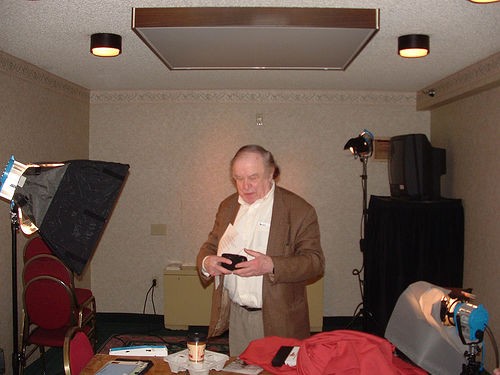
- The staging. The photographs were “taken by SI photographer Lane Stewart, who recruited his friend, art teacher and occasional assistant Joe Berton to portray the fictional Sidd Finch character.” (SI, 2020)
- The catch. “Perhaps no story in Sports Illustrated ’s first six decades engendered the response of “The Curious Case Of Sidd Finch.””; the magazine’s own post-mortem, 15 April 1985: “What they didn’t anticipate was that many readers would want to believe in the existence of Sidd so strongly, despite the 168-mph fastball and other improbabilities, that they would rationalize their doubts for a good while” (SI, 2014)
- The readers, as SI printed them. “Ha-ha. Cancel my subscription.”; “You lousy, rotten, good-for-nothing blankety-blanks. You got me hook, line and sinker—and I loved it.”; “Haven’t we Met fans suffered enough? I submit that the article was cruel and unusual punishment.” (SI, 2014). A hoax archive counts “almost 2000 letters” (Museum of Hoaxes)
Social Persona / Impression Management
Immediate impression: A long, deadpan feature with photographs and a straight-faced byline.
Energy: Patient, literary.
Impression management strategy: THE TELL IN PLAIN SIGHT. The confession was in the subhead from the start.
Forensic Archetype Comparison
| Pattern | Match Level | Evidence |
|---|---|---|
| The Craft Troll | MAXIMUM | Bait built to be believed, with a hidden tell (SI). |
| The Institutional Prank | HIGH | A managing editor’s idea, run in the main book. |
| The Swarm | NONE | Two men and a photographer. |
Psychometric Assessment
A hoax has no psyche. Scores assess the persona the story performs.
Big Five (OCEAN):
| Trait | Score | Evidence |
|---|---|---|
| Openness | 95/100 | A Buddhist pitcher who plays the French horn. |
| Conscientiousness | 85/100 | Photographs, quotes, a subhead acrostic. |
| Extraversion | 60/100 | One issue. |
| Agreeableness | 75/100 | Confessed in two weeks. |
| Neuroticism | 10/100 | “I loved it.” |
Dark Triad:
| Trait | Score | Notes |
|---|---|---|
| Narcissism | 30/100 | |
| Machiavellianism | 60/100 | Readers rationalised “their doubts for a good while” (Sports Illustrated, 2014 retrospective and 1985 publisher’s letter). |
| Psychopathy | 5/100 | No one harmed on the record. |
MBTI: ENTP (“The Debater”) — the editor who does six hundred stories a year and one for fun.
Why This Profile Matters
Sidd Finch is the gentle end of the hoax lineage: an institution trolling its own readers, confessing on schedule, and being thanked for it. It sits beside Orson Welles’s broadcast, the media pranks of Alan Abel and Joey Skaggs, the impersonations of The Yes Men, and Andy Kaufman’s commitment to the bit.
Threat Assessment
| Category | Level | Notes |
|---|---|---|
| Physical threat | NONE | |
| Memetic threat | MODERATE | The model April Fools’ story. |
| Institutional threat | NONE | |
| Civilizational threat | NONE |
Flame Warrior Classification
Primary: not yet typed. The evidence on file leans Troller (partial). Secondary: none yet.
Notes: ATK 3: one story in one issue, and one of the magazine’s largest mailbags. DEF 2: the byline and the masthead, and the tell in print. HP 5: an angry boss, some cancelled subscriptions, and a story still retold every April.
Sources: Sports Illustrated, “The Curious Case of Sidd Finch” (1985); Sports Illustrated, 2014 retrospective and 1985 publisher’s letter; Sports Illustrated, 2020; Museum of Hoaxes
Cross-Referenced Dossiers

The scores on this file are computed by a published rule from sourced records, the same rule for every troll. Nobody types a number: a score moves only when a record does. How the scoring works
Prefer RSS? Subscribe here.